
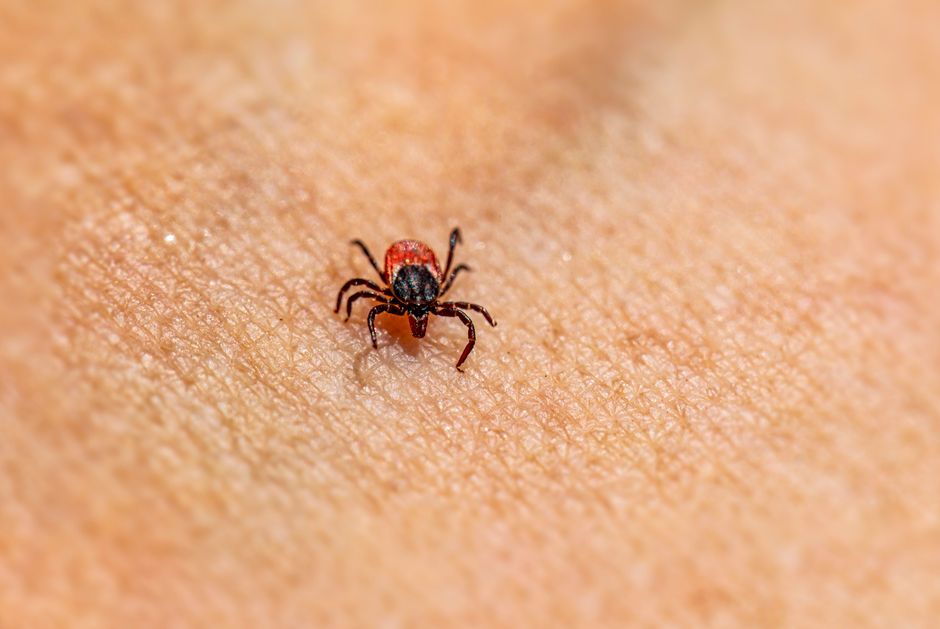
Chigger bites itch because of what the mite does to your skin, not because of what it leaves behind. The larvae inject digestive enzymes that break down skin cells, and your immune system reacts to that. To ease the itch, wash the area with soap and water, apply an over-the-counter hydrocortisone cream or calamine lotion, and resist scratching. To prevent future bites, treat clothing and gear with permethrin, use an EPA-registered insect repellent on exposed skin, and shower soon after being outdoors in tall grass or brush.
What Are Chiggers And Why Do They Bite?
Chiggers are the larval stage of mites in the Trombiculidae family. Only the larvae bite humans. Adults and nymphs feed on other things and do not bother people.
These larvae are tiny. Most are about the size of a period at the end of a sentence, roughly 0.2 to 0.4 millimeters. You will almost never see the one that bit you.
They do not burrow into your skin and they do not suck blood like a tick or mosquito. Instead, a chigger attaches to skin, injects enzymes that break down cells, and feeds on the resulting fluid. This is a key point that clears up a common myth. People often believe chiggers stay embedded in the skin. They do not. The larva drops off on its own after feeding, usually within a few hours to a day.
Chiggers are most active in warm weather. In the United States they are common in the South, Southeast, and parts of the Midwest. They cluster in tall grass, weeds, brush, and along the edges where lawns meet woods. They also gather in damp, shaded spots.
What Do Chigger Bites Look Like And Where Do They Appear?
Chigger bites usually show up as small, red, intensely itchy bumps. Some develop into small welts or blisters. The itch tends to be out of proportion to how small the bite looks.
The bites cluster in areas where clothing fits snugly against skin. Common sites include:
- The ankles and lower legs
- Behind the knees
- The groin and inner thighs
- The waistband area
- Under tight socks, elastic bands, and belts
- The armpits and behind the knees
This pattern happens because chiggers seek places where skin is thin and where clothing presses against the body. If you have bites scattered across wide-open areas of skin, chiggers are less likely than other causes.
The itching usually starts within a few hours of the bite and can last for several days to about a week. Symptoms vary from person to person. Some people react strongly and others barely notice.
How Do You Ease The Itch From Chigger Bites?
Start by washing the bite area with soap and water as soon as you notice symptoms. This helps remove any remaining chiggers and cleans the skin.
For the itch itself, several over-the-counter options are widely used:
- Hydrocortisone cream (1%) to reduce inflammation and itching
- Calamine lotion for temporary relief
- Oral antihistamines such as diphenhydramine or cetirizine, which some people find helpful for itch, especially at night
- Cool compresses to calm irritated skin
- Colloidal oatmeal baths, which some people find soothing
These measures ease symptoms. They do not speed healing in any proven way, and no treatment has been shown in strong trials to shorten the course of chigger bites specifically.
The single most useful thing you can do is avoid scratching. Scratching breaks the skin, and broken skin can become infected. Keep fingernails short and consider covering the bites at night if you scratch in your sleep.
Some people try home remedies like nail polish, bleach, or covering bites with clear tape. No clinical evidence supports these. Nail polish in particular rests on the false idea that a chigger is still under the skin. It is not, so the polish does nothing except possibly irritate the skin further.





When Should You See A Doctor For Chigger Bites?
Most chigger bites heal on their own without medical care. See a doctor if signs of infection appear or if symptoms are severe.
Watch for these warning signs:
- Increasing redness, warmth, or swelling around a bite
- Pus or fluid draining from a bite
- Fever
- Red streaks spreading from the bite area
- Bites that keep getting worse after a week instead of improving
These can signal a bacterial skin infection, which may need antibiotics. A doctor can assess whether that is what is happening.
Some people develop a stronger allergic reaction with more widespread rash or hives. If that happens, or if itching is severe enough to disrupt sleep and daily life despite home care, it is reasonable to check in with a clinician.
How Do You Prevent Chigger Bites?
Prevention works on two fronts: keep chiggers off your skin, and avoid the places where they gather.
Clothing is your first line of defense. Wear long pants and long sleeves when walking through tall grass, weeds, or brush. Tuck your pant legs into your socks or boots. This closes off the ankles, a favorite entry point.
Treating clothing and gear with permethrin is one of the more effective steps available. Permethrin is an insecticide applied to fabric, not to skin. Pre-treated clothing is sold commercially, and you can also treat your own clothes with products made for that purpose. Follow the label directions exactly. Do not apply permethrin directly to your skin.
For exposed skin, use an EPA-registered insect repellent. Products containing DEET, picaridin, or IR3535 are commonly recommended. Follow the label for how and where to apply. The Centers for Disease Control and Prevention maintains guidance on which repellents are registered and how to use them safely. Repellents reduce risk. They do not make bites impossible.
Showering soon after you come indoors can help wash off chiggers that have not yet attached. Wash your clothes in hot water and dry them on high heat to remove any mites still on the fabric.
When you can, avoid walking through uncut grass, brush, and the overgrown edges of fields and trails. Staying on cleared paths in chigger-heavy areas lowers your exposure.
Do Chiggers Spread Disease?
In the United States, chiggers are not known to transmit disease to humans. The main problem they cause is the intense itch and the risk of infection from scratching.
This is different from other parts of the world. In parts of Asia and the Pacific, a different type of chigger mite can transmit a bacterial infection called scrub typhus. That disease is not a concern from chigger bites acquired in the U.S.
So the honest picture is reassuring on one front and not on another. Chiggers in the U.S. are not a disease threat. But the bites are genuinely uncomfortable, and scratching can lead to a skin infection that does need treatment. That is why easing the itch and leaving the skin intact matters.
Frequently Asked Questions
Do chiggers stay under your skin?
No. Chiggers do not burrow in or stay embedded. The larva attaches, feeds, and drops off on its own, usually within a few hours to a day.
How long do chigger bites itch?
The itching typically lasts several days to about a week, though it varies from person to person. See a doctor if bites worsen after a week or show signs of infection.
What is the fastest way to stop chigger bites from itching?
Washing the area and applying hydrocortisone cream or calamine lotion gives many people relief. Avoiding scratching is the most important step to prevent infection.
Does nail polish remove chiggers?
No. Nail polish does not help because there is no chigger left under the skin to smother, and no evidence supports this remedy.
