
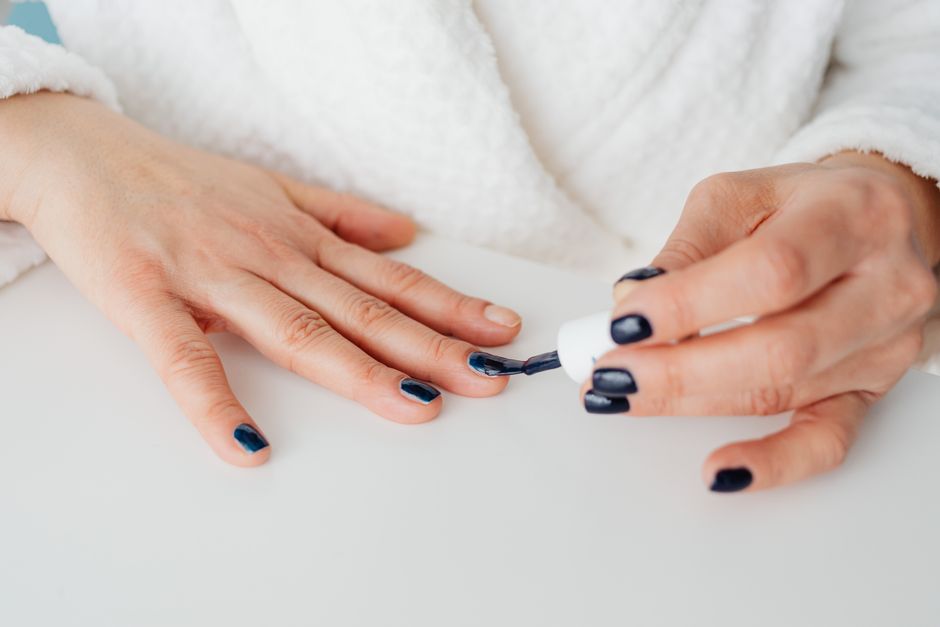
Waiting for nail polish to dry can feel like it takes forever. You paint your nails, and then you cannot touch anything for what seems like an hour. The good news is that you can speed up the process significantly with the right techniques. The fastest way to dry polished nails is to use a quick-dry top coat, followed by a cold water or ice water dip for two to three minutes, and then a quick-dry spray or oil. This combination works because it speeds up solvent evaporation and helps harden the polish film, but you still need to give the polish time to fully cure beneath the surface.
Why Does Nail Polish Take So Long to Dry?
Nail polish dries through evaporation. The liquid polish contains solvents that keep the color and resin in a fluid state. When you brush it onto your nail, those solvents start to evaporate into the air. As they leave, the remaining ingredients form a solid film on your nail.
This is why thin coats dry faster than thick ones. A thick layer of polish holds more solvent. That means more liquid needs to evaporate before the surface feels dry. The top of the polish can feel dry to the touch while the layer underneath is still soft. That is why you can dent a nail hours after painting it.
Temperature and airflow also matter. Warm air holds more moisture, which slows evaporation. Moving air, like from a fan, carries solvents away faster. Cold air slows the chemical reaction but helps the film set more firmly. This is why the ice water method works even though it seems counterintuitive.
How To Dry Polished Nails Fast
The most reliable method combines a few steps. Start with thin coats of polish. Two thin coats dry much faster than one thick coat. Wait two minutes between coats so the first layer can set before you add the second.
Apply a quick-dry top coat as your final layer. These products contain ingredients that speed up evaporation across the entire polish film. They are available at most drugstores and are specifically designed for this purpose.
After the top coat, dip your nails in ice water for two to three minutes. The cold temperature helps the polish harden more quickly. Make sure the water is cold but not painful. Keep your nails submerged without touching the sides of the bowl.
Finish with a quick-dry spray or a few drops of quick-dry oil. These products help the remaining solvents evaporate from the surface. They also add a protective layer that reduces smudging.
Does Cold Water Actually Work?
Yes, cold water works, but it does not work the way many people think. Cold water does not “set” the polish instantly. It helps the polish film harden faster because the cold temperature reduces the flexibility of the resin. This makes the surface less likely to smudge when you touch it.
The water also creates a barrier that keeps air away from the polish surface. This slows evaporation temporarily, but the cold effect on the resin is what makes the polish feel harder more quickly.
Some research suggests that cold water is not faster than air drying in terms of full cure time. The polish still needs hours to fully harden all the way through. But the surface becomes touch-dry faster, which is what most people mean when they say “dry.”
One important note: do not use hot water. Heat softens the resin and can cause the polish to bubble or peel. Cold water is the only temperature that helps.




What About Quick-Dry Sprays and Drops?
Quick-dry sprays and drops are common salon products. They work by adding a layer of oil or silicone to the surface of the polish. This layer helps the solvents below evaporate more quickly by creating a barrier that encourages the solvent to move to the surface.
These products do help, but they are not magic. They make the surface dry to the touch faster. The polish underneath still needs time to cure fully. You can expect the surface to be touch-dry in about five minutes with a spray or drops, compared to ten to fifteen minutes without them.
Some quick-dry drops contain oils that can leave a residue on the nails. This is usually not a problem, but it can make the polish look slightly dull. Wiping the nails gently with a tissue after the drops dry can remove any excess oil.
What Are the Best Home Remedies?
Several home remedies circulate online, and some work better than others.
- Cooking spray: Spraying a light mist of cooking spray over wet nails can help them dry faster. The oil creates a barrier similar to quick-dry drops. It works, but it can leave a greasy residue that needs to be washed off.
- Hair dryer on cold: Using the cold setting on a hair dryer can speed up evaporation. The moving air carries solvents away from the nail surface. Do not use the hot setting. Heat softens the polish and can cause bubbles.
- Fan: A simple desk fan pointed at your hands works well. The airflow speeds up evaporation without the risk of heat damage.
- Ice water bath: As described above, this is one of the most effective home methods.
One method that does not work is dipping nails in olive oil. Some people claim this speeds up drying, but the oil does not help the solvents evaporate. It just coats the surface and can make the polish softer.
How Long Does Nail Polish Really Take to Cure?
There is a difference between touch-dry and fully cured. Touch-dry means the surface is no longer sticky or soft. This usually happens in ten to twenty minutes with regular polish. Fully cured means the entire polish film is hard, all the way down to the nail. This can take anywhere from one to two hours, and sometimes up to 24 hours for thick layers.
This is why you can wake up the morning after painting your nails and still see sheet marks on them. The polish was not fully cured when you went to bed, even though it felt dry.
To avoid this, wait at least one hour before doing anything that puts pressure on your nails. This includes buttoning buttons, typing for long periods, or carrying heavy bags. If you need your nails to be fully hard quickly, consider using a gel polish system with a UV or LED lamp. These cure in 30 to 60 seconds per layer, but they require special removal products.
Are Gel Polishes Faster?
Gel polishes dry much faster than regular polish because they cure under a UV or LED lamp. The lamp activates photoinitiators in the gel, causing it to harden in seconds. This is a different chemical process than evaporation.
Gel polish is not necessarily better for everyone. It requires a lamp, which costs money. It also requires soaking in acetone to remove, which can damage the natural nail if done incorrectly. If you are looking for a fast-drying option that lasts longer, gel is worth considering. If you want simplicity, stick with regular polish and quick-dry products.
There are also hybrid polishes that claim to dry faster than regular polish without a lamp. Some of these do dry faster, but the difference is usually modest. They still take several minutes to become touch-dry.
What Mistakes Make Polish Take Longer to Dry?
Several habits slow down the drying process without you realizing it.
Thick coats: The biggest mistake. One thick coat takes much longer to dry than two thin coats. The outer layer dries first, trapping solvent underneath. This can lead to bubbles and smudging.
Skipping base coat: A base coat helps the polish adhere to the nail, which can actually speed up drying. Without it, the polish may slide around and take longer to set.
Shaking the bottle: Shaking introduces air bubbles into the polish. These bubbles can burst during drying, leaving pits and dents. Roll the bottle between your hands instead.
Painting in a humid room: High humidity slows evaporation. If your bathroom is steamy, paint your nails in a dry room instead.
Touching nails too soon: Even if the surface feels dry, the polish underneath is still soft. Touching it can leave fingerprints or dents that are hard to fix.
Frequently Asked Questions
Can I use a hair dryer to dry my nails?
Yes, but only on the cold setting. Hot air softens the polish and can cause bubbles. Cold air speeds up evaporation and helps the polish set faster.
How long should I wait before touching things after painting my nails?
Wait at least one hour before doing anything that puts pressure on your nails. The surface may feel dry in ten to twenty minutes, but the polish underneath needs more time to harden fully.
Does the ice water trick really work?
Yes, it makes the surface touch-dry faster. The cold temperature hardens the resin in the polish. The polish is not fully cured after the dip, but it is less likely to smudge.
Is gel polish faster than regular polish?
Gel polish cures in seconds under a UV or LED lamp, so it is much faster than regular polish. However, it requires special equipment and removal products, so it is not always the most convenient option.
