
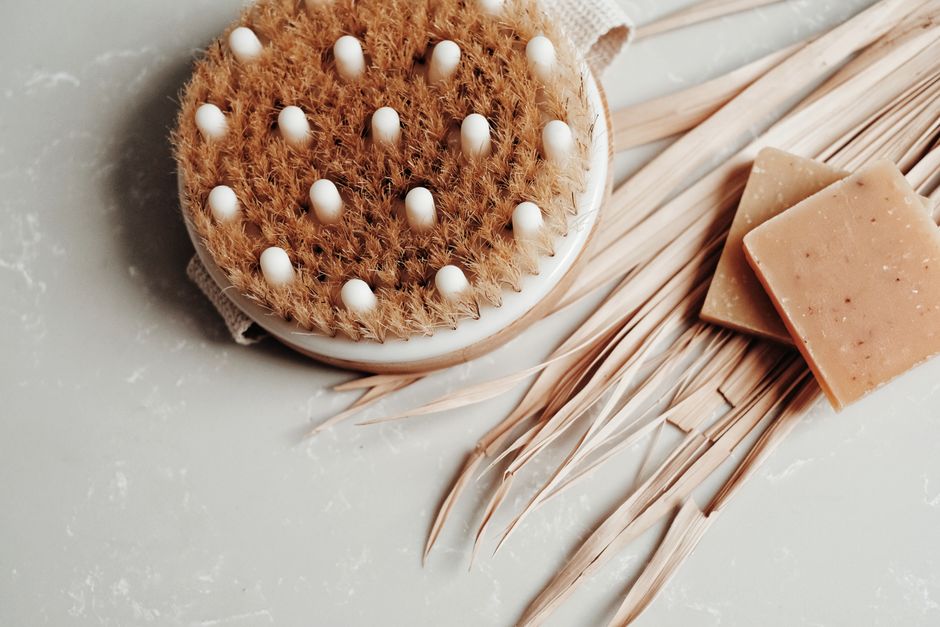
Dry brushing means moving a stiff-bristled brush over dry skin, usually before a shower, in long strokes toward your heart. It takes about three to five minutes. The technique is simple, but the claims around it are not. Some benefits are real and modest. Others, especially the idea that it “detoxes” your body, are not supported by evidence.
Here is what the research actually shows, how to do it without irritating your skin, and who should skip it.
What Does Dry Brushing Actually Do to Your Skin?
The brush removes dead skin cells from the surface. That is the main, well-established effect. The outermost layer of skin, the stratum corneum, constantly sheds cells. A brush physically loosens and lifts them. Your skin feels smoother afterward, and light reflects more evenly off it.
This is a form of mechanical exfoliation, the same category as a scrub or a loofah. It works. It is not magic. The result lasts a few days at most, because your skin keeps making new cells.
The firm strokes also increase blood flow to the skin surface. You can see this as mild pinkness that fades within minutes. Increased circulation to the skin is real, but it is temporary and local. It does not change your overall circulation or your health in any lasting way.
What about the claim that dry brushing “stimulates the lymphatic system” and removes toxins? The lymphatic system is real. It moves fluid and immune cells through the body. But it does not need help from a brush. Lymph moves when you breathe, when your muscles contract, and when your blood vessels pulse. No study has shown that brushing the skin improves lymphatic drainage in healthy people. And your liver and kidneys handle waste removal. A brush cannot do their job.
How To Dry Brush Your Body Step by Step
Do it on dry skin, before you shower, and keep the pressure light. Most people press far too hard at first. The brush should feel like a firm massage, not a scrape.
Here is the sequence most skin care sources describe:
- Start at your feet and ankles. Use long, upward strokes toward your heart.
- Move up the legs, always stroking upward.
- On the belly, use gentle clockwise circles.
- Brush your arms from hands toward shoulders.
- On the back, stroke downward toward the waist, then upward again.
- Use lighter pressure on the chest and neck, or skip those areas.
- Finish with a shower to rinse off loosened skin cells.
- Apply moisturizer within a few minutes while skin is still damp.
Keep the whole routine to about three to five minutes. Longer is not better. Over-brushing causes redness, stinging, and tiny tears in the skin barrier.
Skip your face. Facial skin is thinner and far more prone to irritation. Use a dedicated gentle exfoliant there if you exfoliate at all.
How Often Should You Dry Brush?
Two to three times a week is a reasonable starting point for most people. Some people tolerate daily brushing. Others find that even a few times a week leaves their skin tight or irritated.
Start with once or twice a week and see how your skin responds over a couple of weeks. If it feels smooth and comfortable, you can add a session. If it feels raw, stinging, or looks red for more than a short while, cut back.
There is no official guideline on frequency. The right number is the one your skin tolerates without irritation. That varies a lot from person to person.
Which Brush Should You Use?
Choose a brush with natural or soft synthetic bristles and a long handle so you can reach your back. The bristles should feel firm but not scratchy against the back of your hand.
A few practical points:
- Firm, stiff bristles are more likely to irritate skin. Softer is safer, especially at first.
- A long handle helps you reach your back without pressing hard.
- Clean your brush regularly. Rinse it and let it dry fully. A damp brush left in a humid bathroom can grow bacteria and mold.
- Replace it when bristles splay or flatten, since worn bristles stop exfoliating evenly.
You do not need an expensive brush. A basic, well-made one does the same job as a costly version.
Who Should Not Dry Brush?
Some people should avoid it entirely or check with a doctor first. Dry brushing is a physical exfoliant, and broken or inflamed skin does not respond well to being scrubbed.
Avoid dry brushing if you have:
- Eczema, psoriasis, or dermatitis on the areas you would brush
- Sunburn, rashes, cuts, or open wounds
- Very sensitive or reactive skin
- Skin that is currently irritated from another product
- Poor circulation or nerve damage in the legs, especially with diabetes
People with diabetes deserve special mention. Reduced sensation in the feet and legs means you may not feel a brush causing damage. Small injuries can become serious infections in this group. If you have diabetes-related nerve damage, ask your doctor before starting.
If you have a skin condition and are not sure whether brushing is safe, ask a dermatologist. This is a case where a quick professional opinion is worth it.
Does Dry Brushing Have Real Benefits?
The evidence is thin, and that is the honest position. Most claims about dry brushing come from skin care tradition and popular books, not from controlled trials.
The benefits that hold up are modest:
- Smoother skin from removing dead cells. This is well established for mechanical exfoliation in general.
- A temporary feeling of alertness from the brisk strokes. Many people report it feels energizing.
- Better absorption of moisturizer right after exfoliation, since the surface is smoother.
The benefits that do not hold up include detoxification, cellulite removal, and improved immune function. No clinical evidence confirms any of these. Cellulite in particular is a structural feature of how fat sits under the skin. Brushing the surface does not change that structure.
What Are the Risks?
The main risk is skin irritation. Too much pressure, too-frequent sessions, or stiff bristles can strip the skin barrier. That leaves skin red, dry, and more sensitive to products and to the environment.
Micro-tears are a real concern. Repeated harsh brushing can create tiny breaks in the skin where bacteria can enter. In rare cases this can lead to minor infections, especially in people with compromised skin or immune systems.
Watch for these signs that you are overdoing it:
- Redness that lasts more than a short while after brushing
- Stinging or burning during or after
- Flaking or tightness
- New itchiness or small bumps
If any of these appear, stop for a week or two and let your skin recover.
A Non-Obvious Point About Exfoliation
Your skin does not need much help shedding dead cells. It renews itself on a cycle of roughly a month. For most people, gentle exfoliation once or twice a week is plenty. More frequent or more aggressive exfoliation tends to backfire, because a damaged barrier makes skin look duller, not brighter.
If your goal is smoother, healthier-looking skin, a good moisturizer and sun protection will do far more than any brush. Dry brushing is a nice add-on. It is not the foundation.
Frequently Asked Questions
Does dry brushing really remove toxins?
No. Your liver and kidneys remove waste from your body, and no study shows that brushing skin improves this. The main proven effect is removing dead skin cells.
Can dry brushing reduce cellulite?
No clinical evidence confirms this. Cellulite comes from how fat sits under the skin, and surface brushing does not change that structure.
Should you shower before or after dry brushing?
Brush before you shower on dry skin. Then shower to rinse off loosened cells and apply moisturizer while skin is still damp.
Is dry brushing safe for sensitive skin?
Often not. Sensitive or reactive skin is more prone to irritation from a stiff brush, so use very light pressure or choose a gentler exfoliation method instead.
