
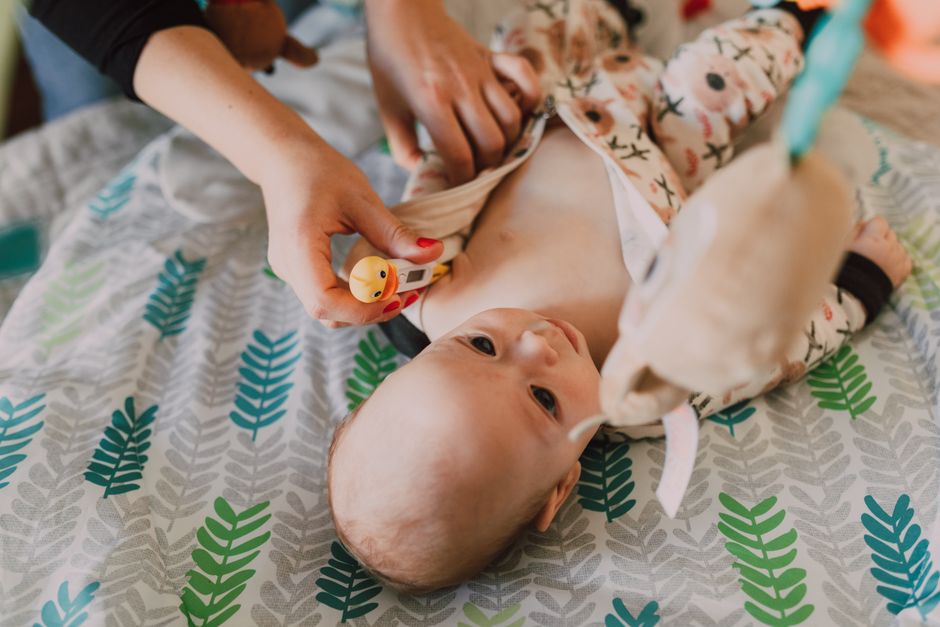
When your toddler has a fever, dress them in one light layer of breathable clothing — like a cotton t-shirt and thin pants or a onesie — and keep the room comfortably cool. Do not bundle them in blankets or heavy pajamas. Do not strip them down to a diaper either. The goal is to let heat escape naturally without making them shiver, because shivering generates more body heat and can push a fever higher.
That single principle — light clothing, comfortable room, no extreme measures — guides almost every decision about dressing a feverish toddler. The details below explain why, and what to do in situations that are not so straightforward.
Why Does Clothing Matter So Much When A Toddler Has A Fever?
A fever is the body’s thermostat resetting to a higher temperature. The hypothalamus — the brain region that controls body temperature — raises the set point in response to infection. Your toddler’s body then works to reach that new, higher temperature.
Clothing either helps or hinders that process. Heavy layers trap heat against the skin and can push body temperature higher than the fever itself would. Too few layers lets heat escape too quickly, which triggers shivering. Shivering is a muscle response that generates heat, and it works against what the body is trying to regulate.
The sweet spot is one light layer that keeps your child comfortable without trapping excess heat. Think of it as helping the body do what it is already trying to do, not forcing the temperature up or down.
How To Dress A Toddler With Fever What To Wear?
Choose a single layer of lightweight, breathable fabric. Cotton works well because it allows air to move and moisture to escape. A short-sleeve t-shirt with thin cotton pants, or a light onesie, is usually enough.
Skip these:
- Fleece pajamas or heavy sleepers
- Multiple layers of clothing
- Hats indoors (they trap heat at the head)
- Tight-fitting synthetic fabrics that do not breathe
- Socks if the child’s feet feel warm to the touch
If your toddler feels cold or is shivering, add one thin layer — a light blanket over the legs, for example. Once the shivering stops, remove it. The clothing should match how your child actually feels, not a fixed rule.
Room temperature matters too. A comfortably cool room — one where a lightly dressed adult would feel fine — supports the body’s natural cooling. There is no single ideal number that applies to every child, but most guidance suggests keeping the room comfortable rather than warm or cold.
Should You Bundle A Feverish Toddler To “Sweat It Out”?
No. The idea that you can sweat out a fever by piling on blankets is a persistent myth, and it can be dangerous. Bundling traps heat and can raise body temperature further, potentially leading to overheating.
Fever is not something to force out through sweating. The body regulates its own temperature through the hypothalamus, and adding layers interferes with that process rather than helping it. Sweating happens when a fever breaks naturally — it is a result of the fever resolving, not a method for resolving it.
Overheating a febrile child can cause dehydration, discomfort, and in serious cases, heat-related complications. The evidence here is clear and long-established: light clothing and a comfortable environment are the appropriate approach.
What About Blankets During Sleep?
Use a light blanket only if your toddler seems cold or is shivering. Once they are asleep and comfortable, a thin cover is fine. Avoid thick comforters, multiple blankets, or heavy sleep sacks.
Check on your child periodically through the night. If they feel hot and sweaty, remove a layer. If they feel cool and are shivering, add a thin one. Their body temperature will fluctuate as the fever rises and falls, so a single setup may not work all night.
For toddlers under two, follow safe sleep guidance: no loose blankets in the crib. A light sleep sack or appropriate pajamas for the room temperature is safer. If your child is under two and has a fever, consult your pediatrician about how to keep them comfortable during sleep.
What Should A Toddler With A Fever Wear Outside?
If you need to take a feverish toddler outside — for a doctor’s visit, for example — dress them in one light layer plus a light jacket or cardigan if it is cool. Do not add extra layers just because they have a fever.
If it is hot outside, keep them in the lightest single layer possible and minimize time in direct sun. If it is cold, a light jacket over their indoor clothing is enough; do not bundle them in a heavy coat, hat, and blankets. The fever is already raising their body temperature, and adding insulation for cold weather can overheat them.
Keep outdoor time brief when your child has a fever. Rest is more important than fresh air in most cases, and extreme temperatures — hot or cold — are harder on a febrile child’s body.
When Should You Call A Doctor?
Dressing your toddler appropriately is supportive care, not treatment. Fever itself is a symptom, and the underlying cause matters more than the number on the thermometer.
Call your pediatrician if your child:
- Is under 3 months old with any fever (rectal temperature of 100.4°F / 38°C or higher)
- Has a fever above 104°F (40°C)
- Is unusually fussy, lethargic, or hard to wake
- Has trouble breathing, a stiff neck, or a rash that does not fade when pressed
- Is not drinking fluids or has signs of dehydration (fewer wet diapers, no tears, dry mouth)
- Has a fever lasting more than three days
- Has a seizure
These are general warning signs. Your pediatrician may have different thresholds based on your child’s health history. When in doubt, call.
Does Fever Medication Change What They Should Wear?
Fever-reducing medication like acetaminophen or ibuprofen lowers the body’s temperature set point. As the fever comes down, your child may start to sweat. That is normal and expected.
Keep them in the same light layer. If they are sweating heavily, you can change them into dry clothes to prevent chills, but do not add layers. Sweating is the body releasing heat, and covering up during that process traps it again.
Follow dosing instructions from your pediatrician or the product label exactly. Ibuprofen is generally not recommended for infants under 6 months. Acetaminophen dosing is based on weight, not age, so check with your doctor for the correct amount.
What About A Lukewarm Bath Or Cool Compress?
Cool compresses or a lukewarm sponge bath can help a child feel more comfortable, but they do not treat the fever itself. Never use cold water or ice — that causes shivering, which raises core temperature and makes things worse.
Some clinicians suggest a lukewarm sponge bath for comfort when a child is very hot and uncomfortable. The evidence for its effect on actual fever reduction is limited. It is not a substitute for medication or medical care when those are needed.
Alcohol rubs are dangerous and should never be used. They can cause alcohol poisoning through the skin and are not an accepted treatment for fever in children.
How Can You Tell If Your Toddler Is Dressed Right?
Touch the back of their neck or their chest. If it feels hot and clammy, they may be overdressed — remove a layer. If it feels cool and they are shivering, add a thin one. Their hands and feet often feel cooler than their core during a fever, so do not use them as your main guide.
Watch for signs of discomfort: flushed cheeks, restlessness, or pulling at their clothes. These can signal that they are too warm. Conversely, curling up and shivering means they need a light extra layer.
The goal is comfort and safety, not a specific outfit. Adjust as their temperature changes throughout the day and night.
Frequently Asked Questions
Should I put a hat on my toddler with a fever?
No. A hat traps heat at the head and can raise body temperature. Keep your toddler’s head uncovered indoors, even if they feel chilly.
Can I let my feverish toddler sleep in just a diaper?
A diaper-only approach is fine if the room is warm and your child seems comfortable, but it can lead to shivering if the room is cool. A single light layer is usually the safer choice.
What temperature should the room be for a toddler with a fever?
Keep the room at a temperature where a lightly dressed adult would feel comfortable. There is no single number that applies to every child, but avoiding a hot or stuffy room is important.
Should I wake my toddler to check their temperature at night?
No, unless your doctor has told you to. Sleep is important for recovery, and waking a comfortable child to check a fever is not necessary.
