
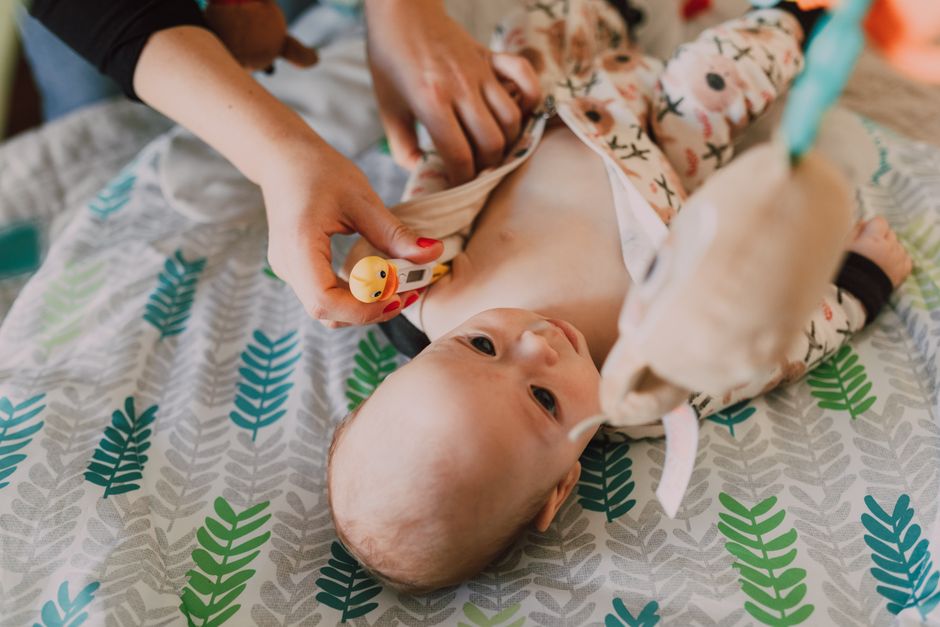
When your baby has a fever at night, the goal of dressing them is simple: keep them comfortable and let the body release heat, not trap it. Dress your baby in one light layer of breathable clothing, keep the room comfortably cool, and use a light blanket or sleep sack only if they seem chilled. Overdressing and heavy blankets can push body temperature higher and make a fever worse.
Most parents worry about the opposite problem. They picture a cold baby and pile on layers. But a fever means the body’s thermostat has been reset higher, and the body is already generating extra heat. Wrapping a feverish baby in thick pajamas and a heavy quilt works against the body’s attempt to cool down.
This guide explains what to put on your baby at night, what to avoid, and when a fever needs a call to the doctor. It covers babies of different ages, because the rules are not the same for a newborn and an older infant.
How To Dress A Baby With Fever At Night Safely?
One light layer is the standard answer. A cotton onesie or a thin cotton pajama set is usually enough for a feverish baby in a normal indoor room.
Cotton and other breathable fabrics let heat and moisture escape. Synthetic fabrics and thick fleece hold heat in. If you can only remember one thing, make it this: breathable fabric, single layer.
Room temperature matters as much as clothing. A room that is comfortable for a lightly dressed adult is generally right for a feverish baby. Most guidance for infant sleep points to a room that feels neither hot nor cold to an adult in light clothing. There is no single number that fits every home, but if you are sweating in a t-shirt, the room is too warm for a feverish baby.
If your baby feels cold or is shivering, that is a signal to add a light layer — not a heavy one. Shivering can happen when a fever is rising, as the body tries to generate heat. Once the fever levels off, the same baby may kick off blankets. Watch your baby, not just the thermometer.
Why Overdressing A Baby With A Fever Is Risky
Overdressing traps heat. When a baby has a fever, the body is trying to shed extra heat through the skin. Layers of thick clothing and heavy blankets block that process.
This can push the temperature higher than the fever would go on its own. In serious cases, trapped heat can contribute to overheating, which is a separate and dangerous problem. Overheating during sleep is also linked to an increased risk of sudden infant death syndrome (SIDS), which is why infant sleep guidance consistently advises against overdressing and against loose bedding for babies under one year.
There is a second risk that surprises many parents. Bundling a feverish child in blankets to “sweat it out” is an old idea with no scientific support. Sweating does not shorten a fever or fight an infection. It only adds heat stress to a body that is already running hot.
Signs that a baby may be too warm include a hot, flushed chest and back, damp hair, rapid breathing, and restlessness. If you see these, remove a layer and check again in a few minutes.
What Should A Feverish Baby Wear To Bed?
A short-sleeved cotton onesie or a light cotton sleeper is a reasonable default. For a baby who seems chilled, a thin long-sleeved cotton sleeper works. Skip the fleece, the quilted sleep sack, and the thick pajamas.
Footed sleepers are fine if they are thin cotton. Socks are optional. A baby’s hands and feet often feel cool during a fever even when the body is warm, because blood flow shifts toward the core. Cool hands and feet alone are not a reason to add layers.
Here is a simple way to think about it:
- Warm room or summer: one thin cotton layer, no blanket for babies under one year
- Normal room: one light cotton layer, plus a light sleep sack if your baby seems chilled
- Cool room: one light cotton layer, plus a thin sleep sack or a single light blanket for babies over one year
For babies under one year, safe sleep guidance says no loose blankets in the crib at all. A wearable sleep sack is the safer option if you want an extra layer. This is about safe sleep, not just fever.



Is It Safe To Use A Blanket On A Baby With A Fever?
For babies under one year, loose blankets in the sleep space are not considered safe, fever or not. A wearable sleep sack is the alternative.
For toddlers and older children, a single light blanket is fine if they seem chilled. If your child kicks it off, that is usually a sign they do not need it. Do not tuck a feverish child in tightly under heavy covers.
If your child is shivering hard and cannot get comfortable, a light blanket can help them settle. Remove it once the shivering stops. The blanket is for comfort during a chill, not for the whole night by default.
What Temperature Should The Room Be?
Keep the room at a temperature that feels comfortable to a lightly dressed adult. Most infant sleep guidance describes this as a room that is not too hot and not too cold, and advises checking the baby rather than relying on a single number.
If you want a reference point, many parents find a room in the range of about 68 to 72°F (20 to 22°C) comfortable for sleep. This is a common comfort range, not a strict medical rule, and some babies sleep well slightly warmer or cooler. What matters more is that the room is not stuffy, that air can move, and that your baby is not sweaty or cold to the touch.
Avoid placing the crib directly under a heating vent or next to a radiator. Avoid heavy sleep sacks meant for winter when the room is already warm. If you use a fan, keep it pointed away from the baby, not directly at them.
How Do You Check If A Baby Is Too Hot Or Too Cold?
Feel the back of the neck or the chest. That tells you more than the hands or feet.
If the neck and chest feel hot and damp, your baby is too warm. Remove a layer. If they feel cool, add a light layer. Hands and feet are unreliable because they often run cool during a fever even when the core is warm.
Other signs to watch:
- Too warm: flushed skin, sweating, damp hair, fast breathing, restlessness, a heat rash
- Too cold: cool neck and chest, shivering, mottled skin, a baby who seems to be trying to curl up for warmth
Check every so often through the night, especially in the first hours after the fever starts. A baby’s temperature can shift as the fever rises and falls. What felt right at bedtime may need adjusting by midnight.
When Should You Call A Doctor About A Baby’s Fever?
Age matters more than the number on the thermometer. A fever in a baby under 3 months old is a reason to call a doctor right away, day or night. Newborns and young infants have immature immune systems, and a fever in this age group needs medical attention even if the baby seems fine otherwise.
For babies 3 months and older, call your doctor if:
- The fever is high or keeps rising despite light clothing and fluids
- Your baby is very sleepy, hard to wake, or not interested in feeding
- There are signs of dehydration, such as fewer wet diapers, a dry mouth, or no tears when crying
- Your baby has trouble breathing, a rash that does not fade when pressed, or a stiff neck
- The fever lasts more than a few days or keeps coming back
- Your baby seems to be getting worse instead of better
Trust your instincts. If something feels wrong, call. You do not need to wait for a specific temperature to ask for help.
What Not To Do When A Baby Has A Fever At Night
Do not bundle your baby up to sweat the fever out. Do not use ice baths, cold water sponging, or alcohol rubs. These can cause shivering, which raises the core temperature, and alcohol can be absorbed through a baby’s skin.
Do not give fever-reducing medicine just to make the number look better if your baby is comfortable and drinking well. If you do give medicine, follow your doctor’s guidance and the dosing on the package for your baby’s weight and age. Never give aspirin to a child.
Do not ignore a fever in a newborn. Do not skip fluids. Offer breast milk, formula, or water (for babies over 6 months) often, because fever increases fluid loss.
Frequently Asked Questions
Should I dress my baby in less clothing if they have a fever?
Yes, dress your baby in one light layer of breathable fabric rather than heavy pajamas. This helps the body release heat instead of trapping it.
Can I put a blanket on my baby with a fever?
For babies under one year, loose blankets are not safe in the crib, so use a light sleep sack instead. For older babies and toddlers, a single light blanket is fine if they seem chilled, and you should remove it if they kick it off.
What room temperature is best for a baby with a fever?
Aim for a room that feels comfortable to a lightly dressed adult, often around 68 to 72°F (20 to 22°C). This is a comfort range, not a strict rule, so check your baby’s neck and chest rather than relying on the number alone.
When is a baby’s fever an emergency?
Any fever in a baby under 3 months old needs a call to the doctor right away. For older babies, seek care if your baby is hard to wake, not feeding, breathing fast, or has a rash that does not fade when pressed.
