
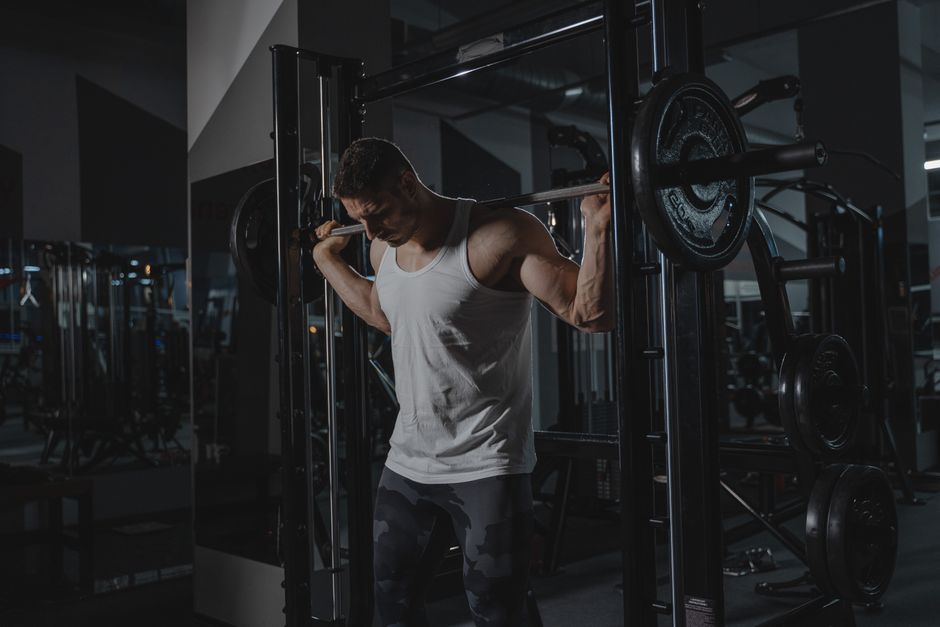
A weighted squat is a hip-hinge and knee-bend movement where you lower your body with a weight held on your back, at your chest, or in your hands, then stand back up. The basics are simple: set your feet about shoulder-width apart, brace your midsection, sit your hips down and back while your knees track over your toes, then drive through your whole foot to stand. Good form matters more than how much weight is on the bar.
Most people can learn a safe bodyweight squat in a few sessions and add weight once the pattern feels controlled. The details below cover setup, depth, common mistakes, and how to progress without wrecking your knees or lower back.
What Equipment Do You Need for Weighted Squats?
You do not need a gym to squat with weight. A single dumbbell, a kettlebell, or a pair of dumbbells covers most home setups. A barbell and squat rack let you load heavier, but they are not required to start.
The equipment you choose changes the movement slightly:
- Bodyweight: the starting point. No load, just the pattern.
- Dumbbells or kettlebells: held at your sides, at your chest (goblet position), or on your shoulders.
- Barbell: rests across your upper back for back squats, or in front of your shoulders for front squats.
- Resistance bands: useful for warm-ups and lighter loading, though they cannot match free weights for heavy strength work.
Whatever you pick, the weight should let you complete every rep with the same control. If the last rep looks sloppy, the weight is too heavy for now.
How To Do Squats With Weights: Step-by-Step
The goblet squat — holding one dumbbell or kettlebell at your chest — is the safest way to learn loaded squats. The weight in front helps keep your torso upright and makes the movement easier to control.
Setup
Stand with feet roughly shoulder-width apart, toes pointed slightly out. Hold a dumbbell vertically against your chest with both hands under the top of the weight. Pull your shoulders back and take a breath into your belly.
The descent
Push your hips back and bend your knees at the same time, as if sitting into a chair. Keep your chest up and your spine neutral. Let your knees travel forward over your toes — that is normal and safe for most people. Lower until your thighs are roughly parallel to the floor, or as far as you can go while keeping your heels down and your back straight.
The ascent
Drive through your whole foot — not just your toes or heels — and stand up. Keep your knees tracking in line with your toes, not caving inward. Exhale as you rise. Squeeze your glutes at the top without leaning back.
For a barbell back squat, the same pattern applies. The bar sits across your upper back (not your neck), your hands grip just outside your shoulders, and you step back from the rack before descending. Have a spotter or use safety bars in a rack when lifting near your limit.
How Deep Should You Squat?
Depth depends on your hips, ankles, and comfort — not on a universal rule. Squatting to thigh-parallel or slightly below is a reasonable target for most healthy adults. Going deeper builds more strength in the bottom position, but only if you can keep your heels down and your lower back from rounding.
If your heels lift off the floor or your back rounds before you reach parallel, you have hit your current limit. That is a mobility issue, not a failure. Work on ankle and hip flexibility, and squat to the depth you can control. Partial squats still build strength; they just train a shorter range.
One clarification worth knowing: the idea that deep squats are bad for healthy knees is not supported by the research. Studies on lifters have generally not found higher rates of knee injury from full-depth squatting. The bigger risk is loading too heavy before you have the control to keep good positions.
What Are the Most Common Squat Mistakes?
Most squat problems come down to a handful of fixable habits. Watch for these:
- Knees caving inward. Push your knees gently outward as you rise so they track over your toes.
- Heels lifting. Often an ankle mobility issue. Try a slightly wider stance, or place small plates under your heels while you work on flexibility.
- Rounding the lower back. This usually means going too deep or too heavy. Reduce depth or load until your back stays neutral.
- Leaning too far forward. Common with back squats. Keep your chest up and brace your core before each rep.
- Bouncing out of the bottom. A controlled pause beats a bounce for building strength and protecting your joints.
If you feel sharp pain — not muscle effort, but joint pain — stop and check your form or see a qualified coach or clinician. Muscle soreness after training is normal; sharp pain during a rep is not.
How Much Weight Should You Start With?
Start lighter than you think you need. For most beginners, bodyweight squats first, then a light dumbbell you can lift for several controlled sets. The right starting weight lets you finish every rep with good form and a little left in reserve.
No universal number applies here — it depends on your strength, experience, and the type of squat. A simple rule: if you cannot keep your back straight and your knees steady on the last rep, drop the weight. Add load gradually, only when the current weight feels easy and controlled across all your sets.
General strength guidance for adults recommends training each major muscle group at least twice a week. Squats fit that pattern well. Two to three squat sessions a week gives most people solid progress without overtraining.
How Do You Progress Safely Over Time?
Progress comes from doing a little more over weeks, not from jumping to heavy weight fast. You can add weight, add reps, add sets, or slow the tempo — any one of these makes the exercise harder.
A practical approach: keep the same weight for a few sessions until every rep feels smooth, then add a small amount. Small, steady increases beat big jumps. Give yourself rest days between hard squat sessions so your muscles can recover.
Warm up first with bodyweight squats and lighter sets. Cold muscles and heavy loads are a poor combination. If you are new to lifting or returning after a long break, a session or two with a coach to check your form is a smart investment.
People with knee, hip, or back conditions, and anyone recovering from injury, should check with a clinician or physical therapist before adding loaded squats. The movement is broadly safe for healthy adults, but individual circumstances vary.
Frequently Asked Questions
How many squats should I do with weights?
Most people do well with two to four sets of eight to twelve reps at a weight they can control. The exact number matters less than keeping good form on every rep.
Are squats with weights safe for your knees?
For healthy adults with good form, weighted squats are not linked to higher rates of knee injury. Sharp knee pain during a rep is a signal to stop and check your technique.
Can I do weighted squats at home without a barbell?
Yes. A dumbbell or kettlebell held at your chest is enough to load the movement well. You can build real strength at home without a rack or barbell.
How often should I do weighted squats?
Two to three sessions a week is a reasonable target for most people. Leave at least a day between hard squat sessions so your muscles can recover.
