
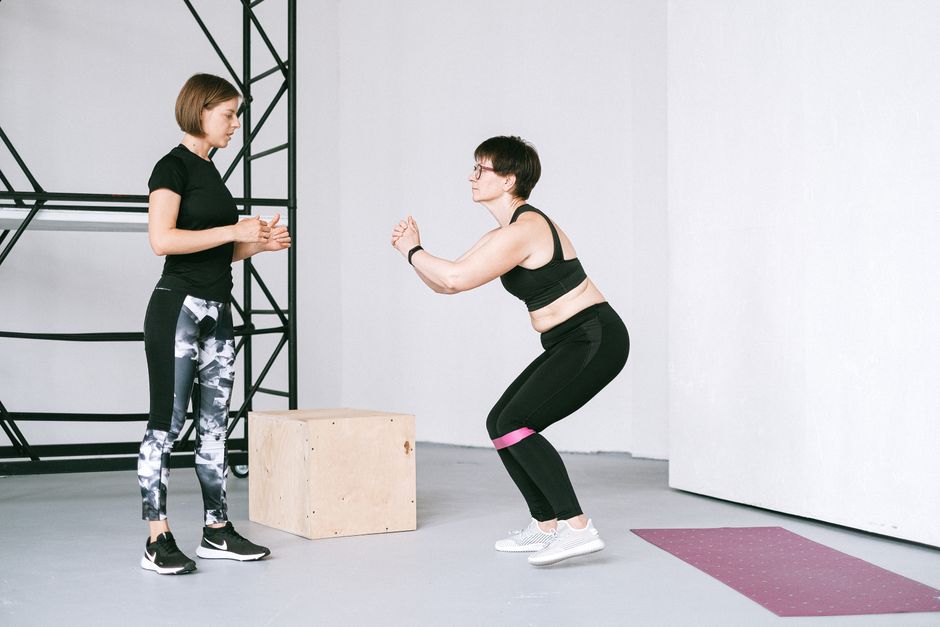
A single leg squat is exactly what it sounds like: standing on one leg, bending the knee and hip, then pushing back up while the other leg stays off the floor. It builds strength in the quads, glutes, and hip stabilizers, and it exposes balance and knee-control problems that a two-legged squat can hide. Most people should start with a chair or a countertop for support, aim for a depth they can control, and add load or range only after the movement feels steady and pain-free.
What Is a Single Leg Squat and What Does It Train?
A single leg squat is a one-legged movement where you lower your body by bending the standing leg, then return to standing. The other leg is not bearing weight. It may reach forward, stay slightly behind you, or hang relaxed.
The exercise loads the same muscles as a regular squat, but the demand shifts. On one leg, the quadriceps, glutes, and hamstrings do all the work that two legs normally share. At the same time, the muscles around the hip and ankle have to keep the knee tracking properly and the pelvis level. That control is the real point of the movement.
Physical therapists and strength coaches use the single leg squat as a screen. How the knee, hip, and trunk behave on one leg can reveal weakness or poor control that never shows up when both feet are planted. It is a common part of return-to-sport testing after knee and hip injuries, though what the test predicts is still debated in the research.
It is not a beginner move. A full single leg squat to a deep position requires substantial strength, mobility, and balance. That is why most sensible progressions start with support and a partial range.
How To Do Single Leg Squats With Proper Form
Good form on a single leg squat means the standing leg does the work, the knee tracks in line with the foot, and the trunk stays controlled. Here is the basic setup.
- Stand on one foot. Keep the other foot off the ground, slightly in front or behind.
- Keep your chest tall and your gaze forward. A slight forward lean of the torso is normal.
- Push your hips back and bend the standing knee to lower your body.
- Let the free leg reach forward or stay near the standing leg for balance.
- Go only as low as you can control. Stop before your form breaks down.
- Push through the whole standing foot to return to the start.
The knee should track roughly over the middle of the foot. If it caves inward, that is a sign the hip muscles are not holding the position yet. Lowering less or using support usually fixes it.
Keep the heel down. If your heel lifts early, you may be running out of ankle mobility or leaning too far forward. Working on ankle range or reducing depth can help.
Do not force depth. A shallow, controlled single leg squat trains the pattern better than a deep, wobbly one. Depth can increase over weeks as strength and control improve.
What Are the Best Progressions for Single Leg Squats?
Progression means making the movement harder in a controlled way. The order below moves from easiest to hardest. Spend time at each stage until it feels steady before moving on.
Supported squat to a chair. Hold a countertop or door frame with one or both hands. Lower to lightly touch a chair behind you, then stand. The chair sets your depth and the hands give you balance.
Supported squat without a chair. Keep the hand support but remove the chair. Lower to a depth you can control, then stand.
Unsupported partial squat. Let go of the support. Lower partway, well above a full depth, and stand. This is where balance becomes the main challenge.
Full single leg squat. Lower to a depth near where the thigh approaches parallel to the floor, if your mobility allows, then stand.
Loaded single leg squat. Add weight with a dumbbell, kettlebell, or goblet hold once bodyweight reps feel solid. Loading is a progression in itself and should come last.
Two other variables matter as much as depth. Range of motion and load both increase difficulty. Adding both at once usually leads to sloppy reps, so change one thing at a time.




How Many Sets and Reps Should You Do?
There is no single correct dose. General strength-training guidance for healthy adults suggests working each major muscle group a few times per week, with enough rest between sessions for recovery.
For a single leg squat, a practical starting point for most healthy adults is a small number of sets per leg, kept well short of failure, done two or three times a week. Because the movement is demanding on one leg, it is easy to overtrain it if you add it to an already heavy leg routine.
Beginners should treat the first few weeks as practice, not a workout to push hard. The goal is clean reps, not fatigue. Once the pattern feels automatic, you can add reps or load.
If you feel sharp pain, joint pinching, or instability you cannot control, stop. Muscle effort is expected. Joint pain is not. Anyone with a recent knee, hip, or ankle injury, or with ongoing joint problems, should get individual guidance before adding this exercise.
What Are the Most Common Mistakes?
Most problems with the single leg squat come down to doing too much, too soon. The knee caving inward is the most common one. It usually means the hip muscles are not yet strong enough to hold the leg steady, and the fix is less depth or added support, not more effort.
Losing balance and grabbing for support is not a failure. It is a signal that the balance component is not ready. Going back to a supported version for a few weeks is the fastest way forward.
Rounding the lower back or letting the torso collapse forward often means the depth is too deep for current control. Staying taller and shallower keeps the spine in a better position.
Rushing the reps hides control problems. Slowing the lowering phase makes the movement harder in a useful way and gives you time to notice your knee and hip position.
Training only one leg and ignoring the other creates a strength gap. Both sides should get equal work, even if one side is noticeably weaker. The weaker side often sets the pace.
Who Should Avoid Single Leg Squats?
Single leg squats are not for everyone, at least not right away. People with significant knee, hip, or ankle pain should not push through it. Pain during a loaded single-leg movement is a reason to stop and get it checked.
Anyone recovering from a knee ligament injury, hip surgery, or ankle injury should follow the guidance of their clinician rather than a general program. The single leg squat is sometimes used in rehabilitation, but the timing and dosage are individual.
People with poor balance or a history of falls should use solid support and stay within a range they can control. Balance training can improve with practice, but starting unsupported is not wise.
If you are unsure whether the movement is appropriate for you, a physical therapist or qualified trainer can assess your specific situation. General advice cannot account for an individual joint or medical history.
Why the Single Leg Squat Matters Beyond the Gym
The single leg squat trains a pattern you use constantly in daily life. Climbing stairs, getting out of a car, and standing up from a low seat all involve pushing off one leg while the other does less. Strength and control on one leg support those everyday movements.
It also builds the kind of balance and hip control that helps during walking and changing direction. That said, no single exercise prevents injury on its own. Claims that one movement prevents knee injuries or fixes running form are not supported by strong evidence. The single leg squat is a useful training tool, not a guarantee.
The value is in what it reveals and what it builds: leg strength, hip stability, and control. Treat it as one part of a balanced routine, not a fix for everything.
Frequently Asked Questions
How do I start single leg squats if I can’t balance on one leg?
Start with a supported version, holding a countertop or door frame with one or both hands, and lower only partway. Balance usually improves with practice, so you can reduce the hand support over time.
How deep should a single leg squat go?
Go only as deep as you can control without your knee caving in or your heel lifting. Depth can increase gradually as strength and mobility improve.
How many single leg squats should I do?
There is no single correct number, but a small number of controlled sets per leg, two or three times a week, is a reasonable starting point for most healthy adults. Add reps or load only once the movement feels steady.
Are single leg squats bad for your knees?
Not inherently, and they are widely used in strength and rehabilitation programs. The main risks come from going too deep or too heavy before you have the control to support it, which is why progressions matter.
