
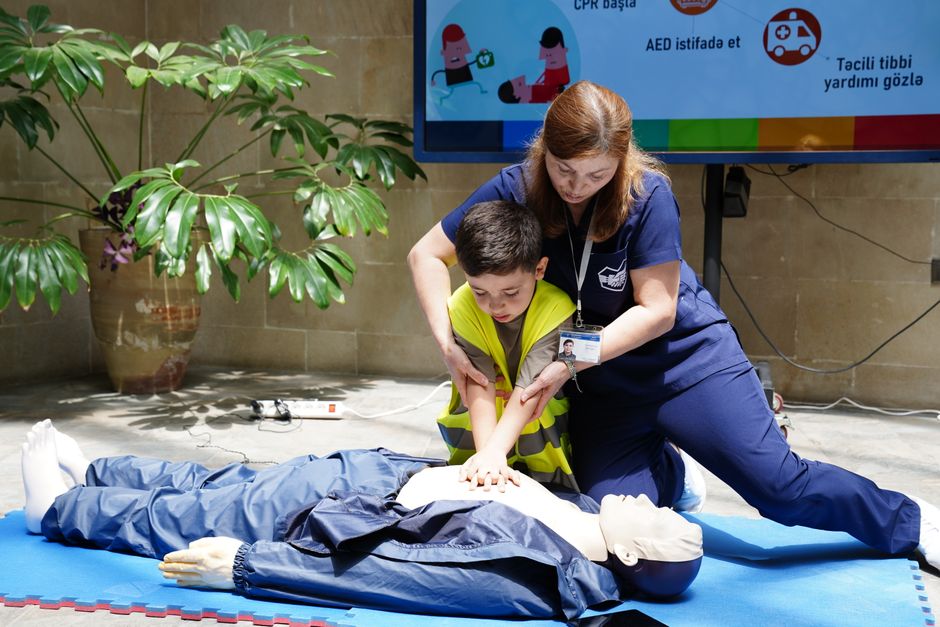
Cardiopulmonary resuscitation, or CPR, is a set of actions anyone can learn to keep blood moving to the brain and heart when someone’s heart stops beating. The steps are simple: check that the scene is safe, see if the person responds, call 911 or have someone else call, and start hard, fast chest compressions in the center of the chest at a rate of 100 to 120 per minute. If you are trained and willing, give rescue breaths after every 30 compressions. If you are not trained, hands-only CPR on its own saves lives.
How To Do Cardiopulmonary Resuscitation? Step By Step
When someone collapses and is not breathing normally, their heart has likely stopped pumping. Every minute without CPR drops their chance of survival by roughly 10 percent. That is why the steps below are built around one goal: restarting circulation as fast as possible.
Here is the sequence, in order.
- Check the scene. Make sure it is safe for you to approach. You cannot help anyone if you become a second victim.
- Check for response. Tap the person’s shoulder and shout, “Are you okay?”
- Call for help. If they do not respond, call 911 or tell a specific person to call. Ask for an AED (automated external defibrillator) if one is nearby.
- Check breathing. Look at the chest for no more than 10 seconds. Gasping, snoring, or occasional noisy breaths are not normal breathing. Treat them as cardiac arrest.
- Start compressions. Place the heel of one hand on the center of the chest, put your other hand on top, and push hard and fast.
- Use an AED as soon as it arrives. Turn it on and follow the voice prompts. Do not stop compressions while it is being set up unless the AED tells you to.
- Keep going until help takes over. Do not stop unless the person wakes up, an AED tells you to pause, or EMS arrives.
If you are trained in CPR and confident giving breaths, do 30 compressions then 2 rescue breaths, and repeat. If you are not trained, or you are unsure, keep doing compressions only. Hands-only CPR is what the American Heart Association recommends for untrained bystanders.
How Hard and How Fast Should Chest Compressions Be?
Push at least 2 inches deep on an average adult. Push at a rate of 100 to 120 compressions per minute. That is roughly the beat of “Stayin’ Alive” by the Bee Gees.
Depth and speed matter more than almost anything else. Compressions that are too shallow do not move enough blood. Compressions that are too slow do not create enough pressure to reach the brain.
Let the chest come all the way back up between compressions. This is called full recoil. If you lean on the chest, the heart cannot refill with blood, and the next compression pushes less of it out.
Do not be afraid of hurting the person. Broken ribs happen. A person in cardiac arrest is clinically dead without CPR. Rib fractures are a survivable problem. Doing nothing is not.
What Is Hands-Only CPR and When Should You Use It?
Hands-only CPR means compressions with no rescue breaths. It is recommended for untrained bystanders, and for anyone who is unwilling or unable to give mouth-to-mouth.
For the first few minutes after cardiac arrest, the blood still holds a fair amount of oxygen. Compressions alone can circulate that oxygen to the brain and heart. This is why hands-only CPR works well for the first several minutes of an adult cardiac arrest.
Hands-only CPR is not the right choice in every situation. Use conventional CPR with breaths if:
- The person collapsed from drowning, choking, or a drug overdose
- The person is a child or infant
- You are trained and willing to give breaths
- EMS is more than a few minutes away
In these cases, the underlying problem is usually a lack of oxygen, not a primary heart rhythm problem. Breaths matter more here.





How Do You Give Rescue Breaths Correctly?
Open the airway first. Tilt the head back gently and lift the chin. This moves the tongue away from the back of the throat so air can reach the lungs.
Pinch the nose shut. Take a normal breath, seal your mouth over theirs, and blow for about one second. Watch for the chest to rise. If it does not rise, reposition the head and try again.
Give two breaths, then return to compressions. The cycle is 30 compressions to 2 breaths. Keep the pause between compressions and breaths short. Every second off the chest is a second the brain is not getting blood.
Do not over-breathe. Big, forceful breaths push air into the stomach, which causes vomiting and makes CPR harder. A normal breath is enough.
What About CPR for Children and Infants?
Children and infants usually go into cardiac arrest because of a breathing problem, not a heart rhythm problem. That changes the approach.
For children, use one or two hands on the chest, depending on the child’s size. Push about 2 inches deep, or one-third the depth of the chest. For infants, use two fingers on the center of the chest, just below the nipple line. Push about 1.5 inches deep, or one-third the depth of the chest.
For both children and infants, give 30 compressions then 2 breaths if you are alone. If two rescuers are present, the ratio changes to 15 compressions to 2 breaths. Use the same rate of 100 to 120 compressions per minute.
If you witnessed the child suddenly collapse and you are alone, call 911 first, then start CPR. If you did not witness the collapse, give 2 minutes of CPR before calling 911. The child likely needs oxygen fast.
What Does an AED Do and How Do You Use One?
An AED is a portable device that checks the heart’s rhythm and delivers a shock if a shockable rhythm is present. It is the only thing besides CPR that has been shown to restart a stopped heart in the field.
Using an AED is simpler than most people expect. Turn it on. It will talk you through every step.
- Expose the bare chest and dry it if wet
- Attach the pads as shown on the pictures. One goes on the upper right chest, the other on the lower left side
- Plug in the connector if it is not already attached
- Stand clear while the AED analyzes the rhythm
- If it says “shock advised,” make sure no one is touching the person, then press the shock button
- Resume compressions immediately after the shock
If the person has a lot of chest hair, the pads may not stick. Some AED kits include a razor. If not, press the pads down firmly. Do not delay compressions to fix this.
When Should You Stop CPR?
Continue CPR until one of these happens:
- The person wakes up, moves, or breathes normally on their own
- EMS or another trained responder takes over
- An AED tells you to stop and analyze the rhythm
- You are physically unable to continue
Do not stop because you are unsure if it is working. CPR rarely looks like it is working. The chest may not rise much. The person may not respond. That does not mean you should stop.
If you are alone and exhausted, keep going as long as you can. Swap with another bystander every two minutes if possible. Fatigue makes compressions shallow, and shallow compressions do not circulate blood.
How Do You Know If Someone Needs CPR?
Start CPR if the person is unresponsive and not breathing normally. That is the whole test.
Gasping is the most commonly missed sign. Many people in cardiac arrest make occasional gasping sounds that look like breathing but are not. If you see gasping, start CPR.
Do not spend time checking for a pulse unless you are a trained healthcare provider. Even trained providers sometimes struggle to find a pulse quickly, and every second spent searching is a second without compressions.
If you are wrong and the person did not need CPR, the risk of harm is low. If you are right and you do nothing, the person will almost certainly die.
Frequently Asked Questions
How fast should chest compressions be?
Push at a rate of 100 to 120 compressions per minute. That matches the beat of the song “Stayin’ Alive.”
Can I do CPR without giving breaths?
Yes. Hands-only CPR is recommended for untrained bystanders and is effective for adult cardiac arrest in the first few minutes. Use conventional CPR with breaths for children, drowning, choking, or overdose.
How deep should I push during CPR on an adult?
Push at least 2 inches deep on an average adult chest. Let the chest come all the way back up between compressions.
What if I am not sure the person needs CPR?
If the person is unresponsive and not breathing normally, start CPR. Gasping or occasional noisy breaths count as not breathing normally.
