
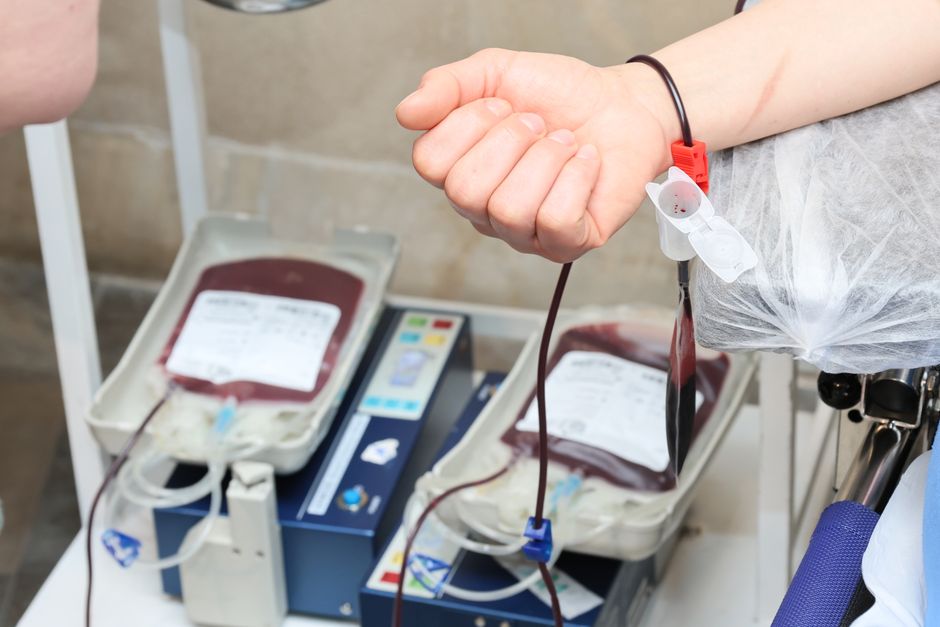
Blood typing identifies which of the four main blood groups you belong to: A, B, AB, or O. It also checks your Rh factor, which is either positive or negative. In a lab, a technician mixes your blood with antibodies to see if it clumps, which reveals your type. At-home kits work the same way but use a small finger prick and a test card you read yourself. Lab testing is the gold standard for medical decisions, while home kits give you a quick answer for personal knowledge.
How Blood Typing Actually Works
Your blood type depends on antigens. Antigens are proteins and sugars that sit on the surface of your red blood cells. If you have A antigens, you are type A. If you have B antigens, you are type B. If you have both, you are type AB. If you have neither, you are type O.
The Rh factor is another antigen. If you have it, you are Rh positive. If you lack it, you are Rh negative. This is why you hear blood types described as A positive or O negative.
Your immune system makes antibodies against the antigens you lack. A person with type A blood has anti-B antibodies. A person with type O blood has both anti-A and anti-B antibodies. This is why transfusion compatibility matters. Giving the wrong blood triggers an immune attack that can be fatal.
How To Do Blood Typing Lab And At Home Methods: Step by Step
Both lab and home methods rely on the same principle: mixing your blood with known antibodies and watching for clumping, which is called agglutination.
Lab method: A phlebotomist draws blood from your arm into a tube. The lab places a drop of your blood on a slide or in a well. They add anti-A serum to one drop and anti-B serum to another. They also test with anti-D serum for the Rh factor. If your blood clumps with anti-A, you have A antigens. If it clumps with anti-B, you have B antigens. If it clumps with anti-D, you are Rh positive.
Home method: You prick your finger with a lancet. You apply blood to the marked circles on a test card. Each circle contains dried antibodies. You add a drop of water or buffer solution. You gently mix and wait about 30 to 60 seconds. The card shows clumping in the circles where your blood reacts. You read the pattern against the included chart.
Home kits are straightforward but require you to follow the instructions exactly. Too much blood or too little water can give a false reading. Reading the results too early or too late can also cause mistakes.
Reading Your Results Correctly
The pattern of clumping tells you your type. Here is how to interpret it:
- Clumping with anti-A only: Type A
- Clumping with anti-B only: Type B
- Clumping with both anti-A and anti-B: Type AB
- No clumping with either: Type O
- Clumping with anti-D: Rh positive
- No clumping with anti-D: Rh negative
For example, if your blood clumps with anti-A and anti-D but not anti-B, you are A positive. If it clumps with nothing at all, you are O negative. O negative is the universal donor type because it lacks all major antigens.
A common mistake is misreading weak clumping as no reaction. Tiny specks or a cloudy appearance can be hard to judge. If you are unsure, repeat the test with a fresh card.




Are At Home Blood Typing Kits Accurate?
At home kits are generally reliable when used correctly. They use the same antibody-antigen reaction as lab tests. Some studies suggest that user error is the main source of incorrect results, not the kit itself.
The key limitation is that home kits test only the major antigens. They do not test for minor blood group systems that matter in some medical situations. For routine personal knowledge, this is rarely an issue. For medical decisions, it matters.
Home kits also cannot detect weak antigen reactions. Some people have a weaker A or B antigen that may not clump visibly on a card. A lab can use additional techniques to confirm these cases.
If you are donating blood or receiving a transfusion, never rely on a home test. Blood banks always perform their own typing and crossmatching. They do this every single time, regardless of what any previous test showed.
Why Blood Type Matters for Your Health
Knowing your blood type is essential for blood donation and transfusion. It also matters during pregnancy. If an Rh negative mother carries an Rh positive baby, her immune system can make antibodies against the baby’s blood. This can cause complications in a second pregnancy with another Rh positive baby. Medical guidelines recommend Rh immunoglobulin injections for Rh negative pregnant women to prevent this.
Blood type also affects who can receive your blood. Type O negative blood can go to anyone in an emergency. Type AB positive people can receive blood from any donor, which is why they are called universal recipients.
Some research has looked at whether blood type affects disease risk. Studies have suggested links between blood type and conditions like stomach ulcers, certain cancers, and heart disease. The evidence is mixed and not strong enough to change medical care. Your blood type does not determine your health destiny.
Limitations and Risks of Home Testing
Home blood typing is safe because it uses a sterile lancet and your own blood. The main physical risk is minor pain or bruising at the prick site. Infection is possible if you do not clean your finger first or if the lancet is reused. Always use a new lancet and wash your hands before testing.
The bigger risk is a wrong result. A false reading can lead you to believe you are a different type than you actually are. This becomes dangerous only if you act on it in a medical setting. If you tell a doctor you are type A but you are actually type B, that misinformation could cause problems during an emergency transfusion.
No home test can replace a lab test for medical purposes. If your blood type matters for a procedure, a medical decision, or pregnancy, the lab will test you themselves. They will not accept your home kit result.
Some people test their children at home. This is generally safe, but children may be more anxious about finger pricks. Also, a child’s blood type may not match what parents expect. This can create family stress. Consider whether this information is necessary before testing a child.
When To Get a Professional Blood Test
You should get a lab blood test if your blood type matters for any medical reason. This includes before surgery, during pregnancy, or if you plan to donate blood. Blood banks and hospitals always perform their own testing.
You might also want a professional test if a home kit gives you an unclear result. A lab can use more sensitive methods and confirm your type with certainty.
Some people want to know their blood type simply out of curiosity. For that purpose, a home kit is fine. Just understand the difference between knowing your type for personal knowledge and having a documented result in your medical record.
Your doctor can order a blood type test as part of routine blood work. This is a simple test that requires no special preparation. You do not need to fast. The results are usually available within a day or two.
Frequently Asked Questions
Can I determine my blood type at home?
Yes, at home blood typing kits are available and use a finger prick with a test card. They are generally accurate when instructions are followed exactly, but they are not a substitute for lab testing in medical situations.
What do the clumps on a blood typing card mean?
Clumping, or agglutination, means your blood reacted with the antibody in that circle. The pattern of which circles clump tells you your ABO type and Rh factor.
Is it safe to test my blood type at home?
Yes, the physical risk is minimal when you use a sterile lancet and clean your finger first. The main risk is misreading the results, so follow the instructions carefully and confirm with a lab test if the result matters medically.
Why do hospitals retest my blood type if I already know it?
Hospitals always retest because transfusion errors are dangerous and a previous test could be wrong or misreported. Standard practice requires fresh testing every time blood is needed.
