
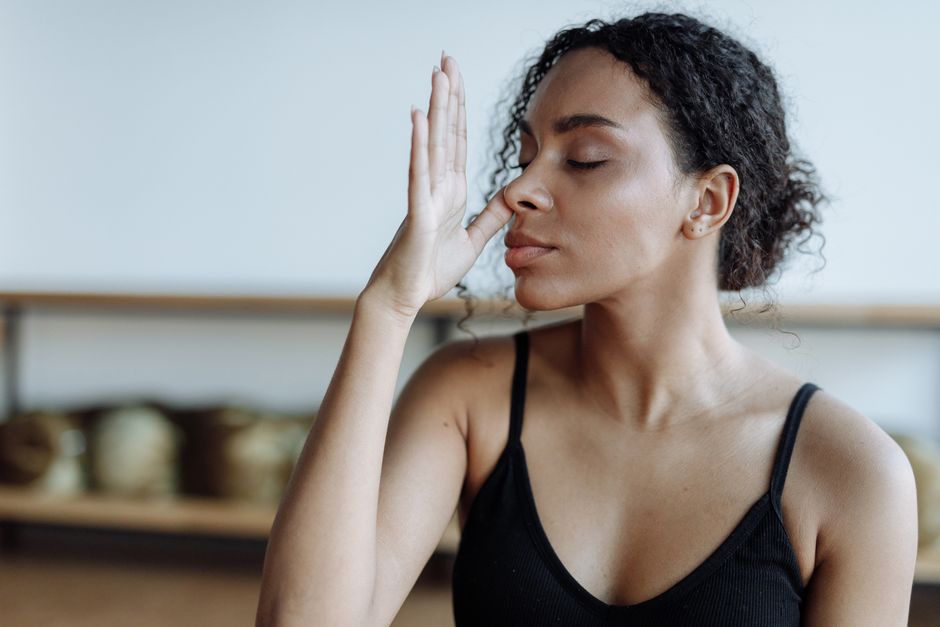
Bhramari pranayama, often called humming bee breath, is a simple breathing technique where you make a humming sound while exhaling. To do it, sit comfortably, close your eyes, place your fingers over your ears, take a deep breath in, and hum loudly as you breathe out. This practice is known for its calming effect on the mind and is considered one of the gentlest forms of pranayama, or breath control, in yoga.
What Is Bhramari Pranayama?
Bhramari comes from the Sanskrit word bhramar, which means bumblebee. The name comes from the humming sound the practice produces. It is a breathing exercise that focuses on the exhale, which naturally helps slow the heart rate and calm the nervous system.
Unlike some other pranayama techniques that involve forceful breathing or breath retention, Bhramari is gentle. Most people can do it safely, even those new to yoga or meditation. The humming vibration is also part of the practice, and many people find the sensation soothing.
How To Do Bhramari Pranayama Step By Step
Here is the standard method taught in most yoga classes. Find a quiet place where you will not be disturbed. Sit on the floor with your legs crossed or on a chair with your feet flat. Keep your spine tall and your shoulders relaxed.
- Close your eyes and take a few normal breaths to settle in.
- Place your index fingers or thumbs gently over your ears. You are not plugging them tightly. You are simply covering the opening to muffle outside sound.
- Keep your mouth closed. Relax your jaw.
- Inhale slowly and deeply through your nose.
- As you exhale, make a low, steady humming sound, like a bee. Keep the hum smooth and even for the entire exhale.
- Feel the vibration in your head, throat, and chest.
- When the exhale finishes, inhale again through the nose and repeat.
Start with five rounds. As you get comfortable, you can work up to ten rounds. Each round should feel effortless. If you feel dizzy or lightheaded, stop and return to normal breathing.
A common mistake is forcing the hum too loudly. The sound should be comfortable and natural. You are not trying to be loud. You are trying to create a steady vibration.
What Does Bhramari Pranayama Do to Your Body?
The exhale is the part of breathing that activates the parasympathetic nervous system. This is the system responsible for rest and digestion. When you extend your exhale with a humming sound, you are directly signaling your body to relax.
Research on Bhramari is limited but growing. Some studies suggest that regular practice can lower heart rate and reduce blood pressure in the short term. A 2017 study published in the International Journal of Yoga found that Bhramari pranayama reduced heart rate and respiratory rate in healthy medical students after just a few minutes of practice.
The humming creates a vibration that travels through the skull. This vibration may stimulate the vagus nerve, which runs from the brain to the abdomen and plays a major role in calming the body. This is a plausible mechanism, but more research is needed to confirm exactly how much of the calming effect comes from the vibration versus the slow breathing itself.
Some research also suggests that humming increases nitric oxide in the nasal passages. Nitric oxide is a molecule that helps open blood vessels and may support respiratory health. A small 2015 study in Medical Hypotheses proposed that humming could increase nasal nitric oxide levels, but this has not been confirmed in large trials.





What Are the Benefits of Bhramari Pranayama?
The main benefit people report is a sense of calm and reduced anxiety. Because the practice forces you to focus on the sound and the breath, it acts as a form of meditation. It gives your mind a single point of attention, which can help break the loop of racing thoughts.
Some potential benefits reported in studies and clinical practice include:
- Reduced stress and anxiety: The slow exhale and focused attention activate the relaxation response.
- Lower heart rate and blood pressure: Short-term reductions have been observed in several small studies.
- Improved sleep: Many people use Bhramari before bed to wind down. The evidence for this is mostly anecdotal, but the calming mechanism is sound.
- Reduced tension headaches: The vibration in the head and face may help relax tense muscles. Some yoga teachers recommend it for this purpose, though clinical evidence is limited.
- Improved focus and concentration: The practice trains attention, similar to other meditation techniques.
None of these benefits are guaranteed. Individual results vary. What works for one person may not work for another. The evidence base is small, but the practice is low-risk and easy to try.
When Should You Not Do Bhramari Pranayama?
Bhramari is considered safe for most people, but there are situations where you should avoid it. If you have an active ear infection or a condition that affects your inner ear, skip the practice. The vibration may worsen your symptoms.
If you have high blood pressure, be careful. Some forms of pranayama can raise blood pressure, especially those involving breath retention. Bhramari does not involve retention, which makes it safer, but you should still monitor how you feel. If you feel any discomfort, stop.
If you are pregnant, the practice is generally considered safe in the first trimester. Some teachers recommend avoiding it later in pregnancy because lying down or certain seated positions may be uncomfortable. No clinical guidelines currently exist specifically for Bhramari during pregnancy. Talk to your healthcare provider if you have concerns.
Do not practice Bhramari when you have a blocked nose from a cold or allergy. You need to breathe through your nose for this technique. If you cannot breathe through your nose, the practice will not work. Wait until your congestion clears.
If you have epilepsy or a seizure disorder, check with your doctor first. Any breathing practice that changes oxygen and carbon dioxide levels in the blood has the potential to trigger seizures in susceptible individuals. The risk with Bhramari is low, but it is not zero.
How Is Bhramari Different From Other Breathing Exercises?
There are many types of pranayama, and each has a different effect on the body. Understanding the differences can help you choose the right practice for your needs.
Bhramari is unique because it uses sound. The humming creates a vibration that other breathing techniques do not produce. It is also one of the most passive forms of pranayama. You are not forcing the breath or holding it.
Compare this to Kapalabhati, or skull shining breath, which involves forceful exhales and active pumping of the abdomen. Kapalabhati is energizing and stimulating. Bhramari is calming and grounding. They are almost opposites.
Anulom Vilom, or alternate nostril breathing, involves closing one nostril at a time and switching sides. It is also calming, but it requires more coordination and focus than Bhramari.
Ujjayi breath involves a soft hissing sound in the throat. It is similar to Bhramari in that it produces sound, but the sound is made in the throat rather than the nasal passages. Ujjayi is often used during yoga asana practice, while Bhramari is typically done in a seated meditation posture.
If you are new to breathing exercises, Bhramari is a good place to start. It is simple, gentle, and hard to do incorrectly.
How Long Should You Practice Bhramari?
There is no official recommendation for how long to practice Bhramari. Yoga traditions vary. Some teachers suggest five minutes daily. Others recommend three rounds in the morning and three rounds at night.
What matters more than duration is consistency. A short daily practice is more effective than a long practice you do once a week. If you can commit to five minutes a day, that is a reasonable goal.
Some people find that Bhramari works best as a quick reset during a stressful day. A single round of humming breath can be done anywhere, even at your desk. You do not need a yoga mat or a quiet room to benefit from one round.
Listen to your body. If you feel calmer after three rounds, stop there. If you want more, add more. The practice should never feel like a chore or a struggle.
Does Bhramari Work for Anxiety and Sleep?
Anxiety and sleep problems are the two most common reasons people try Bhramari. The logic is sound. Slow breathing activates the parasympathetic nervous system, which lowers heart rate and reduces the stress response.
Some small studies have looked at Bhramari specifically for anxiety. Results are promising but not conclusive. A 2019 study in the Journal of Clinical and Diagnostic Research found that Bhramari pranayama reduced anxiety scores in nursing students. The study was small, and the results need to be replicated in larger trials.
For sleep, the evidence is mostly anecdotal. Many people report that doing Bhramari before bed helps them fall asleep faster. The practice is a form of mindfulness, and mindfulness has been shown in multiple studies to improve sleep quality. If Bhramari helps you wind down, use it. If it does not, try another technique.
The honest position is this: Bhramari is a low-risk practice with real potential to help with anxiety and sleep. The evidence is not strong enough to call it a treatment for either condition. It is best used as a tool alongside other healthy habits like regular exercise, good sleep hygiene, and professional care when needed.
Frequently Asked Questions
Can Bhramari pranayama be done lying down?
Yes, you can do Bhramari lying down if that is more comfortable for you. The key is to keep your body relaxed and your spine in a neutral position.
How many rounds of Bhramari should I do daily?
Start with five rounds and increase to ten as you get comfortable. Consistency matters more than the number of rounds.
Why do I feel dizzy after Bhramari pranayama?
Dizziness can happen if you are breathing too deeply or forcing the exhale. Stop the practice and return to normal breathing until the feeling passes.
Can children do Bhramari pranayama?
Children can do Bhramari, and many enjoy the buzzing sound. Keep the practice short and make it playful rather than strict.
