
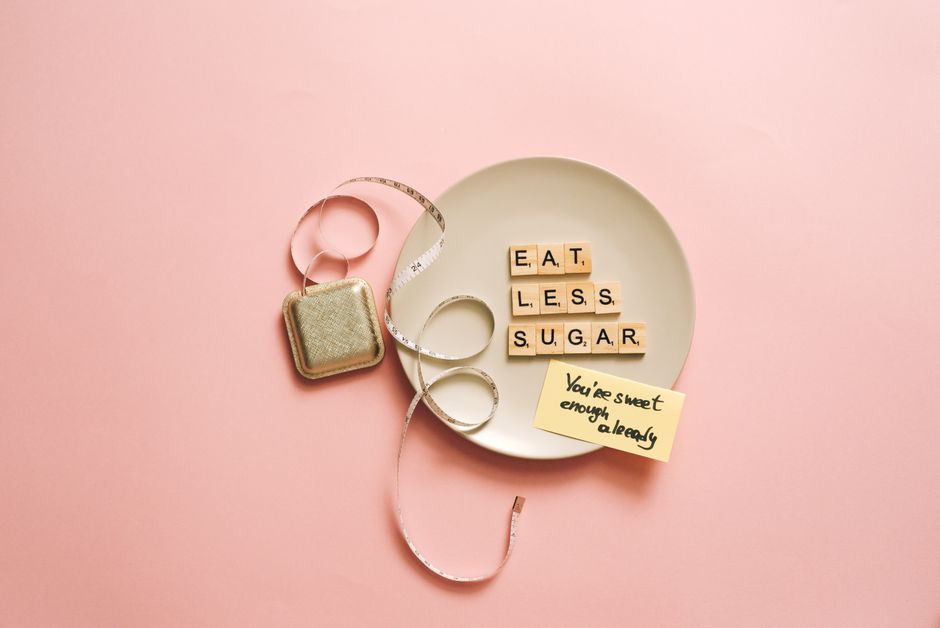
A sugar-free diet works when you change what you keep in the house, read labels for added sugars under every name they hide behind, and replace sweet drinks first. Those three steps do more than willpower ever will. The goal is not to ban every molecule of sugar. It is to cut added sugars while keeping the foods that actually feed you.
What Counts as Sugar on a Sugar-Free Diet?
Sugar is not one ingredient. It is a category, and the label rarely says “sugar” more than once.
Added sugars include table sugar, honey, maple syrup, agave, corn syrup, high-fructose corn syrup, dextrose, maltose, sucrose, and fruit juice concentrate. Food manufacturers use dozens of names because ingredients are listed by weight, and splitting sugar across five names pushes each one lower on the list.
Naturally occurring sugars are a different matter. The sugar in a whole apple comes packaged with fiber, water, and micronutrients. The sugar in a soda comes alone. Your body handles these differently, though the difference is smaller than some diet books claim. Fiber slows absorption and blunts the blood glucose spike. It does not make the sugar disappear.
This is where most people get confused. A strict sugar-free diet means no added sugar and limited natural sugar. A realistic sugar-free diet means cutting added sugar to near zero and keeping whole fruit. The second version is what most clinicians mean when they talk about reducing sugar intake.
One clarification worth making: the World Health Organization recommends keeping free sugars — those added by manufacturers, cooks, or consumers, plus the sugars in honey, syrups, and fruit juice — below 10% of total daily calories, with additional health benefits suggested below 5%. For a 2,000-calorie diet, 10% is about 50 grams or 12 teaspoons. That is the reference point, not zero.
How To Do A Sugar Free Diet Steps That Actually Work?
The steps that work are unglamorous. They target your environment and your habits, not your motivation.
Step 1: Clear the obvious sources. Sugary drinks are the single largest source of added sugar in the typical American diet. Soda, sweet tea, energy drinks, and sweetened coffee drinks deliver sugar fast and do not make you full. Replace them with water, sparkling water, or unsweetened tea. This one change often cuts added sugar by half.
Step 2: Read the label every time. Look at the “Added Sugars” line on the Nutrition Facts panel. It is listed in grams. Four grams equals about one teaspoon. A flavored yogurt can carry 15 grams. A granola bar can carry 12. A pasta sauce can carry 10. None of these taste sweet enough to warn you.
Step 3: Cook more than you buy. When you make your own food, you control the sugar. Bottled dressings, marinades, and sauces are common hidden sources. Oil, vinegar, lemon, and herbs cover most of the same ground.
Step 4: Change breakfast first. Breakfast is where added sugar hides most comfortably — cereal, flavored oatmeal, pastries, flavored yogurt, juice. Eggs, plain yogurt with fresh fruit, or unsweetened oatmeal with nuts are workable swaps.
Step 5: Expect a rough first week. Sugar activates reward pathways in the brain, and cutting it sharply can produce headaches, fatigue, and irritability for several days. This is a real adjustment, not a sign you are doing it wrong. Symptoms typically ease within a week or two.
Step 6: Do not replace sugar with sugar alcohols and expect no consequences. Products sweetened with erythritol, sorbitol, or maltitol are lower in sugar, but large amounts can cause bloating and loose stools. They are not automatically better for you. They are different.
Which Foods Have Hidden Added Sugar?
The foods that surprise people most are the savory ones.
- Bread and rolls — many commercial loaves add sugar for browning and shelf life
- Pasta sauce and ketchup — often 8 to 12 grams per half-cup
- Salad dressings — especially “light” and “fat-free” versions
- Flavored yogurt — plain yogurt has natural lactose; flavored adds much more
- Breakfast cereals and granola — even “healthy” ones
- Cured meats — bacon, ham, and sausage often contain sugar
- Protein bars and meal replacement shakes
- Nut butters with added sugar or chocolate
- Canned soups and broths
- Instant oatmeal packets
You do not need to eliminate all of these. You need to know which ones you eat often and find a lower-sugar version of those. A person who eats bread twice a day has a different problem than someone who eats it twice a month.
Is Fruit Allowed on a Sugar-Free Diet?
Whole fruit is generally fine. Fruit juice is not.
The difference is structure. A whole orange contains fiber and water that slow how fast the sugar reaches your bloodstream. A glass of orange juice delivers the sugar from three or four oranges in under a minute, with the fiber stripped out. The calories add up the same way; the fullness does not.
Dried fruit sits in the middle. It keeps some fiber but concentrates sugar into a small volume, which makes overeating easy. A handful of raisins contains far more sugar than a handful of grapes.
If you have diabetes or prediabetes, fruit still belongs in your diet, but portion and timing matter more. This is a conversation to have with your clinician or a registered dietitian, not something to figure out from a magazine article.
Can You Quit Sugar Cold Turkey?
You can, and some people find it easier than tapering. A clean break removes the decision-making. There is nothing to negotiate with at 9 p.m. because there is nothing in the cabinet.
The tradeoff is that withdrawal symptoms tend to hit harder when you stop abruptly. Headaches, low mood, and cravings are common in the first few days. Some people find a two-week taper more manageable.
Neither approach has been shown in head-to-head trials to be superior for long-term success. What the evidence does support is that people who change their food environment succeed more often than people who rely on restraint alone. Willpower is a limited resource. A kitchen with no ice cream in it does not require willpower.
What About Sugar Substitutes?
Non-nutritive sweeteners — aspartame, sucralose, saccharin, stevia, monk fruit — provide sweetness without the calories. Whether they help with weight or health outcomes is genuinely unsettled.
Some studies suggest they can help reduce total calorie intake when used to replace sugary drinks. Other research raises questions about effects on gut bacteria and glucose metabolism. The evidence is mixed, and the studies point in different directions.
What is clearer: swapping a daily soda for a diet soda is likely a net improvement for most people, but it is not the same as switching to water. If your goal is to reduce your dependence on sweet tastes, artificial sweeteners keep that dependence alive.
How Long Until a Sugar-Free Diet Feels Normal?
Taste preferences do shift, but not overnight. Most people report that foods they once found mildly sweet start tasting much sweeter after several weeks of reduced sugar. This is a real phenomenon — taste receptors adapt to repeated exposure, and the change is generally reported within a month or two.
The first week is the hardest. The second week is easier. By the fourth week, many people notice they no longer crave sugar the way they did. This timeline is based on patient reports and general clinical experience, not on controlled trials with fixed endpoints.
Slip-ups do not reset the clock. A single dessert does not undo a month of change. What matters is what you do the next morning.
When Should You Talk to a Doctor First?
Talk to a clinician before making large dietary changes if you take insulin or a sulfonylurea for diabetes, since reducing sugar intake can cause blood glucose to drop too low. Medication doses may need adjustment.
The same applies if you have a history of an eating disorder. Restrictive food rules can be genuinely harmful in that context, and a sugar-free diet is a form of restriction. This is not a case where you should try it and see.
For most healthy adults, cutting added sugar is low risk. But “most” is not “everyone,” and a five-minute conversation with your doctor is cheaper than a problem.
Frequently Asked Questions
How many grams of sugar per day is considered sugar-free?
There is no official definition of a “sugar-free” diet, but the World Health Organization recommends keeping free sugars below 10% of daily calories, which is about 50 grams on a 2,000-calorie diet. Many people aiming for a sugar-free diet target under 25 grams of added sugar per day.
What happens to your body when you stop eating sugar?
In the first few days, many people experience headaches, fatigue, and irritability as the body adjusts. After a few weeks, taste preferences often shift so that previously normal sweets taste much sweeter.
Can you eat bananas on a sugar-free diet?
Yes, whole bananas are generally allowed because their sugar comes with fiber and potassium. The sugar in fruit is not the same as added sugar, though people with diabetes may need to watch portion sizes.
Is honey allowed on a sugar-free diet?
No. Honey is an added sugar for the purposes of a sugar-free diet, and it affects blood glucose similarly to table sugar. It contains trace amounts of minerals, but not enough to matter nutritionally.
