
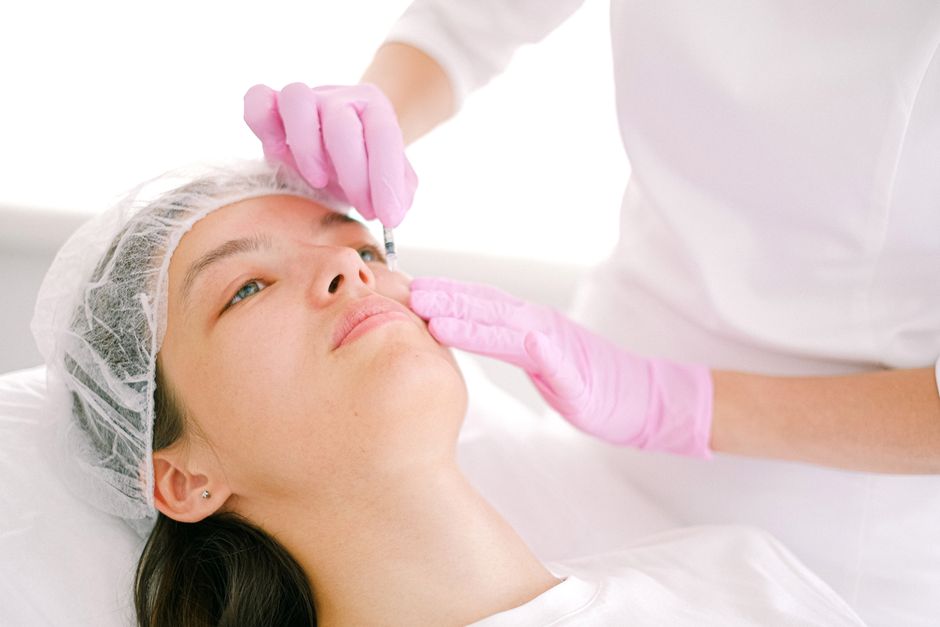
Glycolic acid peels can be done at home, but only with low-strength products and careful technique. The safest approach is to start with a concentration of 10% or less, apply it to clean dry skin for a few minutes, and rinse thoroughly. Higher-strength peels — generally anything above 20% — are best left to a dermatologist or trained clinician who can monitor your skin’s response.
Glycolic acid is an alpha-hydroxy acid derived from sugarcane. It works by loosening the bonds between dead skin cells on the surface, which helps them shed. That sounds simple, but the margin between a helpful peel and a chemical burn is narrower than most product marketing suggests.
What Does Glycolic Acid Actually Do to Your Skin?
Glycolic acid dissolves the “glue” that holds dead skin cells together. This process is called exfoliation, and it is well established in dermatology.
Because glycolic acid has the smallest molecular size of the common alpha-hydroxy acids, it penetrates the skin more readily than lactic or mandelic acid. That faster penetration is part of why it works well — and part of why it can irritate more easily.
At low concentrations, the main effect is surface exfoliation. The outermost layer of dead cells lifts away, and skin underneath looks smoother and brighter. At higher concentrations applied by professionals, the acid penetrates deeper and can trigger a controlled wound response, which the skin repairs by producing new collagen. That deeper remodeling is a clinical procedure, not something a home product reliably achieves.
One clarification worth knowing: glycolic acid does not “detox” skin or pull impurities out of pores. That language appears in marketing but has no physiological basis. What it does is accelerate the natural shedding of dead surface cells.
How To Do A Glycolic Acid Peel At Home Safely: Step by Step
Safe home use depends on three things: a low concentration, a short contact time, and a skin barrier that is not already compromised.
Before you start, confirm your product lists its concentration. If a label does not state the percentage of glycolic acid, that is a reason to be cautious. You cannot manage contact time safely without knowing strength.
- Patch test first. Apply a small amount to a discreet area, such as along the jawline or inner forearm, and wait 24 to 48 hours. Watch for redness, stinging that does not settle, or swelling.
- Start with clean, dry skin. Wash with a gentle cleanser and pat dry completely. Water on the skin can change how evenly the acid applies.
- Use a low concentration. Over-the-counter peels are typically in the range of 5% to 10%. Start at the lower end.
- Time it. Follow the product’s instructions exactly. For a first use, a shorter contact time than the label allows is reasonable. Do not leave a peel on longer because you want faster results.
- Rinse thoroughly. Use cool or lukewarm water and rinse longer than feels necessary. Some products include a neutralizer; if yours does, use it as directed.
- Skip actives afterward. Do not apply retinoids, vitamin C, other acids, or scrubs to the treated area for several days.
- Moisturize and protect. Use a plain, fragrance-free moisturizer and daily sunscreen. Treated skin is more vulnerable to sun damage.
Frequency matters as much as strength. Most home peels are not designed for daily use. A common approach is once every one to two weeks, but the right interval depends on your skin and the product. If your skin stays red or stings between sessions, you are doing too much.
What Strength Is Safe to Use at Home?
There is no universal legal limit on glycolic acid concentration in cosmetics in the United States, which is exactly why you need to read labels. Professional peels often use concentrations of 20% to 70%, sometimes higher, and those are applied under clinical supervision with timed neutralization.
Home products are generally formulated at lower strengths, commonly 5% to 10%. Some at-home kits sold online offer higher percentages. A higher number on the bottle does not mean better results — it means less room for error.
Professional organizations have raised concerns about consumer access to high-concentration acids without supervision. The core issue is that a strong acid left on too long, applied unevenly, or used on sensitive skin can cause a chemical burn. Burns from at-home chemical peels are a recognized reason for dermatology visits.
If you want results beyond what a low-strength product gives you, the safer path is a clinician-performed peel, not a stronger bottle at home.
Who Should Avoid At-Home Glycolic Acid Peels?
Some people should not use glycolic acid peels at home at all, or should check with a doctor first.
Avoid home peels if you have active acne with open sores, a skin infection, eczema or psoriasis in the treatment area, or skin that is currently sunburned, windburned, or irritated. Applying acid to broken or inflamed skin increases the risk of a burn and scarring.
Use caution and get medical advice if you:
- Are pregnant or breastfeeding — data on acid peels in these groups is limited, so ask your clinician before use
- Take isotretinoin (Accutane) or have taken it recently, since it makes skin more fragile
- Use prescription retinoids or have recently had laser treatment, waxing, or dermabrasion in the area
- Have a history of cold sores in the treatment area, since peels can trigger outbreaks
- Have darker skin tones — glycolic acid can cause post-inflammatory hyperpigmentation, and a clinician can advise on risk
- Have a known allergy or prior reaction to alpha-hydroxy acids
If you have a skin condition you are trying to treat — acne scars, melasma, sun damage — a home peel is not a substitute for a diagnosis. A dermatologist can tell you whether an acid peel is appropriate for your specific concern.
What Side Effects Are Normal and What Is Not?
Mild stinging during application is expected. So is temporary redness that fades within a short time. Light flaking or dryness over the next few days is also common.
What is not normal: intense pain, blistering, swelling, oozing, or redness that deepens rather than fades. These can signal a chemical burn. If they occur, rinse with cool water, stop using the product, and seek medical advice. Do not apply more products to “fix” it.
Another sign to watch is prolonged sensitivity. If your skin stings when you apply your normal moisturizer days after a peel, your barrier is likely compromised. Pause all exfoliation until it settles.
Post-inflammatory hyperpigmentation is a real risk, particularly for people with medium to dark skin tones. Dark patches can appear after irritation or a burn and may take months to fade. This is a strong reason to patch test and to avoid overdoing frequency.
How Does At-Home Compare to a Professional Peel?
The difference is not just strength. It is supervision, neutralization, and skin assessment.
A clinician assesses your skin, chooses an appropriate acid and concentration, applies it evenly, times it, and neutralizes it. They can also spot early signs of a burn and stop. At home, you are doing all of that yourself with a product designed to be forgiving — but not risk-free.
Results differ too. Home peels at low strength mainly improve surface texture and brightness with repeated use. Deeper concerns like significant sun damage, scarring, or pigmentation usually need professional treatment or other approaches. A home peel used consistently may produce gradual improvement in skin smoothness, but it will not replicate a clinical peel.
If you are unsure which is right for you, that uncertainty itself is a reason to ask a dermatologist rather than to experiment with stronger products.
Frequently Asked Questions
What percentage of glycolic acid is safe for home use?
Home products are generally formulated at 5% to 10%, and starting at the lower end is safest. Higher concentrations are best applied by a trained clinician.
How often can I do a glycolic acid peel at home?
Most home peels are designed for occasional use, often once every one to two weeks, but this depends on the product and your skin. If redness or stinging persists between sessions, use it less often.
Can glycolic acid cause a chemical burn at home?
Yes. Leaving a high-concentration product on too long, applying it to sensitive or broken skin, or using it too frequently can cause a chemical burn. Blistering, intense pain, or spreading redness are signs to stop and seek medical advice.
Should I use sunscreen after a glycolic acid peel?
Yes. Treated skin is more sensitive to the sun, so daily broad-spectrum sunscreen is important. Without it, you risk irritation and dark spots.
