
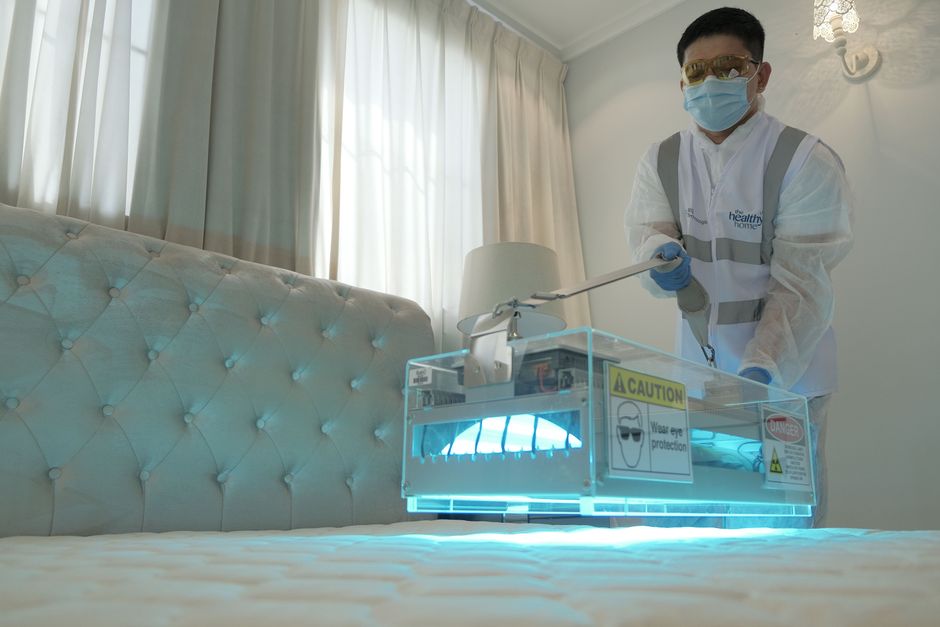
You cannot fully disinfect a hotel bed before you sleep in it. Disinfection means killing or inactivating pathogens on a surface, and a mattress, duvet, and pillows are porous, thick, and impossible to treat completely in a hotel room with the tools you have. What you can do is reduce your exposure to the things that actually matter — other people’s germs on high-touch surfaces, and the rare but real possibility of bed bugs — with a short routine that takes about five minutes.
Here is the honest version of what works, what does not, and where the real risks are.
What actually lives on a hotel bed?
The realistic concerns are not exotic. They are ordinary respiratory viruses, common bacteria, and occasionally bed bugs.
Respiratory viruses — including influenza and coronaviruses — spread mainly through the air and through droplets, not through surfaces. Surface transmission is possible but is a minor route compared with breathing shared air in a lobby, elevator, or restaurant. This matters because it changes what is worth your time. Wiping down a remote control does very little if you then spend an hour in a crowded breakfast room.
Bacteria on hotel surfaces are well documented. Studies of hotel rooms have found that the highest bacterial counts tend to show up on items that get cleaned least often and touched most: TV remotes, light switches, bedside lamp pulls, and the telephone. Housekeeping typically changes linens and towels between guests, and those are usually washed at high temperatures that kill most pathogens. The remote control is not washed.
Bed bugs are a different category. They are insects, not germs, and they are not killed by disinfectant sprays or hand sanitizer. They hide in seams, under the mattress tag, in the box spring, and behind the headboard. They feed on blood at night. A hotel room can look spotless and still have them.
How do you check a hotel bed for bed bugs?
Pull the sheets back and look at the mattress itself. This takes two minutes and is the single most useful thing you can do.
Use your phone’s flashlight. Check these spots:
- The seams and piping along the top and sides of the mattress
- Under the mattress tag, which bed bugs commonly hide behind
- The corners of the mattress and the area where the mattress meets the box spring
- Behind and under the headboard, if you can move it or see behind it
- The bed frame, especially any cracks or joints
What you are looking for:
- Small dark spots that look like ink dots or ground pepper — these are droppings
- Tiny shed skins, pale and translucent
- Live insects, roughly the size and shape of an apple seed, reddish-brown
- Small blood smears on the sheets
If you find any of these, ask for a different room. Not a different bed in the same room. Bed bugs travel through wall voids and along plumbing, so a room far from the original — ideally on a different floor — is the safer request. Some travelers ask for a room that has been vacant for a while, though this is not a guarantee of anything.
Does disinfectant spray or a UV wand work on a hotel bed?
No. Neither will disinfect a mattress, and both give a false sense of security.
Disinfectant sprays are formulated and tested for hard, non-porous surfaces. A mattress is the opposite. Liquid soaks into fabric and foam rather than sitting on the surface long enough to kill pathogens, and you cannot reach the interior where microorganisms sit. Spraying the top of a duvet does essentially nothing.
UV-C wands sold for travel are a separate problem. UV-C does inactivate some pathogens on smooth surfaces under controlled conditions in a laboratory. In a hotel room, handheld wands deliver far too little dose, at the wrong distance, for too short a time, and they cannot penetrate fabric at all. Bed bugs are not reliably killed by them either. No clinical evidence confirms these devices reduce illness in travelers.
What does have evidence behind it is hand hygiene. Washing your hands with soap and water, or using an alcohol-based sanitizer with at least 60 percent alcohol when soap is not available, is the best-supported way to reduce your own infection risk from surfaces you touch. That is true in a hotel and everywhere else.
What should you actually wipe down in a hotel room?
Focus on the small number of surfaces your hands touch and then carry to your face. That is where surface transmission would realistically happen.
Worth wiping with a disinfecting wipe:
- TV remote and any gaming controller
- Light switches and lamp pulls
- Telephone handset
- Door handles and the deadbolt
- Nightstand and desk surface
- Ice bucket handle and the coffee maker buttons
Read the label on any wipe you bring. Disinfectants need a specific contact time — the surface has to stay visibly wet for a set number of seconds or minutes — to actually kill pathogens. Wiping a surface and letting it dry in three seconds does not disinfect it. This is one of the most common mistakes people make with disinfecting wipes at home and on the road.
Skip the mattress. Skip the pillows. Skip the duvet. You cannot disinfect them, and trying wastes time you could spend on the things that matter.
Should you bring your own bedding or a sleeping bag liner?
Bringing your own pillowcase is a reasonable, low-cost habit if it makes you more comfortable. It does not meaningfully reduce infection risk, because linens are not the main route of transmission and hotel linens are generally washed at temperatures that kill most pathogens.
A sleeping bag liner or travel sheet does offer one genuine benefit: it creates a physical barrier between you and the mattress, which can reduce contact with bed bugs if any are present. It will not stop them entirely, since they can crawl onto exposed skin. If you are staying somewhere with a known bed bug problem, the more useful step is to inspect the room and, if needed, change rooms.
One thing worth doing regardless: when you get home, unpack your suitcase away from your bedroom if you have any reason to suspect bed bugs, and consider running clothes through a hot dryer cycle before putting them away. Heat kills bed bugs and their eggs. This is standard guidance from pest control and public health sources.
What is the realistic risk of getting sick from a hotel bed?
Low, and mostly not from the bed itself.
The evidence consistently shows that respiratory infections spread mainly through shared air. Your risk in a hotel comes far more from the person coughing in the elevator, the crowded breakfast buffet, and the recirculated air in a conference room than from the sheets you sleep in.
Bed bugs are a real but uncommon problem. They are not known to transmit disease, but their bites cause itching and welts in many people, and bringing them home is expensive and stressful to eliminate. That is the main reason to do the two-minute mattress check.
Other pathogens on hotel surfaces — cold viruses, norovirus, and various bacteria — can survive on hard surfaces for hours to days depending on the organism and conditions. Touching a contaminated surface and then touching your eyes, nose, or mouth is a plausible route of infection. Hand hygiene interrupts that route, which is why it remains the most reliable step you can take.
What is the bottom line?
You cannot disinfect a hotel bed, and products that claim to are not supported by evidence. What works is narrower and simpler: inspect the mattress for bed bugs, wipe the high-touch hard surfaces with a disinfecting wipe and respect the contact time, and wash your hands before you eat or touch your face.
Everything beyond that is mostly reassurance theater. It feels productive. It does not change your risk much.
Frequently Asked Questions
Can I get bed bugs from a hotel bed?
Yes, it is possible, though most hotel stays do not result in bed bugs. Inspecting the mattress seams, tag, and headboard before you settle in is the most effective way to reduce the risk, and asking for a room on a different floor if you find signs.
Does Lysol or disinfectant spray kill bed bugs?
No. Disinfectant sprays are not labeled or proven to kill bed bugs, and they do not penetrate the seams and crevices where the insects hide. Heat treatment and professional pest control are the established methods for eliminating them.
Should I bring my own sheets to a hotel?
It is not necessary for infection control, since hotel linens are generally washed at high temperatures that kill most pathogens. A travel sheet can create a partial barrier against bed bugs, but it will not stop them completely.
How long do germs live on hotel surfaces?
It varies widely by organism and surface, ranging from hours to several days. Hand washing with soap and water, or an alcohol-based sanitizer with at least 60 percent alcohol, is the best-supported way to reduce your risk from touching those surfaces.
