
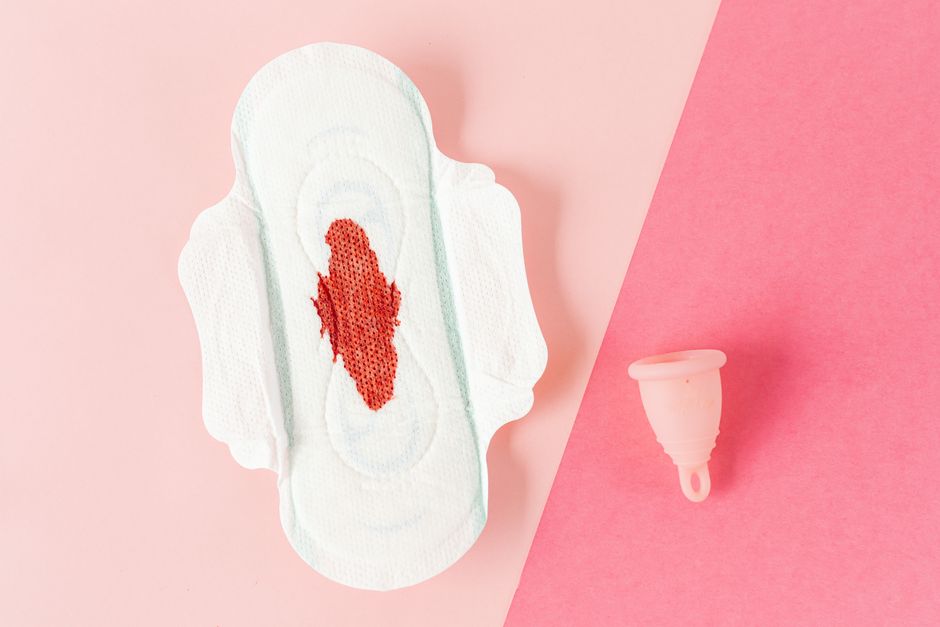
You count from the first day of one period to the first day of the next. That number of days is your cycle length. For most adults it falls between 21 and 35 days, though shorter and longer cycles can be normal depending on your age and health.
Finding your own number takes a few months of simple tracking. One cycle on its own tells you very little, because cycle length naturally shifts from month to month. The pattern across several cycles is what matters.
What Counts as Day One of Your Cycle?
Day one is the first day of full menstrual bleeding, not spotting. If you wake up to a few brown spots and the flow starts properly the next morning, day one is the next morning. This distinction matters because it shifts your whole count by a day.
Many people miscount here without realizing it. Light spotting before a period is common, and it is easy to log that as the start. Clinicians and researchers generally use the first day of actual flow as day one, and tracking apps usually let you mark spotting separately for this reason.
The same rule applies at the end. You do not need to count the last day of bleeding for cycle length. You only need the first day of each period, because cycle length is measured start to start, not start to finish.
How Do You Calculate Cycle Length From Your Dates?
Write down the date your period starts. When the next period begins, count the days between the two start dates. That count is your cycle length for that cycle.
Here is a simple example. If your period starts on March 3 and the next one starts on March 30, your cycle length is 27 days. You do not count March 3 twice. The easiest way to get this right is to subtract the earlier date from the later one.
Track at least three cycles before you settle on a number. Cycle length varies naturally, and a single month can be misleading. Averages across several months give you a far more useful picture than any one cycle.
If you prefer not to do the math, most period tracking apps calculate this automatically once you log start dates. The calculation itself is straightforward. The value comes from logging consistently over time.
Why Does Cycle Length Change From Month to Month?
Small shifts are normal. A cycle that runs 26 days one month and 29 the next is not a sign of a problem. The menstrual cycle is driven by hormones that rise and fall in a feedback loop, and that loop is sensitive to everyday factors.
Stress, illness, travel, sleep changes, and significant weight change can all shift ovulation timing. Because the second half of the cycle is relatively fixed, a delay in ovulation usually pushes the whole cycle longer. This is why an unusually stressful month can produce a late period even when nothing else has changed.
Age matters too. Cycles in the years after a first period are often irregular, and cycles in the years before menopause commonly become shorter or more variable. Both patterns reflect changing hormone signaling rather than a single fixed rhythm.
One clarification worth knowing: the length of bleeding is not the same as cycle length. A period that lasts five days does not mean a five-day cycle. Cycle length is always measured from the start of one period to the start of the next.
What Is a Normal Cycle Length?
For most adults, a normal cycle runs between 21 and 35 days. The average is often cited as around 28 days, but that figure is a midpoint, not a target. Plenty of healthy people sit comfortably at 24 or 32 days.
Adolescents often have longer cycles in the first few years after their periods begin. Adults approaching menopause often see cycles shorten or become less predictable. Both are well-documented patterns tied to hormonal changes at those life stages.
Consistency matters as much as the number itself. A cycle that stays within a few days of its usual length is generally reassuring. A cycle that swings widely from month to month is worth discussing with a clinician.
| Life Stage | Typical Cycle Pattern |
|---|---|
| First few years after periods begin | Often longer and more variable |
| Prime reproductive years | Usually 21 to 35 days, fairly consistent |
| Years before menopause | Can shorten or become less predictable |
When Should You Talk to a Clinician About Cycle Length?
Talk to a clinician if your cycles are consistently shorter than 21 days or longer than 35 days. Also worth raising: cycles that stop for several months without pregnancy, bleeding between periods, or bleeding heavy enough to interfere with daily life.
These signs do not automatically mean something is wrong. They are simply patterns that deserve a professional look, because several common conditions can affect cycle regularity and are best assessed in person.
Tracking several months of start dates gives a clinician useful information. Bring your log to the appointment. A clear record of cycle lengths is more helpful than a general sense that things feel off.
How Do You Track Cycle Length Accurately?
Log the first day of every period in the same place each time. A paper calendar, a notes app, or a period tracking app all work. The tool matters far less than using it consistently.
Record these details alongside your start dates:
- The first day of full flow, not spotting
- Any days of spotting before or after bleeding
- Notable symptoms, such as cramps or mood changes
- Any illness, travel, or major stress during the cycle
After three to six cycles, you will have a reliable sense of your usual length and how much it varies. That range is more meaningful than any single number.
One practical note on apps: many estimate future periods based on past averages. Those predictions are estimates, not certainties, and they become less reliable when your cycles are irregular. Use them as a rough guide, not a precise forecast.
Does Cycle Length Tell You Anything About Ovulation?
Cycle length gives you a rough window, not a precise ovulation date. Ovulation typically happens in the middle portion of the cycle, but the exact timing varies between people and between cycles in the same person.
This is where many people get misled. A 28-day cycle does not guarantee ovulation on day 14. Cycle length can offer a general estimate, but it cannot confirm whether or when ovulation occurred.
If you need to know about ovulation for a specific reason, such as trying to conceive, methods like ovulation predictor kits or basal body temperature tracking give more direct information. Even those methods have limits. If timing matters medically, a clinician can advise on the most reliable approach for your situation.
Frequently Asked Questions
How do I calculate my menstrual cycle length?
Count the days from the first day of one period to the first day of the next. That number is your cycle length, and it is best measured across at least three cycles.
Is a 28-day cycle normal?
Yes, 28 days is a common average, but any length between 21 and 35 days is generally considered normal for adults. The average is a midpoint, not a required target.
Can my cycle length change from month to month?
Yes, small shifts of a few days are normal and often linked to stress, illness, travel, or hormonal changes. Cycles that swing widely or fall outside the 21 to 35 day range are worth discussing with a clinician.
Does a 28-day cycle mean I ovulate on day 14?
Not necessarily. Day 14 is a rough estimate for a 28-day cycle, but actual ovulation timing varies between people and between cycles, so cycle length alone cannot confirm it.
