
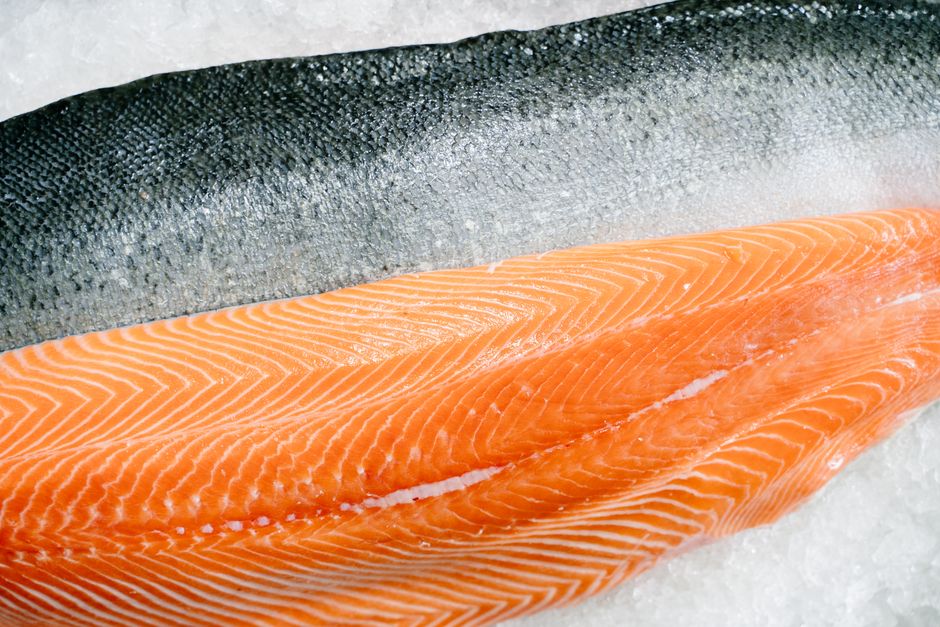
Frozen salmon is one of the better conveniences in a home kitchen, but how you thaw it decides whether you sit down to a moist, flaky fillet or a sad, watery one. The safest and best-tasting method is to thaw it in the refrigerator, still sealed, on a plate on the bottom shelf, allowing roughly 24 hours for a one-pound fillet. If you need it sooner, seal it in a leak-proof plastic bag and submerge it in cold water, changing the water every 30 minutes. Never thaw salmon on the counter at room temperature.
The reason comes down to both food safety and texture. Room-temperature thawing lets the outside of the fish sit in the temperature range where bacteria multiply quickly while the center is still frozen. And the slower, gentler methods protect the muscle fibers and the water they hold, which is what keeps the cooked result tender instead of mushy.
Why Does Thawing Method Change the Texture of Salmon?
Salmon muscle is mostly water held inside and between bundles of protein fibers. When you freeze it, that water turns into ice crystals. The size and location of those crystals affects how much damage the tissue takes.
Slow freezing tends to form larger ice crystals that can puncture cell membranes. When the fish thaws, some of the water that was once held inside the cells leaks out. That is the puddle you sometimes see in the bottom of a thawed package. Fast commercial freezing, which is how most frozen fish is processed, forms smaller crystals and generally does less damage, which is one reason frozen fish can be surprisingly good when handled well.
Thawing method matters because the goal is to let the ice melt and be reabsorbed rather than to rush the process. A slow refrigerator thaw gives the tissue time to reabsorb much of that moisture. A fast warm thaw does not, and it also pushes the fish through the bacterial danger zone faster than you want. So the texture problem and the safety problem point to the same solution: thaw cold and thaw slow.
How Long Does It Take to Defrost Frozen Salmon in the Fridge?
Plan on about 24 hours in the refrigerator for a one-pound fillet or steak, and longer for a whole side of salmon. Thinner portions thaw faster; a thick center-cut piece takes the longest.
The exact time depends on a few things:
- The thickness of the piece, not just its weight
- How cold your refrigerator runs
- Whether the fish is vacuum-sealed or wrapped loosely
- Whether it is a single fillet or a solid block of several pieces frozen together
Keep the fish in its original packaging or a sealed bag, set it on a plate to catch drips, and place it on the bottom shelf. The plate matters more than people realize. Raw seafood juices can drip onto other food below, and the bottom shelf keeps any leakage away from ready-to-eat items. If the package is torn, put it inside a sealed zip-top bag first.
Once thawed, salmon keeps in the refrigerator for about one to two days before you should cook it. If your plans change, you can refreeze it, though the texture will suffer somewhat from the second freeze-thaw cycle. Refreezing is safe if the fish was thawed in the refrigerator, but not if it sat out at room temperature.
What Is the Fastest Safe Way to Defrost Salmon?
The cold-water method is the fastest safe option. Seal the salmon in a leak-proof plastic bag, press out the air, and submerge it in a bowl or sink of cold tap water. Change the water every 30 minutes until it thaws.
For a one-pound fillet, this usually takes about an hour, depending on thickness. A whole side can take considerably longer. The water must stay cold, not warm. Warm or hot water thaws the outer layers fast while the center stays frozen, and it also encourages bacterial growth on the surface. Cold water conducts heat far better than air, which is why this method beats leaving the fish on the counter by a wide margin.
Do not use this method if the bag leaks. If water gets into the flesh, you lose flavor and quality, and you risk cross-contamination. Double-bagging is a reasonable precaution if your seals are questionable.





Can You Defrost Salmon in the Microwave?
You can, but it is the method most likely to ruin the fish. Microwaves thaw unevenly. The thin edges and tail can start to cook while the thick center is still icy, and once part of a fillet is cooked, you cannot undo it.
The USDA lists microwave thawing as an acceptable method, but with a condition: the food must be cooked immediately afterward. That is because microwave thawing can push parts of the fish into the temperature range where bacteria grow, so you should not let it sit. If you use the microwave, set it to the defrost setting, use short bursts, and separate pieces as they loosen. Then cook the salmon right away.
Given how easily the texture suffers, most people are better off with the cold-water method when they are short on time.
What About Thawing Salmon on the Counter or in Hot Water?
Both are worth avoiding, and for related reasons. Leaving salmon on the counter means the outer surface warms into the range where bacteria multiply rapidly while the inside is still frozen solid. The USDA advises against thawing any perishable food on the counter.
Hot water is faster but does real damage. It can start to cook the outer layers of the fish before the center thaws, turning the surface opaque and rubbery. It also warms the surface into the bacterial danger zone. Cold water gets you most of the speed with none of those problems.
One clarification that surprises people: the “danger zone” is not about how long food has been out in total. It is about time spent in the range where bacteria grow quickly, generally between 40°F and 140°F. The relevant guidance is to limit time in that range, which is why cold methods that keep the fish below 40°F are preferred for thawing.
How Can You Tell When Frozen Salmon Is Fully Thawed?
Press the thickest part of the fillet with a finger. If it gives slightly and feels cool but not icy, it is thawed. If you feel a hard, frozen core, it needs more time.
You can also check for ice crystals in the center by looking at the thickest cross-section, or by gently separating the flesh along its natural seams. A fully thawed fillet is pliable and slightly soft. A partially thawed one resists bending at the center.
If you are cooking it soon, a slightly icy center is not a disaster for some dishes, but for even cooking you want it fully thawed. A frozen center will cook unevenly, leaving the outside overcooked by the time the middle is done.
Does Thawing Affect How You Should Cook the Salmon?
Yes, and this is where a lot of thawed salmon goes wrong. Thawed salmon tends to release more moisture than fresh, so it can steam in the pan instead of searing. That is why a thawed fillet often ends up pale and soft rather than browned and crisp.
A few practical adjustments help:
- Pat the fillet completely dry with paper towels before cooking, and do it again if more moisture beads up
- Let it sit uncovered in the refrigerator for a short time after thawing to dry the surface
- Use a hot pan and do not crowd it, so moisture can escape as steam rather than pooling
- Season just before cooking, since salt draws out water over time
Thawed salmon is fully suitable for baking, grilling, poaching, and pan-searing. It is a little less forgiving than fresh, mostly because of that extra surface moisture, but with a dry surface and a hot pan the difference is small.
How Do You Keep Frozen Salmon From Going Bad Before You Cook It?
Freezer storage time matters as much as thawing. The USDA recommends using frozen fish within a set window for best quality, and salmon held too long can develop freezer burn and off flavors even if it stays technically safe. Airtight packaging and a consistently cold freezer slow that decline.
When you buy frozen salmon, keep it frozen until you are ready to thaw it, and thaw only what you plan to cook. Buying individually wrapped portions makes this easier than wrestling with a solid block. If you froze fresh salmon yourself, wrap it tightly and use it within a few months for the best texture.
Once thawed, treat the salmon like fresh fish. Keep it cold, cook it within a day or two, and do not leave it sitting out. Cooked salmon keeps in the refrigerator for a few days.
Frequently Asked Questions
How long does it take to defrost frozen salmon in the fridge?
About 24 hours for a one-pound fillet, and longer for thicker pieces or a whole side. Thinner portions thaw faster than thick center cuts.
Can you defrost frozen salmon in cold water?
Yes, seal it in a leak-proof bag and submerge it in cold water, changing the water every 30 minutes. This is the fastest safe method, usually about an hour for a one-pound fillet.
Is it safe to thaw salmon on the counter?
No, the USDA advises against thawing perishable food at room temperature because the surface warms into the range where bacteria multiply quickly. Use the refrigerator or cold water instead.
Can you refreeze salmon after thawing it?
Yes, if it was thawed in the refrigerator, though the texture may suffer from the extra freeze-thaw cycle. Do not refreeze salmon that sat out at room temperature.
