
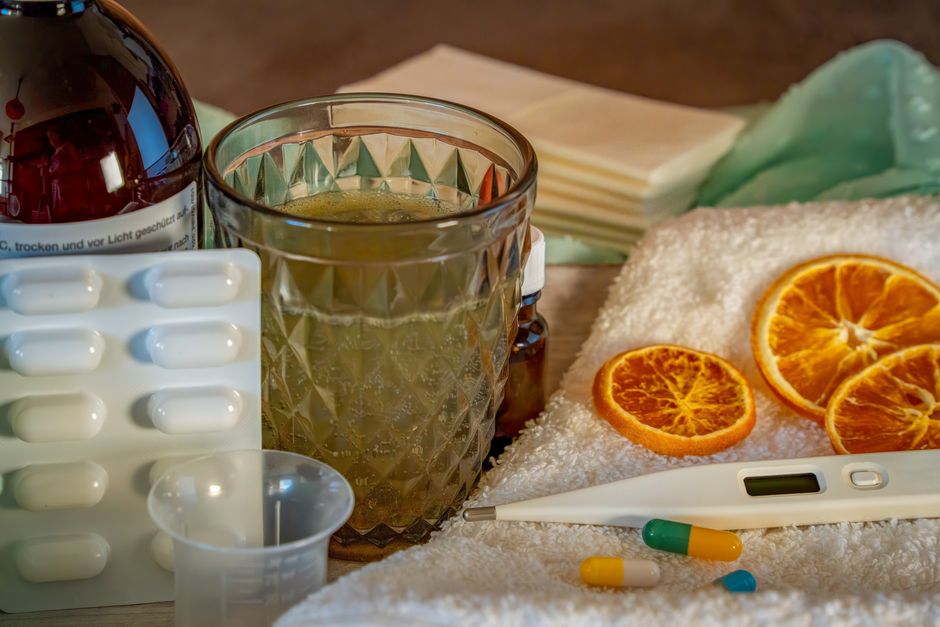
A fever is a rise in core body temperature above normal. Most clinicians use 100.4°F (38°C) as the threshold. It is not a disease. It is a normal immune response, and in most healthy adults and older children it does not need to be brought down at all. What matters is how the person looks and feels, and whether certain warning signs appear.
The basics are simple. Rest, drink fluids, dress lightly, and use fever-reducing medicine only if you are uncomfortable. Go to a doctor if the fever is very high, lasts more than a few days, or comes with signs like a stiff neck, trouble breathing, or confusion. Infants under 3 months are a separate case and need medical care right away.
What Is a Fever, and Why Does the Body Raise Its Temperature?
A fever is a controlled rise in body temperature set by the brain. It is not the same as overheating, and that difference matters.
When immune cells detect an infection, they release signaling proteins called cytokines. These travel to the hypothalamus, the brain’s thermostat. The hypothalamus responds by raising the body’s target temperature. You then feel cold and start to shiver, because your body is working to reach that new setpoint. This is why chills often come first.
The raised temperature is thought to help the immune response and make it harder for some germs to multiply. The evidence for how much this helps in a real infection is not fully settled. What is clear is that fever is a normal, coordinated response, not a malfunction.
This is also why fever is different from heat stroke or heat exhaustion. In those conditions, the body’s cooling fails and temperature rises without the hypothalamus raising the setpoint. Heat stroke is a medical emergency. A fever from infection is not the same event.
Normal body temperature is often cited as 98.6°F (37°C), but that figure is a rough average. Temperature varies through the day, is usually lower in the morning, and differs between people. Readings also vary by where you measure. Rectal temperatures run higher than oral, and oral runs higher than armpit readings. That is one reason a single number is a poor guide on its own.
How Should You Treat a Fever at Home?
For most healthy adults and children over a few months old, the goal is comfort, not a normal number on the thermometer.
If a person with a fever is drinking, sleeping, and reasonably comfortable, treatment can be minimal. The fever is doing its job. If they are miserable, aching, or cannot rest, medicine can help them feel better. Lowering the fever for comfort is reasonable. Lowering it to a target number is not necessary.
What actually helps
- Fluids. Fever increases water loss through sweating and faster breathing. Water, broth, and oral rehydration solutions all work. Urine that is pale yellow suggests adequate hydration.
- Rest. The body is using energy on the immune response. Sleep supports recovery.
- Light clothing and a comfortable room. Dress the person so they are neither shivering nor sweating heavily.
- Fever-reducing medicine for discomfort. For adults, acetaminophen or ibuprofen are the standard options. Follow the label or a clinician’s instructions exactly, especially for dose and spacing.
What to avoid
- Cold baths and ice packs. These can cause shivering, which raises body temperature further, and they cause real distress. They are not recommended for routine fever.
- Alcohol rubs. These are unsafe. Alcohol can be absorbed through the skin, and the practice has caused harm, particularly in children.
- Bundling up to “sweat it out.” This traps heat and can push temperature higher. It does not shorten an illness.
- Aspirin for children or teenagers. Aspirin use during a viral illness in children has been linked to Reye’s syndrome, a rare but serious condition affecting the liver and brain. It should not be given to children or teens unless a clinician specifically directs it.
One point worth stating plainly: giving medicine to lower a fever does not treat the underlying infection. It changes how the person feels. It does not shorten most illnesses, and it does not make an infection less contagious.
Which Fever-Reducing Medicines Are Used, and What Are the Limits?
Two medicines do most of the work: acetaminophen and ibuprofen. They act differently and have different cautions.
Acetaminophen lowers fever and relieves pain. It is generally easier on the stomach. Its main risk is liver injury when too much is taken, including when it is accidentally combined with other products that already contain it. Many cold and flu remedies include acetaminophen, so read labels carefully to avoid doubling up.
Ibuprofen is a nonsteroidal anti-inflammatory drug (NSAID). It lowers fever and reduces inflammation and pain. It can irritate the stomach and, less commonly, affect the kidneys. People with kidney disease, stomach ulcers, or certain other conditions should check with a clinician before using it.
Both are available over the counter. Dosing depends on age and weight, and for children it should follow the product label or a clinician’s guidance. For infants under 3 months, do not give fever medicine without medical advice — call for care first.
Some clinicians advise against alternating the two medicines in children, because it complicates dosing and raises the risk of error. Others find it helpful in specific cases. The evidence does not clearly favor routine alternating, so it is best discussed with a clinician rather than done by default.
When Is a Fever a Red Flag?
Age and symptoms matter far more than the exact number. A high fever in a comfortable, alert adult is usually less concerning than a moderate fever with certain warning signs.
Seek medical care promptly if any of the following apply:
- An infant under 3 months with any fever. A temperature of 100.4°F (38°C) or higher in this age group needs urgent medical evaluation, because young infants can have serious infections with few other signs.
- A stiff neck, severe headache, confusion, or a rash that does not fade when pressed. These can signal meningitis, which is a medical emergency.
- Trouble breathing, chest pain, or a bluish tint to the lips.
- A seizure caused by the fever. Febrile seizures are common in young children and usually not dangerous on their own, but a first one should be evaluated.
- Signs of dehydration. These include little or no urine, a dry mouth, no tears when crying, or unusual sleepiness.
- A fever that lasts more than a few days, or keeps returning.
- A fever in someone with a weakened immune system, or who is being treated for cancer.
- A fever with a very high temperature that does not respond to medicine, or that comes with severe symptoms.
For older children and adults, the number alone is a weak guide. Most clinicians are more interested in how the person is acting than in whether the reading is 101°F or 103°F.
Can You Have a Fever Without an Infection?
Yes. Infection is the most common cause, but not the only one.
Inflammatory conditions, some autoimmune diseases, certain cancers, and reactions to some medicines can all raise body temperature. So can heat illness, though that works differently, as noted earlier. In these cases the fever is a signal of something else going on, and the pattern and other symptoms are what point to the cause.
This is why a fever that persists without an obvious infection deserves a medical look. It is not automatically serious, but it should not be ignored either.
How Do You Measure a Fever Accurately?
Where and how you measure changes the reading, so consistency helps.
Rectal measurement is considered the most accurate for infants and young children. Oral thermometers are reliable for older children and adults who can hold them still. Armpit readings are convenient but tend to run lower and are less precise. Ear and forehead thermometers vary in accuracy depending on technique and the device.
Take the temperature when the person has not just had a hot drink, exercised, or been bundled in blankets. Those can nudge a reading up without a true fever. If a reading seems off, repeat it after a few minutes rather than acting on a single number.
When you call a clinician, tell them the reading, where you measured it, and how the person looks and behaves. That context is more useful than the number alone.
Frequently Asked Questions
What temperature is considered a fever?
Most clinicians use 100.4°F (38°C) as the threshold for a fever. Readings vary by where you measure, so oral, rectal, and armpit numbers are not directly interchangeable.
Should I treat a fever or let it run its course?
For most healthy adults and children, treating a fever is about comfort, not necessity. If the person is resting and drinking fluids, medicine is optional; if they are very uncomfortable, a fever reducer can help.
When should I go to the doctor for a fever?
Go promptly for a fever in an infant under 3 months, or if there is a stiff neck, confusion, trouble breathing, a rash that does not fade, signs of dehydration, or a fever that lasts more than a few days.
Can a fever be dangerous on its own?
In healthy adults and older children, fever from infection is rarely dangerous by itself. The concern is usually the underlying cause and the warning signs around it, not the temperature number alone.
