
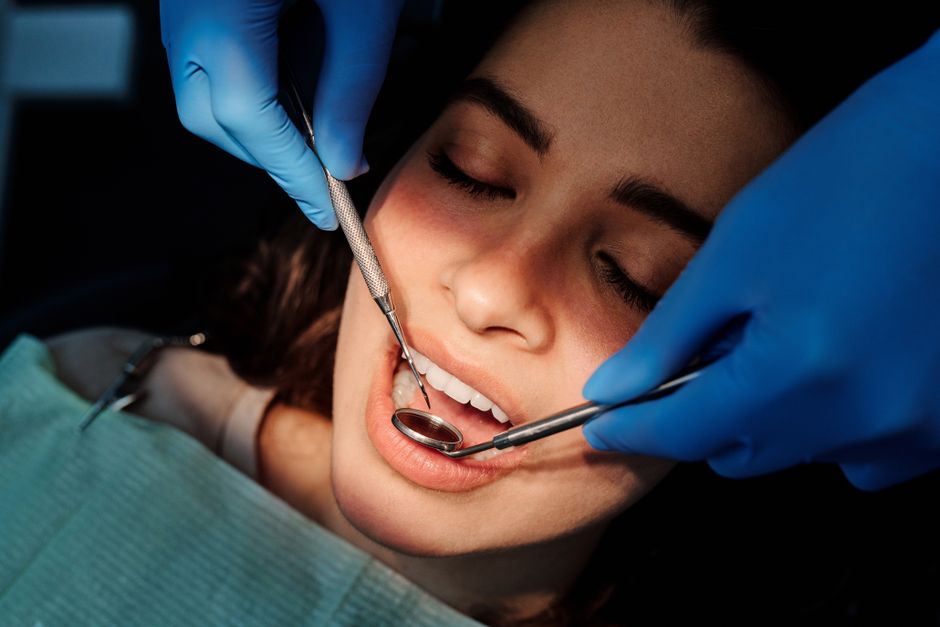
A chipped tooth is rarely an emergency, but it does need attention. The broken edge can cut your tongue or cheek, and the crack may expose the softer inner layer of the tooth to bacteria. Call your dentist for an appointment, save any broken piece in milk or saliva, and avoid chewing on that side until you are seen.
Most chips are small and easy to repair. A dentist can often smooth a minor edge or bond the tooth with a tooth-colored filling material in a single visit. The key is not to ignore it, because even a small chip can worsen over time.
What Should You Do Right After You Chip A Tooth?
Rinse your mouth with warm water and check for any sharp edges. If the chip is bleeding, hold clean gauze on the area for a few minutes. Most chips do not bleed, but a chip that reaches the gumline or involves the tooth root can.
Save the broken fragment if you can find it. Place it in milk or in your own saliva, not in water. Water can damage the cells on the surface of the tooth piece. A dentist may be able to reattach it, though this depends on the size and condition of the fragment.
Call your dentist the same day. Describe what happened and whether you have pain. If you have significant pain, swelling, or bleeding that will not stop, ask for a same-day visit or go to an urgent care or emergency department.
In the meantime:
- Eat soft foods and chew on the opposite side of your mouth.
- Avoid very hot or very cold drinks if the tooth feels sensitive.
- Use dental wax or sugar-free gum over a sharp edge as a temporary cover if it is cutting your tongue.
- Take an over-the-counter pain reliever if needed, following the label directions.
Do not try to file or sand down a sharp edge yourself. You can damage the enamel further or cut your mouth.
Why Does a Tooth Chip in the First Place?
Teeth are strong, but enamel is brittle. A chip usually happens when force meets a weak spot. Common causes include biting down on something hard, a fall or blow to the face, and grinding your teeth at night.
Some chips happen on teeth that were already weakened. A large filling or a tooth that has had a root canal can leave the remaining tooth structure more fragile. Untreated decay can also hollow out a tooth from the inside, so it breaks under normal chewing.
Acidic foods and drinks, and stomach acid from reflux or frequent vomiting, can soften enamel over time. Softened enamel chips more easily. This is a slow process, not an overnight one, but it adds up.
Age matters too. Enamel does not regrow, so decades of wear leave less of it. Small chips and cracks become more common as people get older.
How Does a Dentist Decide How to Fix a Chipped Tooth?
The repair depends on how deep the chip goes and whether the tooth is still alive and comfortable. A dentist will look at the size and location of the chip, check for decay, and test how the tooth responds to temperature and tapping.
Here is how the main options compare:
| Type of chip | Typical repair | What to expect |
|---|---|---|
| Small chip on the edge of a front tooth | Bonding or smoothing | Tooth-colored resin applied and shaped; usually one visit |
| Moderate chip with some lost structure | Bonding or a filling | Rebuilds the shape; one visit in most cases |
| Large chip or a tooth with a big existing filling | Crown or onlay | Usually two visits; protects the remaining tooth |
| Chip that exposes the inner pulp | Root canal, then crown | Needed when the nerve is involved or the tooth is painful |
| Vertical crack running down the root | Often extraction | A tooth split this way usually cannot be saved |
Bonding is the most common fix for small chips. The dentist roughens the surface, applies a conditioning agent, then builds up layers of a tooth-colored resin and hardens each layer with a special light. The result is shaped and polished to match the tooth.
Bonding does not last forever. The resin can chip or stain over time, and it may need touching up or replacing after several years. How long it lasts depends on where the tooth is, how much force it takes, and your habits.
For a larger chip, a crown covers and protects what is left of the tooth. A crown is more involved and costs more than bonding, but it is the better choice when a lot of tooth structure is gone.
When Is a Chipped Tooth a Real Emergency?
A chip that causes severe pain, ongoing bleeding, or swelling needs urgent care. These signs suggest the damage is deeper than the surface, or that the nerve or surrounding tissue is involved.
Seek prompt care if:
- The tooth is very sensitive to hot or cold and the pain lingers.
- You see a pink or red spot in the center of the broken area, which can mean the pulp is exposed.
- The tooth is loose or has moved out of position.
- There is bleeding from the tooth that does not stop with pressure.
- You have facial swelling, fever, or trouble swallowing.
A chip alone is usually not an emergency. But an exposed nerve, a loose tooth, or a tooth knocked out is. A permanent tooth that is fully knocked out should be handled carefully and replanted or kept in milk while you get to a dentist right away. Time matters a great deal in that situation.
Can You Wait a Few Days Before Seeing a Dentist?
For a small, painless chip, waiting a few days is usually fine as long as you protect the tooth and keep the area clean. For anything painful or sharp, it is better to be seen sooner.
Waiting is not risk-free. A chip leaves a rough edge that can trap food and bacteria. That raises the chance of decay starting in the damaged area. A sharp edge can also cut your tongue or the inside of your cheek, and a small chip can spread into a larger break under chewing pressure.
Some people put off care because the tooth does not hurt. That is a common mistake. Pain is not a reliable guide to how much damage has happened. A tooth can be cracked or decaying without hurting yet.
What Can You Do to Prevent Another Chip?
Protecting your teeth from force and from enamel wear is the main goal. The habits that prevent one chip usually prevent the next.
Wear a night guard if you grind or clench your teeth in your sleep. A dentist can make a custom guard, or you can buy one over the counter. Custom guards tend to fit better, but either is far better than nothing.
Use a mouthguard for contact sports. This is one of the most effective ways to prevent chips and knocked-out teeth during play.
Avoid using your teeth as tools. Opening packages, tearing tape, or cracking nuts with your teeth is a common way to chip one.
Watch what you bite into. Hard candies, ice, unpopped popcorn kernels, and olive pits are frequent culprits. Biting down on a hard, unexpected object is how many chips happen.
Keep up with dental checkups. Small problems get caught before they turn into breaks. If you have reflux or frequent vomiting, tell your dentist. Rinsing with water after acid exposure and waiting before brushing can help limit enamel damage.
Does a Chipped Tooth Always Need a Filling?
No. A very small chip that only affects the outer edge may only need smoothing. The dentist polishes the rough edge so it does not cut your mouth or trap food.
Whether you need a filling depends on how much tooth is missing and where the chip is. A chip on a chewing surface that leaves a dip can collect food and needs rebuilding. A tiny nick on the front edge may need nothing more than a gentle polish.
Do not assume you can skip the dentist because it looks minor. Only an exam can show whether the chip is superficial or whether it has reached the softer layer underneath. That inner layer is where decay and sensitivity begin.
Frequently Asked Questions
Can a chipped tooth heal on its own?
No. Enamel does not regrow, so a chipped edge will not grow back. A dentist can repair the shape, but the tooth cannot heal the missing part by itself.
How much does it cost to fix a chipped tooth?
Cost varies widely by repair type and location, and dental insurance often covers part of it. Bonding is generally the least expensive option, while a crown or root canal costs considerably more.
Is it OK to leave a chipped tooth alone?
A tiny, painless chip may be fine for a short time, but it should still be checked. Left alone, a chip can trap food, lead to decay, or spread into a larger break.
What should I do if a chipped tooth is sharp?
Cover the sharp edge with dental wax or sugar-free gum until you can see a dentist. Do not file it yourself, because you can damage the tooth or cut your mouth.
