
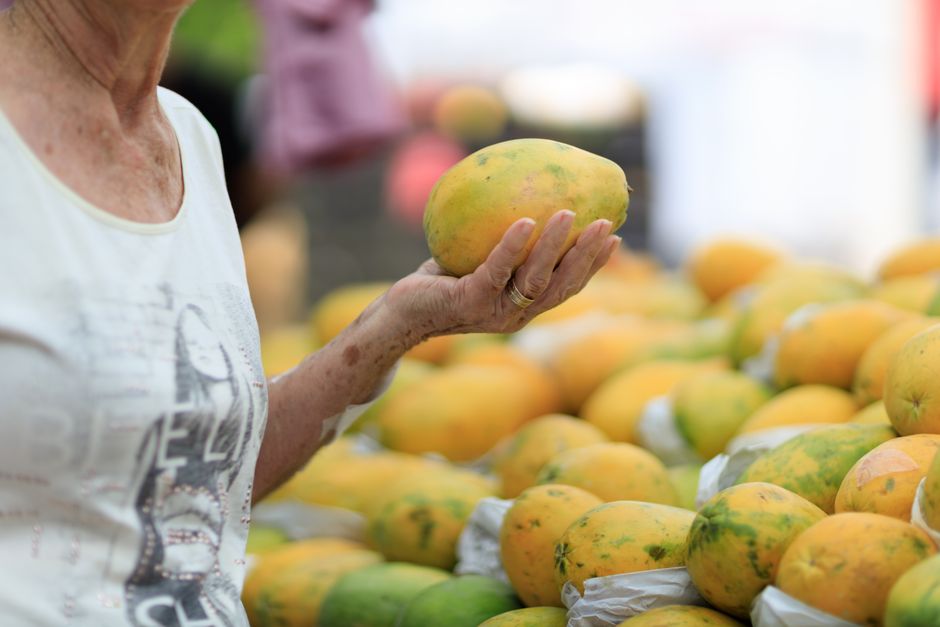
Cutting a mango correctly comes down to one thing: working around the large, flat pit in the center. Stand the fruit on its stem end, slice down each side of the pit to free two rounded cheeks, then score the flesh in a grid and press the skin inward so the cubes pop outward. That method works for almost every mango you will buy.
Most people struggle with mangoes because they try to peel them like an apple or cut them like an avocado. The pit makes both approaches fail. Once you understand where the pit sits and how the flesh is arranged around it, the whole process takes under a minute. This guide covers the standard cheek-and-score method, the tools that actually help, how to tell when a mango is ready, and the mistakes that turn the fruit to mush.
Where Is the Mango Pit and Why Does It Matter?
The mango pit is a large, flat, oval-shaped seed pod that runs lengthwise through the center of the fruit. It is not round like a peach pit. It is wide and thin, more like a flattened paddle, and it takes up a significant share of the fruit’s interior.
This shape is the single most important fact for cutting a mango. Because the pit is flat, the fruit has two broad “cheeks” of flesh on either side of it. Those cheeks are where nearly all the edible fruit sits. The thin strips of flesh along the two narrow edges of the pit are much smaller and harder to separate cleanly.
Mango flesh also clings to the pit fibers to varying degrees. Some varieties are described as “fiberless” or “fiberless-type” and release from the pit fairly cleanly. Others, often sold as “fibery” or traditional varieties, hold on tightly and leave strings of flesh behind. You cannot tell which type you have until you cut in.
How To Cut A Mango Correctly: The Step-by-Step Method
The cheek-and-score method is the standard approach because it works with the pit’s shape instead of fighting it. Here is how it goes.
- Stand the mango upright on its stem end on a cutting board. A ripe mango may wobble. Hold it steady with your non-cutting hand, keeping your fingers curled back.
- Find the widest side of the fruit. The pit runs parallel to that wide face. You want to slice along that axis, not across it.
- Slice down about a quarter-inch from the center line, angling the knife slightly outward as you go. You are trying to skim past the flat side of the pit. Repeat on the opposite side. You now have two cheeks and a middle section holding the pit.
- Score the flesh of each cheek in a grid with your knife, cutting down to the skin but not through it. Cubes of roughly half an inch work well.
- Press the skin side inward with your thumbs. The scored cubes will turn outward like a hedgehog. Slice them off the skin with your knife, or eat them straight off the skin.
- Deal with the middle section last. Trim the remaining flesh off the pit with shallow cuts, or simply gnaw it. There is usually less fruit here than people expect.
If the mango is very ripe and soft, scoring can crush the flesh. In that case, slice the cheeks off as above, then scoop the flesh out with a spoon instead of cubing it.
Should You Peel a Mango Before Cutting It?
You do not need to peel a mango before cutting it, and for most people the skin-on method is easier and wastes less fruit. The skin holds the scored cubes together and gives you something to grip when you press the cheek inside out.
Peeling first does have one advantage: it lets you cut clean slices without the skin getting in the way. If you prefer that, use a vegetable peeler rather than a knife. A knife tends to take off too much flesh with the skin, especially on a soft, ripe mango.
One more point on the skin itself. Mango skin is edible, but some people react to it. Mango skin and sap contain urushiol, the same family of compounds found in poison ivy and poison oak. People with a sensitivity to urushiol can develop a rash around the mouth or on the hands after handling or eating mango skin. If you have reacted to poison ivy before, peeling the fruit and washing your hands after handling it is a reasonable precaution. The flesh itself is not the problem.





How Do You Know When a Mango Is Ripe Enough to Cut?
A ripe mango gives slightly when you press it gently with your thumb, similar to a ripe avocado or peach. It should not feel hard, and it should not feel mushy or leave a dent that stays.
Color is a poor guide on its own. Mangoes come in green, yellow, red, orange, and blends of all four, and the color depends heavily on the variety. A red blush on the skin often says more about how much sun the fruit received than about ripeness. Smell is a better signal. A ripe mango has a sweet, slightly floral scent near the stem end.
Firm mangoes will ripen at room temperature over a few days. Once ripe, they keep for a short time in the refrigerator, though cold storage can change the texture. If you cut a mango too early, the flesh is firm and tart but still usable in salads or cooked dishes. An overripe mango turns stringy and difficult to cube cleanly, which is when the spoon-scoop approach makes more sense.
What Tools Do You Actually Need?
A sharp chef’s knife or a serrated utility knife and a stable cutting board are enough. A sharp blade matters more than the type of knife. A dull knife slips on the mango’s smooth skin, which is a real safety concern given how much pressure you have to apply.
A few tools get recommended often, with varying levels of usefulness:
- Vegetable peeler: Genuinely useful if you want peeled slices. Low cost, low risk.
- Serrated knife: Helpful for very ripe fruit, where a smooth blade can crush the flesh. Some people also find the serrations grip the slippery skin better.
- Mango splitter: A dedicated tool shaped to slide around the pit. It works, but it is a single-purpose gadget. A knife does the same job.
- Spoon: The best tool for overripe mangoes and for scraping the last bits off the pit.
What Are the Most Common Mango-Cutting Mistakes?
The most common mistake is cutting straight through the middle of the fruit from top to bottom, as you would an apple. That drives the knife directly into the pit and gives you two halves with a large seed stuck in each. You end up fighting the pit with your knife, which is both frustrating and a common cause of slips.
The second mistake is cutting too close to the center line. People assume the pit is narrow and slice right beside it, only to hit bone. Slicing a bit wider, about a quarter-inch off center, clears the pit more reliably. You can always trim extra flesh off the pit afterward.
The third mistake is using a dull knife on a firm mango. The blade skids across the skin instead of biting in. Sharpening the knife beforehand is the fix, not pressing harder.
Finally, many people discard the pit section without checking it. There is usually a worthwhile strip of flesh along the narrow edges of the pit. Running a knife along those edges or scraping with a spoon recovers it.
How Should You Store Cut Mango?
Cut mango should go into the refrigerator promptly. Place the pieces in a sealed container and use them within a few days. Cut fruit is more vulnerable to spoilage and bacterial growth than whole fruit because the flesh is exposed, so do not leave it sitting out at room temperature for long stretches.
Cut mango also freezes well. Spread the pieces on a tray so they freeze separately, then transfer them to a bag or container. Frozen mango works fine in smoothies and cooked dishes, though the texture softens once thawed and it will not hold up as fresh cubes.
Does the Way You Cut a Mango Affect Anything Beyond Convenience?
Mostly, cutting method affects how much fruit you get and how cleanly it comes apart. But there is one practical point people overlook: the pit and skin are where the urushiol compounds concentrate. Handling them and then touching your face, especially around your mouth or eyes, is how sensitive people end up with irritation. Washing your hands after cutting a mango is a simple habit worth keeping.
Beyond that, the method is a matter of texture and preference. Cubes suit eating fresh and adding to salads. Slices suit smoothies and salsas. Scooped flesh suits sauces and chutneys. None of these choices changes the nutritional value of the fruit in any meaningful way.
Frequently Asked Questions
How do you cut a mango without a knife?
You can peel a very ripe mango by hand and pull the flesh apart, but the pit makes clean separation difficult without a blade. A knife is the practical tool for the job.
Can you eat mango skin?
Mango skin is edible, but it contains urushiol, the compound behind poison ivy reactions, and some people develop a rash after handling or eating it. Peeling is the safer choice if you have reacted to poison ivy before.
How do you cut a mango that is too ripe?
Skip the scoring step and scoop the flesh out of each cheek with a spoon instead. Overripe flesh crushes easily under a knife and will not hold cube shapes.
Which side of the mango do you cut first?
Cut along the widest face of the fruit, since the flat pit runs parallel to that side. Slicing a quarter-inch off the center line on each side clears the pit most reliably.
