
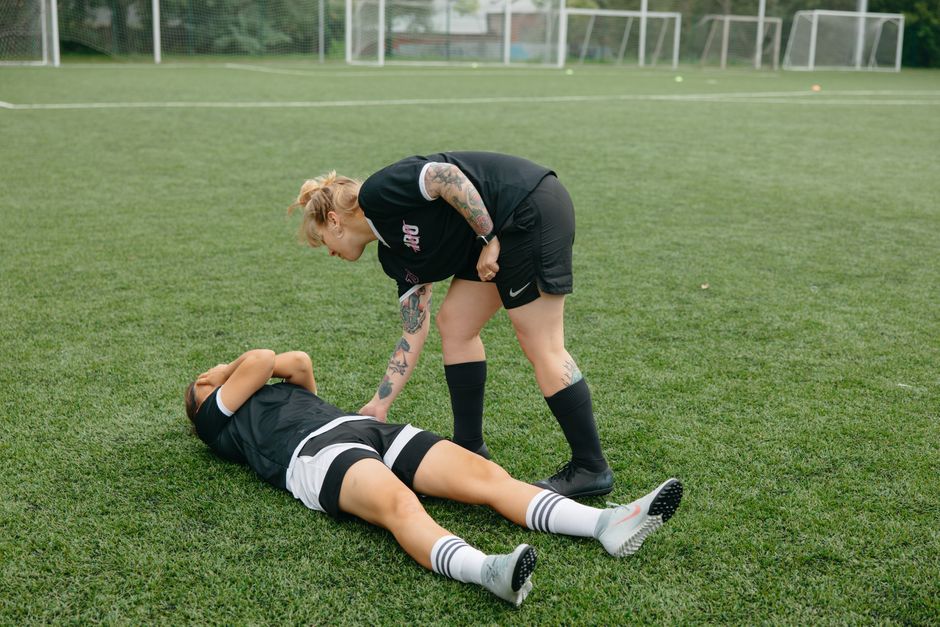
A groin injury is not something to push through. Most groin strains heal with rest and a gradual return to activity, but the process takes patience. The fastest way to cure a groin injury is to stop the activity that caused it, apply ice in the first few days, and then follow a structured rehabilitation plan that restores strength and flexibility before you return to sport.
What Is a Groin Injury, Exactly?
A groin injury usually means a strain in the adductor muscles. These are the muscles on the inside of your thigh that pull your leg toward your body. They help with running, kicking, and changing direction.
Strains are graded by severity. A mild strain involves a small tear and heals in one to two weeks. A moderate strain involves a partial tear and can take three to six weeks. A severe strain is a complete tear and may require months of recovery or even surgery.
Not every groin pain is a muscle strain. A sports hernia, hip joint problems, or even kidney stones can cause pain in the same area. If your pain came on gradually without a specific injury, or if you have swelling, numbness, or trouble urinating, see a doctor before assuming it is a strain.
How To Cure A Groin Injury: The First 72 Hours
The first three days after a groin strain determine how quickly you recover. The goal is to limit bleeding and swelling inside the muscle.
Use the RICE method — rest, ice, compression, and elevation. Rest means no running, kicking, or stretching that pulls on the inner thigh. Ice the area for 15 to 20 minutes every two to three hours for the first 48 to 72 hours. Wrap the ice in a towel so you do not damage your skin.
Compression with an elastic bandage helps reduce swelling. Keep it snug but not tight enough to cut off circulation. Elevation is less practical for the groin than for an ankle, but lying down with your leg supported and slightly raised can help.
Anti-inflammatory medications like ibuprofen can reduce pain and swelling. Take them as directed on the label. Do not take them for more than a week without checking with a doctor.
When to Move From Rest to Gentle Movement
Complete rest for too long weakens the muscle and slows healing. The shift from rest to movement happens when you can walk without a limp and feel only mild discomfort, not sharp pain.
Start with gentle range-of-motion exercises. Lie on your back and let your knees fall open slowly, then close them. Move only as far as feels comfortable. Pain that is sharp or increases the next day means you are doing too much.
Isometric exercises are the next step. These contract the muscle without changing its length. Squeeze a pillow between your knees for five seconds, then release. Do ten repetitions a few times a day. This builds strength in the adductors without stressing the healing tissue.
No clinical guidelines specify exact timelines for each phase because every injury differs. The consistent principle is this: progress only when the previous step is pain-free.



Strengthening Exercises for Full Recovery
Once gentle movement is pain-free, you can begin progressive strengthening. This phase is where most people fail. They feel better, stop doing the exercises, and re-injure themselves within weeks.
Side-lying leg lifts target the adductors directly. Lie on your side with the injured leg on the bottom. Keep your leg straight and lift it about six inches off the floor, hold for two seconds, then lower slowly. Start with one set of ten and build up over days.
Standing hip adduction uses a resistance band. Anchor the band at ankle height, step away so there is tension, and pull your leg across your body against the band. Control the movement in both directions.
Squats and lunges strengthen the whole lower body, which takes pressure off the groin. Bodyweight squats are enough at first. Add weight only when you can complete three sets of fifteen without pain.
Strengthening should continue for at least two weeks after you feel normal. A muscle that feels fine during daily activity is not yet ready for sprinting or kicking.
Stretching and Flexibility After a Groin Strain
Stretching is important, but timing matters. Stretching a freshly strained muscle makes the tear worse. Start stretching only when you can do strengthening exercises without pain.
The butterfly stretch is a classic groin stretch. Sit with the soles of your feet together and let your knees fall toward the floor. Hold for 20 to 30 seconds. Do not bounce. You should feel a gentle pull, not pain.
The standing groin stretch works the same muscles from a different angle. Stand with your feet wide apart, shift your weight to one side, and bend that knee while keeping the other leg straight. You should feel the stretch along the inside of the straight leg.
Stretching does not heal the muscle. It restores flexibility so the muscle can move normally when you return to activity. Flexibility without strength leaves you vulnerable to re-injury.
Returning to Sport After a Groin Injury
Returning too early is the single biggest cause of chronic groin problems. A groin strain that heals incompletely can become a nagging injury that lasts for months or years.
You are ready to return to sport when you meet three criteria. First, you can walk, jog, and sprint without pain. Second, you can do the strengthening exercises at full range without discomfort. Third, you can move sideways and change direction without pain.
Start with straight-line jogging. Add sideways movement and gentle turns over several days. Only then add kicking or explosive movements. The final test is doing your sport at half speed without pain. Full speed comes last.
Warm up properly before every session during your return. A warm muscle is more elastic and less likely to tear. Five to ten minutes of light jogging followed by dynamic leg swings prepares the groin better than static stretching.
How to Prevent Future Groin Injuries
Prevention focuses on strength, flexibility, and workload. A groin that is strong through its full range of motion is less likely to tear.
Regular adductor strengthening should be part of your routine, not just your recovery. The Copenhagen adduction exercise is one of the most studied groin prevention exercises. Some research suggests it reduces groin injury rates in soccer players when done consistently.
Do not increase your training volume or intensity too quickly. Sudden spikes in activity are a common cause of groin strains. Increase your weekly training load by no more than ten percent.
Fatigue increases injury risk. Late in a game or a long run, your muscles are tired and less coordinated. Groin injuries often happen in the final minutes of activity when technique breaks down.
When to See a Doctor for a Groin Injury
Most groin strains heal at home, but some situations require medical attention. See a doctor if you cannot put weight on the leg, if you have significant bruising or swelling, or if the pain does not improve after a week of rest.
See a doctor immediately if you have groin pain with a fever, a painful lump in the groin, or difficulty urinating. These symptoms can indicate a hernia, an infection, or another condition that needs treatment.
If you have had three or more groin injuries in the past year, ask for a referral to a physical therapist or sports medicine specialist. Recurrent groin injuries often have an underlying cause, such as muscle imbalance or hip weakness, that needs targeted treatment.
Frequently Asked Questions
How long does a groin strain take to heal?
Mild strains heal in one to two weeks, moderate strains take three to six weeks, and severe strains can take months. Full recovery means pain-free movement and a gradual return to sport, not just the absence of pain.
Can I walk with a groin injury?
You can walk if you can do so without a limp. Walking with a limp puts abnormal stress on the hip and lower back and can delay healing.
Should I stretch a pulled groin?
No, not in the first few days. Stretching a freshly strained muscle can enlarge the tear. Start gentle stretching only after strengthening exercises are pain-free.
What is the fastest way to heal a groin strain?
The fastest way is to rest early, ice for the first 72 hours, and progress through strengthening exercises in a structured way. Pushing through pain or returning to sport early makes recovery slower.
