
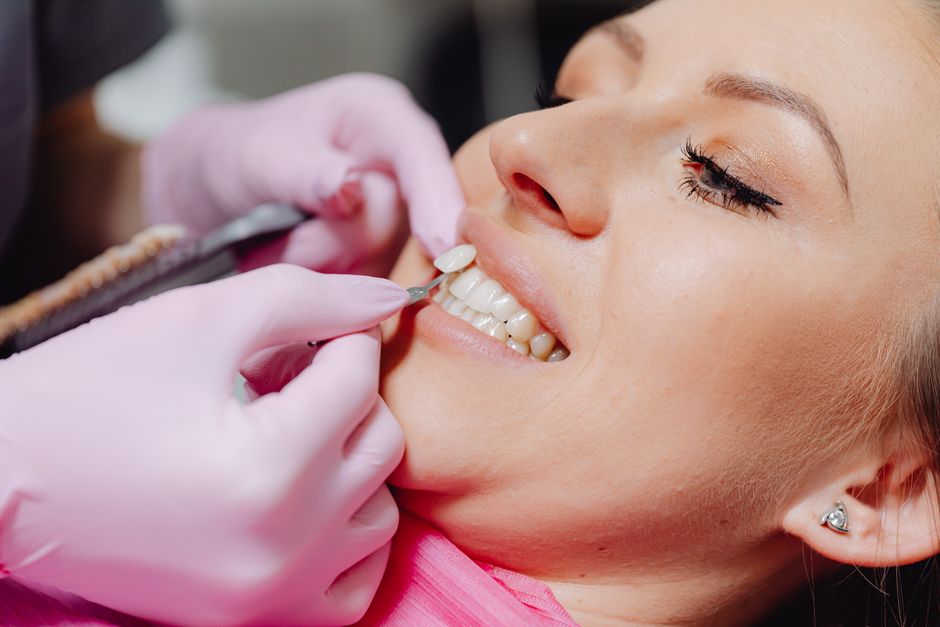
Bad teeth can be covered with dental veneers, crowns, bonding, or a mix of these, depending on how much healthy tooth structure remains. Veneers are thin shells bonded to the front of teeth and work best on mildly damaged teeth that are still mostly intact. Crowns cap the entire tooth and are used when a tooth is heavily broken, heavily decayed, or has had a root canal. Bonding uses tooth-colored resin and is the least invasive option for small chips and gaps.
How To Cover Bad Teeth With Veneers Crowns More: The Core Options
There is no single fix for bad teeth. The right choice depends on how much of the tooth is still healthy and how much is missing. Four main approaches cover most situations.
Dental bonding. A dentist applies a tooth-colored composite resin, shapes it, and hardens it with a special light. Little to no healthy tooth is removed. Bonding suits small chips, minor gaps, and shallow discoloration. It costs the least of the four options and can often be done in one visit. The tradeoff is durability — composite resin stains over time and typically needs repair or replacement sooner than ceramic.
Veneers. A veneer is a thin custom shell, usually ceramic or composite, bonded to the front surface of a tooth. It changes the color, shape, and apparent length of the tooth it covers. Veneers work when the tooth’s structure is largely sound and the problem is cosmetic — staining that whitening cannot fix, small chips, mild crowding, or uneven shape.
Crowns. A crown is a cap that covers the entire visible portion of a tooth above the gumline. It restores a tooth that is too damaged to hold a filling or a veneer. Crowns are commonly used after root canal treatment, on cracked teeth, and on teeth with large decay or fractures.
Other options. For some people, orthodontics, whitening, or a filling solves the problem without veneers or crowns. A dentist should always rule out these simpler routes first.
What Is the Difference Between a Veneer and a Crown?
The difference is how much of the tooth each one covers. A veneer covers only the front face. A crown covers the whole visible tooth.
That distinction drives everything else — how much tooth must be removed, how strong the result is, and how much it costs.
- Coverage: Veneer covers the front surface; a crown covers all sides and the biting surface.
- Tooth removal: Veneers usually require removal of a thin layer of enamel from the front. Crowns require the tooth to be reshaped on all sides, which removes more structure.
- Best use: Veneers for cosmetic flaws on mostly healthy teeth; crowns for structural damage or a weakened tooth.
- Strength: Crowns protect a weakened tooth from fracture. Veneers do not.
One point that surprises many people: neither option is reversible in the way most dental work is. Once enamel is removed, it does not grow back. That is why the decision deserves real thought rather than a quick yes at a cosmetic consultation.
When Are Veneers the Wrong Choice?
Veneers fail when the tooth underneath is not strong enough to support them. If the underlying tooth is decayed, cracked, or heavily worn, bonding a thin shell to the front does not fix the problem — it hides it.
Veneers are generally not the right option when:
- The tooth has significant decay or a large existing filling
- The tooth is cracked or structurally compromised
- There is active gum disease that has not been treated
- The person grinds or clenches their teeth heavily
- The bite is uneven in a way that puts heavy force on the front teeth
Grinding deserves special mention. It is one of the most common reasons veneers chip, break, or come loose. A dentist may recommend treating the grinding first, sometimes with a night guard, before placing veneers at all.





When Is a Crown the Better Option?
A crown is the better choice when the tooth needs protection, not just a better appearance. If a tooth has lost too much structure to hold a filling, or has been treated with a root canal, a crown holds it together and shields it from fracture.
Root canal treatment removes the pulp — the soft inner tissue containing nerves and blood vessels. After that, the tooth no longer has its own blood supply and becomes more brittle over time. A crown is standard care in that situation because it distributes biting force across the whole tooth rather than concentrating it at a weak point.
Crowns are also used on teeth with large fractures, on teeth worn down by years of grinding, and as the outer layer of a dental implant.
The tradeoff is that preparing a tooth for a crown removes more structure than preparing for a veneer. That is acceptable when the tooth is already compromised. It is a bigger sacrifice on a mostly healthy tooth that only has a cosmetic problem.
Can You Combine Veneers and Crowns?
Yes, and it is common. Many people have some teeth that are structurally sound and others that are not. A dentist might place crowns on the back teeth for strength and veneers on the front teeth for appearance.
Matching the materials matters here. Ceramic crowns and ceramic veneers can be color-matched so the result looks consistent. Mixing older metal-based crowns with new ceramic veneers can create a visible difference in color and how light reflects off each surface.
This is one reason a full smile assessment is more useful than treating one tooth at a time. Planning the whole set together usually produces a more even result than fixing teeth piece by piece over years.
What Does the Process Actually Involve?
Both veneers and crowns are custom-made, so the process takes more than one visit in most cases.
For veneers, the dentist typically removes a thin layer of enamel from the front of the tooth, takes an impression or digital scan, and places a temporary. The permanent veneer is bonded at a later visit. Some veneer systems require little or no enamel removal, but not every tooth qualifies.
For crowns, the tooth is reshaped on all sides, an impression is taken, and a temporary crown is placed while the permanent one is made. The permanent crown is cemented at a follow-up appointment.
Bonding is usually the exception — it is often completed in a single visit because the material is applied and shaped directly on the tooth.
After any of these procedures, some sensitivity is common for a short period. How long varies by person and by how much tooth structure was removed.
How Long Do Veneers and Crowns Last?
Both are durable but not permanent. Longevity depends heavily on oral hygiene, grinding habits, and diet.
Well-made ceramic veneers and crowns can last many years, and some last considerably longer. Composite bonding tends to have a shorter lifespan than ceramic and often needs repair or replacement sooner. These are general patterns rather than guarantees — individual results vary widely, and no dentist can promise a specific number of years for any restoration.
The biggest controllable factor is grinding. A person who clenches at night can shorten the life of any restoration, which is why a night guard is often recommended alongside the work.
What Are the Risks and Limitations?
These procedures are well established, but they are not risk-free and they are not reversible.
- Irreversible tooth removal. Enamel does not regrow. Once a tooth is prepared for a veneer or crown, it will always need some form of restoration.
- Sensitivity. Temporary or ongoing sensitivity can occur, especially if a lot of structure was removed.
- Damage to the pulp. In some cases, preparing a tooth can irritate or injure the nerve, and a root canal may later be needed.
- Chipping or loosening. Veneers and crowns can chip, crack, or come loose, particularly with grinding or biting hard objects.
- Gum issues. Poorly fitted restorations can trap plaque and irritate the gums.
None of these are reasons to avoid treatment when a tooth genuinely needs it. They are reasons to get an honest assessment first and to understand that the decision is permanent.
Are There Alternatives to Veneers and Crowns?
Yes, and they are worth asking about before committing to either. Whitening can address many cases of discoloration without removing any tooth structure. Orthodontics can fix crowding or gaps that might otherwise be covered with veneers. A simple filling can repair a small chip or cavity.
For a tooth with mild surface flaws, bonding often achieves a good result with the least removal of healthy tooth. It is not as durable as ceramic, but it is far less invasive.
The right question to ask a dentist is not “which one looks best” but “how much healthy tooth will this remove, and is there a less invasive option that would work.”
Frequently Asked Questions
Can veneers cover badly decayed teeth?
No. Veneers bond to the front of a tooth and do not fix decay underneath. A decayed tooth needs the decay removed and usually a crown or filling first.
Is a crown better than a veneer for a broken tooth?
Usually yes, if the break is significant. A crown covers and protects the whole tooth, while a veneer only covers the front and does not strengthen a cracked or broken tooth.
Do veneers ruin your real teeth?
Veneers require removing a thin layer of enamel, which does not grow back, so the change is permanent. The tooth itself is not “ruined” if the veneer is well made and maintained, but it will always need a restoration afterward.
How much tooth is removed for a crown versus a veneer?
A crown removes more tooth structure because it must cover all sides and the biting surface. A veneer removes less because it only covers the front face.
