
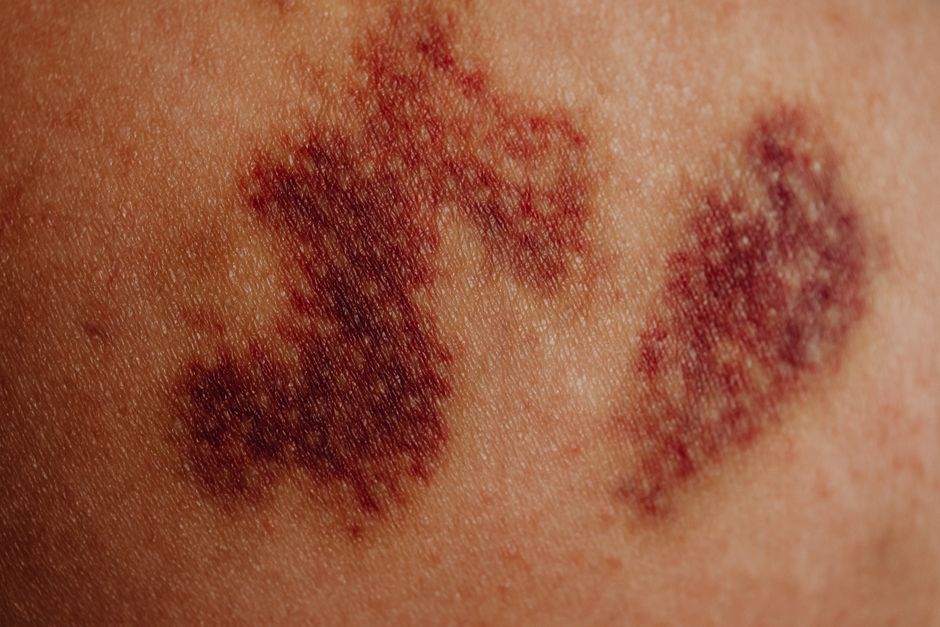
Covering a purple bruise on your face with makeup is possible, but it requires the right technique and products. The key is to use a color corrector before your foundation. A peach or orange corrector neutralizes the purple and blue tones, creating an even base for the rest of your makeup to sit on.
Why Do Bruises Turn Purple in the First Place?
When you hit your face, small blood vessels under the skin break. Blood leaks into the surrounding tissue. That pooled blood is what creates the bruise.
The color changes over time because your body breaks down the blood. Hemoglobin, the protein in red blood cells, goes through stages as it is processed. Early on, the bruise looks red because the blood is fresh and rich in oxygen. Within a day or two, it turns purple or blue as the oxygen is used up. Later, it can look green or yellow as the body finishes clearing the broken-down blood cells.
Purple is the most common color people try to cover. It is also one of the most difficult to hide because it sits opposite the color wheel from yellow and orange. That is exactly why color correction works so well here.
What Color Corrector Should You Use?
Color correction is based on basic color theory. Colors opposite each other on the color wheel cancel each other out. For a purple or blue bruise, the opposite color is yellow or peach. A peach corrector works well for lighter skin tones. A deeper orange or even red-orange corrector works better for medium to dark skin tones.
Do not skip this step. Foundation alone rarely covers a dark bruise. If you layer on enough foundation to hide the purple, it will look thick, cakey, and obvious. The corrector neutralizes the color first, so you need far less foundation on top.
Look for a corrector that is creamy and buildable. Liquid and cream formulas blend more easily into the skin than powder correctors. You want something that layers thin without looking heavy.
Step-by-Step: How To Cover A Purple Bruise On Face With Makeup
Start with clean, moisturized skin. A bruise on dry skin will look worse and makeup will not blend as smoothly. Let the moisturizer absorb fully before you apply anything else.
Apply a thin layer of the color corrector directly to the bruise. Use your fingertip or a small flat brush. Press the product into the skin rather than rubbing it. Rubbing can move the product off the bruise and also irritate the area.
Build the corrector in thin layers. Let the first layer dry slightly before adding a second. You want the purple to look neutralized, not completely covered. The bruise should look like a faint discoloration rather than a dark mark.
Set the corrector with a light dusting of translucent powder. This creates a barrier so the next layers do not disturb the corrector. Use a small fluffy brush and tap, not swipe.
Apply your regular foundation over the area. Use a shade that matches your natural skin tone exactly. Blend the edges outward so there is no visible line where the foundation stops. A damp makeup sponge works well for this because it presses the foundation into the skin without dragging it.
Finish with concealer if needed. Choose a concealer that matches your foundation or is one shade lighter. Apply it only to the center of the bruise and blend the edges. Set everything with a light layer of translucent powder to keep it in place.





How Do You Hide a Bruise on Swollen Skin?
Facial bruises often come with swelling. That changes the surface texture, which makes makeup harder to apply smoothly. The skin is raised and sometimes tender. You need to adjust your technique.
Do not use heavy, matte products on swollen skin. They will settle into any fine lines and make the texture more obvious. A lightweight, hydrating foundation or a tinted moisturizer will look more natural.
Use less product overall. The goal is to even out the color, not to create a perfectly flat surface. Swelling will go down on its own, usually within a few days. Heavy makeup will not speed that up.
Apply makeup gently. Pressing too hard on swollen skin can be painful and can also make the bruise worse by breaking more blood vessels. Use a soft sponge and light pressure.
If the swelling is severe, wait. Makeup will not hide a large, puffy area well. Cold compresses during the first 24 to 48 hours can help reduce swelling faster, which makes the bruise easier to cover later.
How Long Does a Facial Bruise Last?
A typical bruise lasts about one to two weeks. The timeline depends on how hard the impact was and where it is on your face. Areas with more blood flow, like the cheek or forehead, tend to heal faster than areas with less circulation.
The color changes are a normal part of healing. Purple and blue are the early stages. Green and yellow usually mean the bruise is resolving. Once the bruise turns yellow, it is much easier to cover with regular concealer and you may not need the color corrector anymore.
There is no way to make a bruise disappear overnight. Some research suggests that certain creams containing vitamin K or arnica may help slightly, but the evidence is limited. The most reliable approach is to let it heal and use makeup to manage the appearance in the meantime.
When Should You See a Doctor About a Facial Bruise?
Most bruises are minor and heal on their own. But some situations deserve medical attention. If you hit your head and lost consciousness, even briefly, you should be evaluated. If you have vision changes, confusion, or a severe headache after a facial injury, seek care promptly.
See a doctor if the bruise is extremely large or continues to expand over several days. Also seek care if you have difficulty breathing through your nose or suspect your nose may be broken. A bruise that does not start to change color after a week or two is worth having checked.
Frequent bruising without a clear cause is another reason to talk to a healthcare provider. Easy bruising can sometimes signal an underlying issue with blood clotting. This is especially important if you are taking blood thinners or aspirin.
One important note: a bruise on the face that appears without any injury, or that comes with swelling around the eye, should be evaluated. This is not something to manage with makeup alone.
What Mistakes Make a Bruise More Visible?
Using the wrong corrector is the most common mistake. A green corrector, which works well for red acne spots, will do nothing for a purple bruise. It can actually make the bruise look grayish and more obvious.
Skipping the setting powder is another issue. Without powder between the corrector and foundation, the layers mix together. The purple bleeds back through and you end up with a muddy mess.
Applying too much product is also a problem. Thick layers of concealer and foundation draw attention to the area. They look unnatural in person, especially in daylight. Thin layers that build up slowly always look better.
Do not forget to blend past the edge of the bruise. The transition between covered skin and uncovered skin needs to be seamless. Blend the foundation slightly beyond the bruised area so there is no visible border.
Frequently Asked Questions
Can I put makeup on a fresh bruise?
Yes, but wait until any open wound or broken skin has closed. If the skin is intact, makeup is safe to apply.
What color corrector hides a purple bruise?
Peach or orange correctors neutralize purple and blue tones. Choose peach for lighter skin and orange for deeper skin tones.
Does arnica cream help bruises heal faster?
Some studies suggest arnica may reduce bruising, but the evidence is not strong. It will not make a bruise disappear quickly.
How long should I wait to cover a bruise with makeup?
You can cover it as soon as the skin is intact and not open. For best results, wait until the swelling has started to go down, usually after the first day.
