
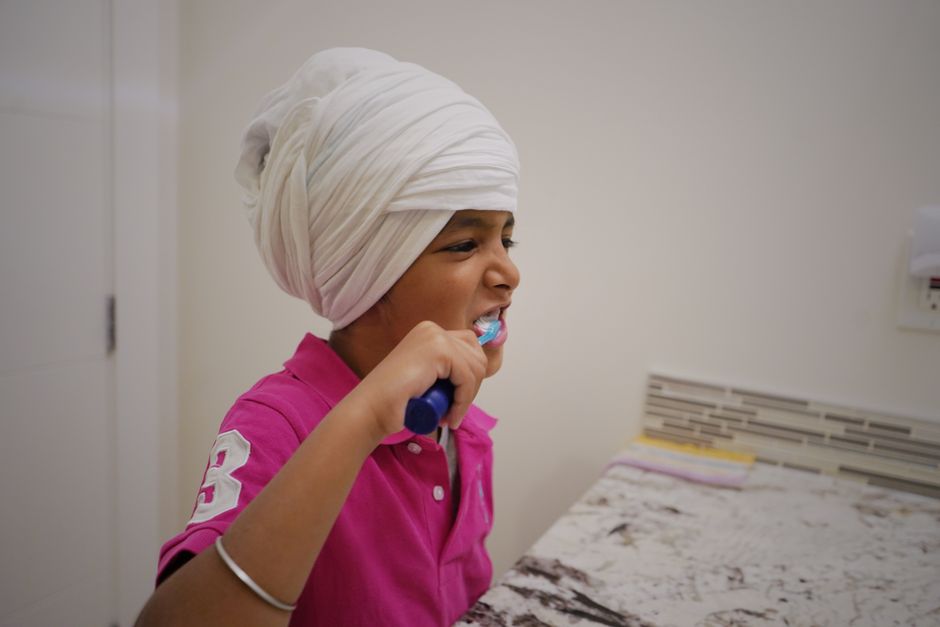
Brushing your teeth correctly takes about two minutes, twice a day, with a soft-bristled toothbrush and fluoride toothpaste. Hold the brush at a 45-degree angle to your gums and use short, gentle, circular strokes on every surface of every tooth. Then spit out the extra toothpaste without rinsing with water afterward. That last step surprises many people, but it is one of the most important parts of the routine.
Most adults have been brushing since childhood. Few were ever taught the details that actually protect teeth. This guide covers what dental professionals generally recommend, why each step matters, and where common habits go wrong.
What Is the Correct Brushing Technique?
The core technique is simple. The angle and the pressure are what most people get wrong.
Start with the brush tilted at about 45 degrees toward your gumline. That angle lets the bristles reach the area where the tooth meets the gum, which is where plaque tends to build up first. Use short back-and-forth or small circular motions. Keep the strokes gentle.
Work systematically through your mouth so no tooth gets skipped:
- Outer surfaces of all teeth, upper and lower
- Inner surfaces of all teeth, upper and lower
- Chewing surfaces of the back teeth
- Behind the very back molars on each side
- The inner surface of the front teeth, where you can tilt the brush vertically and use the tip
For the inner front teeth, many dental professionals suggest holding the brush vertically and making several up-and-down strokes with the front part of the brush. This area is easy to miss with a horizontal grip.
Pressure matters as much as motion. Hard scrubbing does not clean better. Over time it can wear down tooth enamel and cause the gums to recede. A soft brush and light pressure remove plaque just as well without the damage.
How Long Should You Brush and How Often?
Two full minutes, twice a day. That is the standard most dental organizations recommend, and it is the number that shows up consistently in guidance.
Most people brush for far less than two minutes when they are not timing it. A phone timer, a bathroom clock, or an electric toothbrush with a built-in timer all work. Two minutes feels longer than it sounds, which is exactly why the timer helps.
Timing of day matters too. Brushing before bed is the more important of the two sessions. During sleep, saliva flow drops, and saliva is a main defense against acid and bacteria. Leftover food and plaque sit on teeth longer overnight. Brushing last thing before bed removes that material before the long dry stretch.
On frequency, twice daily is the established baseline. Brushing more often than that does not add much benefit and can increase wear on enamel and gums if the technique is rough.
Should You Rinse After Brushing?
No. Spit out the excess toothpaste and stop there.
Fluoride is the reason. It works by staying in contact with the tooth surface, where it helps harden enamel and makes it more resistant to acid attacks from bacteria and food. Rinsing with water immediately after brushing washes away the fluoride before it has time to act. Mouthwash used right after brushing does the same thing.
This is one of the most commonly missed steps. Many people rinse out of habit and never realize it works against them. The general guidance is to spit, not rinse, and to avoid eating or drinking for a short period afterward so the fluoride stays on the teeth longer.
If you use mouthwash, use it at a separate time of day rather than right after brushing. Some clinicians recommend this, though the main point is simply not to wash the fluoride off immediately.
Soft, Medium, or Hard Bristles?
Soft bristles. For nearly everyone, a soft-bristled brush is the right choice.
Medium and hard bristles are more abrasive. They do not remove more plaque in normal use, but they are more likely to damage enamel and irritate or recede gums over time. People sometimes assume firmer bristles mean a deeper clean. The opposite tends to be true for long-term tooth and gum health.
The same logic applies to brushing force. Even a soft brush used with heavy pressure can cause wear. The goal is to feel the bristles against the teeth and gums, not to scrub hard.
Replace your brush, or the brush head on an electric model, roughly every three to four months, or sooner if the bristles look frayed and splayed. Worn bristles clean less effectively.
Manual vs. Electric Toothbrush: Does It Matter?
Both can clean teeth well. The best brush is the one you will use correctly and consistently.
Electric toothbrushes, particularly those with oscillating-rotating heads, have some evidence behind them for reducing plaque and gum inflammation compared with manual brushing. The size of that advantage varies across studies, and it depends heavily on how well someone uses a manual brush. A person with good manual technique can get excellent results.
Electric brushes do offer practical help. Many have built-in timers and pressure sensors that warn you when you press too hard. For people who struggle with technique or timing, those features can make a real difference.
Manual brushing is entirely adequate when done with the right angle, gentle pressure, and full two minutes. Cost and personal preference are reasonable factors in the choice.
What About Flossing and the Rest of the Routine?
Brushing cleans the surfaces it can reach. It does not clean between the teeth, and that is where a large share of cavities and gum problems start.
Cleaning between teeth once a day is the standard recommendation. Floss is the traditional tool, but small interdental brushes and water flossers are alternatives. Some evidence suggests interdental brushes can be more effective than floss for people with wider gaps between teeth. The best tool is the one you will actually use daily.
Fluoride toothpaste is the other key piece. It is the single most important ingredient in the routine, and it is why the no-rinse step matters. Use a toothpaste that contains fluoride unless a dentist has told you otherwise for a specific reason.
Regular dental checkups catch problems early, when they are easier to address. Home care and professional care work together. Good brushing reduces risk but does not replace a dentist’s ability to spot issues you cannot see.
Common Brushing Mistakes to Avoid
Most problems come from a handful of habits. Checking yourself against this list is worth a minute.
- Brushing too hard. Heavy pressure wears enamel and can cause gums to recede.
- Rushing. Under two minutes leaves plaque behind, especially on back teeth.
- Rinsing after brushing. This washes away the fluoride that protects teeth.
- Skipping the gumline. The 45-degree angle exists to reach this area, which is easy to miss.
- Ignoring the inner surfaces. The tongue side of teeth is often neglected.
- Using a worn brush. Frayed bristles do not clean well.
- Brushing right after acidic food or drink. Acid softens enamel temporarily, so brushing immediately can be more abrasive. Waiting a short while is gentler.
One clarification worth knowing: brushing harder does not compensate for brushing briefly. Plaque is soft and comes off with gentle motion. The two-minute duration and thorough coverage do the work, not the force.
Frequently Asked Questions
How long should you brush your teeth?
Two minutes, twice a day. Most people brush for less than that without a timer, so using one helps.
Should you rinse your mouth after brushing?
No, spit out the excess toothpaste and do not rinse with water. Rinsing washes away the fluoride before it can protect your enamel.
Is it better to brush before or after breakfast?
Brushing before breakfast is generally the safer choice, especially if you eat acidic foods. If you brush after eating, wait a short while so softened enamel is not brushed away.
How often should you replace your toothbrush?
About every three to four months, or sooner if the bristles look frayed. Worn bristles clean less effectively.
