
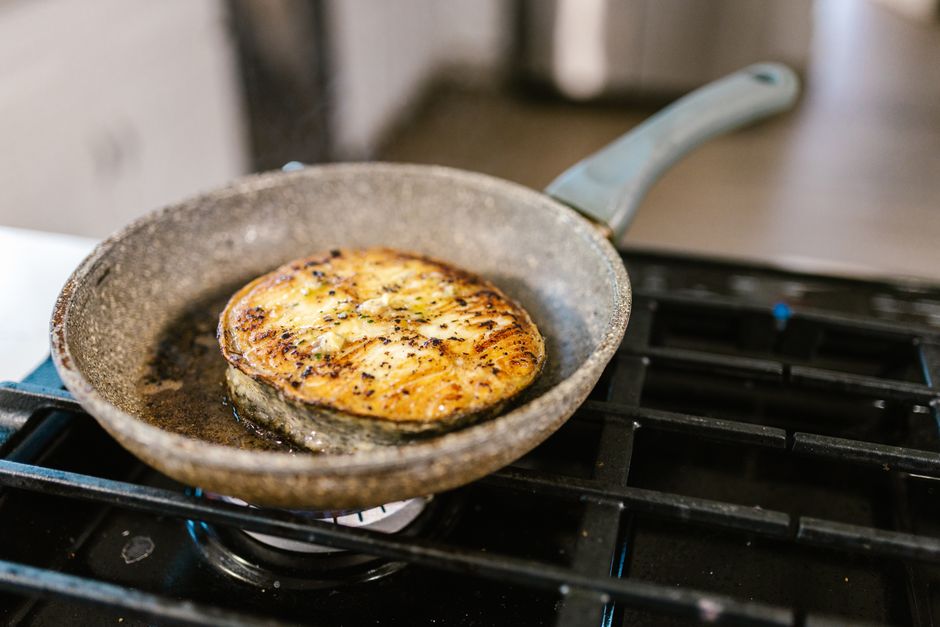
Cooking salmon on the stove takes about 10 minutes from a cold pan to a plated fillet. You pat the fish dry, season it, heat a skillet over medium-high heat with a little oil, lay the fillet in skin-side down, and let it cook undisturbed until the flesh turns opaque and the skin releases cleanly. Flip once, finish for another minute or two, and rest it briefly before serving. That is the whole method. Everything else is detail that makes the difference between good salmon and great salmon.
What Kind of Salmon Should You Buy for Stove Cooking?
Fresh or thawed fillets work best, and thicker center-cut pieces are easier to cook evenly than thin tail ends. A fillet that is roughly 1 inch thick at its thickest point gives you the most control over doneness.
Skin-on fillets are the better choice for pan cooking, even if you plan to remove the skin before eating. The skin holds the flesh together, protects the delicate surface from direct heat, and turns crisp in a hot pan. Skinless salmon works too, but it is more prone to sticking and drying out.
Frozen salmon is fine as long as it is fully thawed before cooking. Thaw it overnight in the refrigerator. A cold center will cook unevenly and leave you with dry edges and a raw middle.
Farm-raised and wild salmon differ in fat content. Wild salmon such as sockeye is leaner and cooks faster. Farmed Atlantic salmon has more fat, which gives it a wider margin for error on the stove. Neither is a health compromise — both are excellent sources of protein and omega-3 fatty acids. The American Heart Association recommends eating fish at least twice a week, and salmon is one of the better choices for that goal.
What Equipment and Ingredients Do You Need?
A heavy skillet is the single most important piece of equipment. Cast iron or a thick stainless steel pan holds heat steadily and gives you a good sear. A nonstick pan works well if you are less confident about sticking, though it will not brown the skin quite as well.
You need very little else:
- Salmon fillets, about 6 ounces each
- 1 to 2 tablespoons of oil with a high smoke point, such as canola, avocado, or light olive oil
- Salt and black pepper
- Optional: butter, lemon, garlic, fresh herbs, or a sauce for finishing
Skip extra virgin olive oil for high-heat searing. It has a lower smoke point and will smoke before the pan is hot enough to sear properly. Save it for drizzling after cooking.
One clarification worth knowing: salmon does not need to reach a sizzling, screaming-hot pan the way a steak does. Medium-high heat is the target. Too hot and the outside burns before the inside cooks. Too cool and the fish steams in its own moisture instead of browning.
How To Cook Salmon On Stove? Step By Step
The method below is the standard approach used by home cooks and professional kitchens alike. It produces a crisp skin, a moist interior, and a browned surface in under 12 minutes.
Step 1: Dry the fish. Pat both sides of the fillet thoroughly with paper towels. Moisture on the surface is the main reason salmon sticks and fails to brown. This step takes 30 seconds and matters more than most people expect.
Step 2: Season. Salt and pepper both sides. If you have time, salt the flesh side and let it sit for 10 to 15 minutes at room temperature. This draws out surface moisture and seasons the fish more evenly.
Step 3: Heat the pan. Place a heavy skillet over medium-high heat and add 1 to 2 tablespoons of oil. Wait until the oil shimmers and moves easily across the pan, about 1 to 2 minutes. Do not add the fish to a cold pan.
Step 4: Lay the fillet in skin-side down. Place it away from you so any splatter moves away from your body. Press gently on the fillet with a spatula for the first 10 to 15 seconds. This keeps the skin flat against the pan so it browns evenly instead of curling.
Step 5: Do not touch it. Let the salmon cook undisturbed for about 4 to 6 minutes, depending on thickness. The flesh will turn opaque from the bottom up. You will see the color change creep about two-thirds of the way up the side of the fillet. That is your cue to flip.
Step 6: Flip once. Slide a thin spatula under the skin and turn the fillet. If the skin resists, give it another 30 seconds — it will release on its own when it is properly browned. Cook the second side for 1 to 3 minutes.
Step 7: Check for doneness. The fish is done when it flakes easily with a fork and the center is opaque. If you use an instant-read thermometer, the USDA recommends a minimum internal temperature of 145°F. Many cooks prefer to pull salmon off the heat at around 125°F to 130°F for a moister texture, but that is a personal preference and falls below the official food safety recommendation.
Step 8: Rest and serve. Move the fillet to a plate and let it sit for 2 to 3 minutes. Carryover heat finishes the cooking and the juices redistribute. Add butter, lemon, or herbs now, not in the pan.




How Do You Know When Salmon Is Done Without a Thermometer?
Look for three signs together rather than relying on any single one. The flesh turns from translucent to opaque, the layers separate into distinct flakes when nudged with a fork, and the thickest part offers slight resistance when pressed. Salmon that feels firm and springy all the way through is likely overcooked.
A thermometer is more reliable than any visual cue. Insert it into the thickest part of the fillet, away from bone or skin. The USDA Food Safety and Inspection Service sets 145°F as the minimum safe internal temperature for fish. At that temperature the fish is fully cooked and safe to eat.
Some cooks pull salmon at a lower temperature for a softer, more translucent center. This is a matter of preference, not a safety standard. If you are cooking for anyone in a high-risk group — pregnant women, young children, older adults, or people with weakened immune systems — follow the 145°F guideline.
Why Does Salmon Stick to the Pan and How Do You Prevent It?
Sticking almost always comes from one of three problems: a pan that is not hot enough, fish that is still wet, or flipping too early. All three are fixable.
Dry the fillet thoroughly and let the pan heat fully before adding oil and fish. Once the salmon is in the pan, leave it alone. The proteins need time to brown and release from the metal. A fillet that sticks when you try to flip it at 2 minutes will usually release cleanly at 4 or 5 minutes. If it still resists, give it more time rather than forcing the spatula underneath.
A well-seasoned cast iron pan or a quality nonstick surface reduces sticking further. Stainless steel works well too, but only when properly preheated.
What Are the Most Common Mistakes When Cooking Salmon on the Stove?
Overcooking is the most frequent error. Salmon goes from perfectly moist to dry and chalky in a matter of a minute or two. The margin is narrow, which is why timing by thickness and checking early matters.
Other common mistakes include:
- Cooking from frozen, which dries the outside before the center thaws
- Using too little oil, which causes sticking and uneven browning
- Crowding the pan, which drops the temperature and steams the fish instead of searing it
- Flipping more than once, which breaks the delicate flesh
- Skipping the rest, which means juices run out onto the plate instead of staying in the fish
Cooking two fillets in a large pan is fine. Four in a small pan is not. Give each piece room to breathe, or cook in batches.
How Should You Season and Finish Stove-Cooked Salmon?
Salt and pepper alone produce excellent salmon. Beyond that, the timing of when you add flavor matters more than which flavor you choose.
Add dry seasonings — salt, pepper, paprika, garlic powder, dried herbs — before cooking so they have time to bloom in the hot oil. Add fresh garlic, ginger, or delicate herbs in the last minute of cooking so they do not burn. Add butter, lemon juice, and fresh herbs after the fish comes off the heat.
A simple pan sauce takes about a minute. After removing the salmon, add a knob of butter to the hot pan, let it melt and foam, squeeze in lemon juice, and spoon the mixture over the fillets. The browned bits left from the fish carry most of the flavor.
Salmon also takes well to a marinade, but keep it short. Acidic marinades break down the surface of the fish quickly, and anything beyond 30 minutes can make the texture mushy. A dry rub or a brief brush of oil and spice works just as well with less risk.
Can You Cook Salmon on the Stove From Frozen?
It is possible but not ideal. Cooking salmon from frozen on the stove tends to overcook the outside before the center thaws, and the result is uneven. The USDA recommends thawing fish in the refrigerator before cooking for the best and safest result.
If you must cook from frozen, use a lower heat, cover the pan, and allow significantly more time. Check the internal temperature with a thermometer rather than relying on time. This method works in a pinch but will not give you the same texture as a properly thawed fillet.
Frequently Asked Questions
How long does salmon take to cook on the stove?
Most 1-inch fillets take about 6 to 9 minutes total, with 4 to 6 minutes on the first side and 1 to 3 minutes after flipping. Thinner fillets cook faster, so check early.
Should I cook salmon skin-side down first?
Yes, start skin-side down to get a crisp skin and protect the delicate flesh. Flip once, near the end, to finish the top.
What temperature should salmon be cooked to?
The USDA recommends a minimum internal temperature of 145°F. Some cooks prefer pulling it off the heat earlier for a moister texture, but 145°F is the official food safety standard.
Why did my salmon turn out dry?
Dry salmon is almost always overcooked or cooked from frozen. Use a thermometer, check early, and rest the fish for 2 to 3 minutes after cooking.
