
Menopause weight gain is not about willpower or a broken metabolism. It is a biological shift driven by declining estrogen, which changes how your body stores fat and uses energy. Combating it requires adjusting your approach to food, movement, and sleep rather than simply eating less and exercising harder. The strategies that work are specific, evidence-based, and often the opposite of what diet culture tells you.
What Causes Menopause Weight Gain?
Estrogen does more than regulate your reproductive system. It also helps your body use insulin effectively and determines where you store fat. When estrogen drops during perimenopause and menopause, your cells become less sensitive to insulin. Your body starts storing more fat around your abdomen rather than your hips and thighs.
This is not random weight gain. It is a shift in fat distribution. The National Institute on Aging explains that muscle mass naturally decreases with age, which lowers your resting metabolic rate. Less muscle means you burn fewer calories at rest. If you eat the same way you did at 35, you will gain weight at 50.
Stress compounds this. Cortisol, the stress hormone, tends to rise during menopause. Higher cortisol encourages belly fat storage and can make you crave high-sugar foods. Sleep disruption, which affects up to 60 percent of menopausal women according to the North American Menopause Society, also raises cortisol and disrupts hunger hormones like ghrelin and leptin.
Does Strength Training Combat Menopause Weight Gain Better Than Cardio?
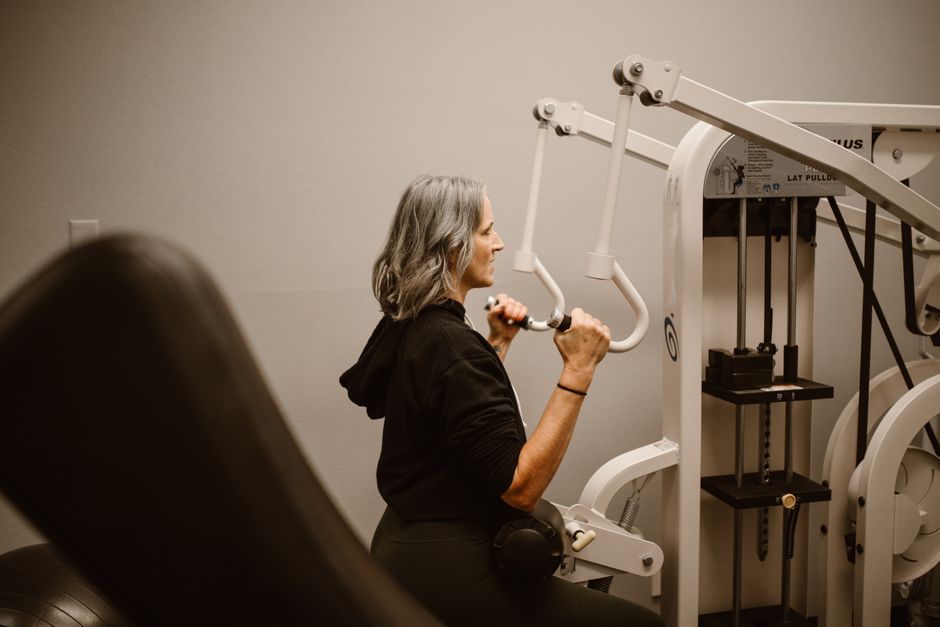
Yes. Strength training is the single most effective exercise for menopause weight management. Research published in the journal Menopause found that women who did resistance training twice per week maintained lean muscle mass and had less abdominal fat gain compared to women who only did cardio.
Cardio burns calories during the activity. Strength training builds muscle that burns calories all day. Each pound of muscle burns about six calories per day at rest, while a pound of fat burns only two. Over months, that difference adds up.
You do not need heavy weights to start. Bodyweight squats, lunges, push-ups, and resistance bands work. The key is progressive overload — gradually making the exercise harder as you get stronger. Two to three sessions per week, 20 to 40 minutes each, targeting all major muscle groups is enough.
Cardio still has a place. Walking, swimming, or cycling supports heart health and helps with calorie balance. But if you only have time for one type of exercise, strength training gives you more metabolic benefit for menopause weight management.
What Dietary Changes Actually Work for Menopause Weight?
Eating less is not the answer. Restricting calories too much during menopause can backfire because your body interprets it as stress and holds onto fat. Instead, focus on what you eat rather than how much.
Protein becomes more important after 40. Research shows that women going through menopause need more protein to maintain muscle mass. Aim for 25 to 30 grams of protein per meal. Eggs, Greek yogurt, chicken, fish, tofu, and lentils are good sources. Spreading protein across meals is more effective than eating most of it at dinner.
Fiber helps with insulin sensitivity and fullness. The Academy of Nutrition and Dietetics recommends 25 grams of fiber per day for women. Vegetables, beans, oats, and berries provide fiber without many calories. A high-fiber breakfast like oatmeal with berries can stabilize blood sugar for hours.
Some women find that reducing refined carbohydrates helps. White bread, pasta, sugary drinks, and pastries spike blood sugar and insulin. When insulin is high, your body stores fat more easily. Swapping refined carbs for whole grains, vegetables, and legumes can reduce this effect.
There is no magic food that reverses menopause weight gain. No amount of green tea, apple cider vinegar, or grapefruit will override the hormonal shift. Consistency with protein and fiber matters far more than any single superfood.
-
 What is the Average Weight Gain During Menopause? The Short Answer
 -
When Does.menopause Start? Everything You Need to Know
-
What Average Age of Menopause? Everything You Need to Know
-
Can You Get Ovarian Cysts After Menopause? The Real Answer
-
AquaSculpt Reviews & Complaints 2025 Update. Is It Legit Or Scam?




Does Intermittent Fasting Help with Menopause Weight Gain?
Some women report success with intermittent fasting, but the evidence is mixed. A 2021 review in Nutrients found that time-restricted eating led to modest weight loss in postmenopausal women, but the results were similar to simply reducing daily calories.
The concern with fasting during menopause is that it can increase cortisol. If your stress levels are already high, fasting for 16 hours may make it harder for your body to manage blood sugar and fat storage. Some women also experience worsened hot flashes and sleep disruption when they skip meals.
If you want to try it, a gentler approach works better. A 12-hour overnight fast — stopping eating by 7 p.m. and having breakfast at 7 a.m. — is less stressful than a 16-hour fast. This gives your body a break from digesting without triggering a stress response.
Intermittent fasting is not necessary for menopause weight management. It is one tool among many. If it makes you irritable, hungry, or unable to sleep, it is not helping.
How Does Sleep and Stress Affect Menopause Weight?
Poor sleep and high stress are underrated drivers of menopause weight gain. A study from the University of Pittsburgh found that women who slept fewer than six hours per night had higher levels of belly fat compared to women who slept seven to eight hours.
When you are sleep-deprived, your body produces more ghrelin, the hunger hormone, and less leptin, the hormone that signals fullness. You also crave high-calorie foods more intensely. This is not a character flaw — it is biology.
Cortisol from chronic stress encourages fat storage around the abdomen. It also breaks down muscle tissue, which lowers your metabolism. Managing stress is not optional for weight management during menopause. It is as important as diet and exercise.
Practical steps that help include keeping a consistent bedtime, avoiding alcohol close to sleep, and doing something relaxing for 10 minutes before bed. A short walk outdoors in the morning can help regulate your circadian rhythm. These small habits compound over time.
What About Hormone Therapy and Supplements?
Menopausal hormone therapy, also called MHT or HRT, can help with weight management indirectly. By stabilizing estrogen levels, it improves insulin sensitivity and reduces abdominal fat storage. A study in the Journal of Clinical Endocrinology and Metabolism found that women using hormone therapy had less visceral fat gain compared to women who did not.
Hormone therapy is not a weight loss drug. It does not burn fat. It addresses the hormonal environment that makes weight gain more likely. The decision to use it should be made with a healthcare provider based on your personal health history and symptoms.
Supplements are a different story. There is no high-quality evidence that any supplement directly causes weight loss during menopause. Some women take calcium and vitamin D for bone health, which is important because bone density declines after menopause. Vitamin D deficiency is also linked to higher body fat, but correcting a deficiency is not the same as taking extra for weight loss.
Be skeptical of supplements marketed specifically for menopause weight loss. Most are not regulated by the FDA and the claims are not backed by research. Your money is better spent on quality protein, vegetables, and a gym membership.
| Strategy | What It Does | Evidence Level |
|---|---|---|
| Strength training | Builds muscle, raises resting metabolism | Strong |
| Higher protein intake | Supports muscle maintenance, increases fullness | Strong |
| Fiber-rich diet | Improves insulin sensitivity, reduces cravings | Strong |
| Quality sleep | Regulates hunger hormones, lowers cortisol | Strong |
| Hormone therapy | Improves insulin sensitivity, reduces visceral fat | Moderate |
| Intermittent fasting | Reduces calorie intake in some women | Mixed |
| Weight loss supplements | No proven effect on menopause weight | None |
Common Misconceptions About Menopause Weight Gain
One of the most persistent myths is that your metabolism crashes during menopause and you cannot do anything about it. Your metabolism does slow, but only by about 1 to 2 percent per decade after age 20. The bigger factor is muscle loss from being less active. You can rebuild muscle at any age.
Another myth is that you need to drastically cut calories. Severely restricting food slows your metabolism and causes muscle loss. This makes weight management harder in the long run. Eating enough protein and fiber while staying active is more effective than starving yourself.
Some people believe that belly fat during menopause is permanent. It is not. Visceral fat is more metabolically active than fat on your hips, which means it responds well to lifestyle changes. Strength training and improved sleep specifically target abdominal fat storage.
The idea that menopause weight gain is inevitable is false. It is common, but it is not unavoidable. Women who maintain muscle, eat enough protein, sleep well, and manage stress tend to maintain their weight through the transition.
Frequently Asked Questions
How much weight do women typically gain during menopause?
On average, women gain about one to two pounds per year during perimenopause and menopause, though individual results vary widely based on lifestyle and genetics.
Can walking help with menopause weight gain?
Walking supports overall calorie balance and heart health, but it is not enough on its own to build the muscle mass needed to counteract metabolic slowdown.
Does menopause weight gain ever go away?
Yes, with consistent strength training, adequate protein intake, and good sleep habits, many women lose the weight or prevent further gain after menopause.
When should I see a doctor about menopause weight gain?
If you are gaining weight rapidly, have other symptoms like fatigue or mood changes, or if lifestyle changes are not working after three months, talk to your healthcare provider.
