
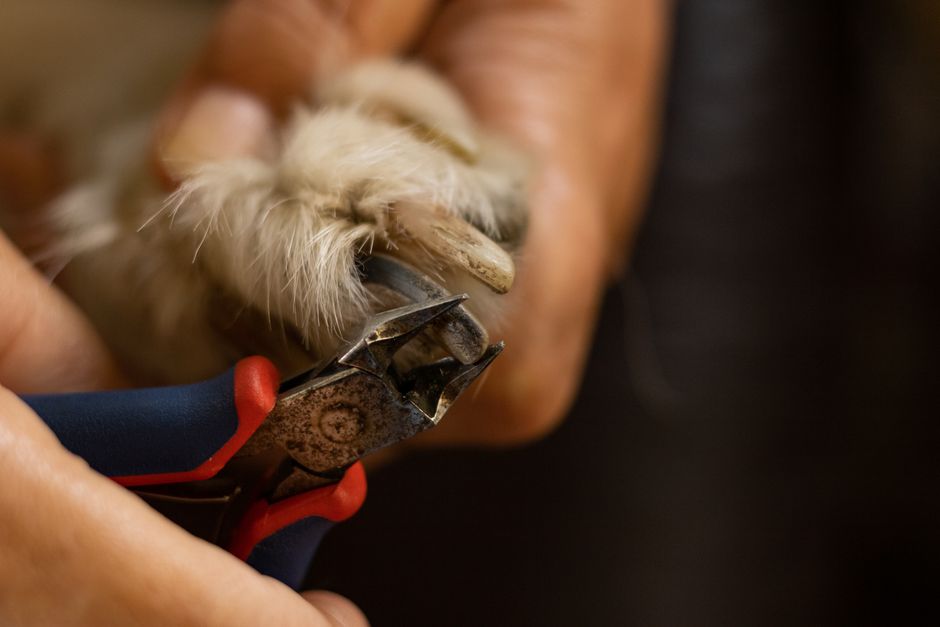
Clipping a dew claw safely comes down to three things: good light, a sharp pair of clippers, and small cuts. Trim only the thin, curved tip of the nail, a little at a time, and stop before you reach the pink center. On dogs with clear or light-colored nails, you can often see that pink center — the quick — and avoid it. On dark nails you can’t see it, so you take thinner slices and check the cut surface after each one.
The dew claw is the nail on the inner side of the leg, higher up than the other toes. On many dogs it never touches the ground, so it doesn’t wear down. That’s why it can grow into a circle and curl back toward the skin if you leave it too long. Learning to clip it well is mostly about patience and knowing when to stop.
What Is the Quick and Why Does It Matter?
The quick is the living tissue inside the nail. It contains blood vessels and a nerve, which is why nicking it bleeds and hurts.
On a dog’s nail, the quick runs through the center and extends partway down the length of the nail. The farther the nail grows, the farther the quick grows with it. That’s the part people miss. A nail that hasn’t been trimmed in months has a longer quick than one kept short. This is why a dog with overgrown dew claws needs several small trims over weeks rather than one big cut. Each trim encourages the quick to recede a little.
Puppies have relatively short quicks compared with the length of their nails, which makes early trimming easier. Adult dogs with neglected nails are the harder case. If you’re unsure how much to take, taking too little is always the safer mistake.
What Supplies Do You Need Before You Start?
You need very few things, but the right ones matter. Dull clippers crush the nail instead of cutting it, which is more painful and more likely to split the quick.
- Sharp nail clippers sized for your dog. Scissor-style or guillotine-style both work; pick what you can control.
- A bright light or a headlamp so you can see the nail clearly.
- Styptic powder or a clotting product from a pet store, in case you nick the quick.
- Treats for reward and to keep your dog calm.
- A towel or non-slip surface so your dog doesn’t slide around.
Some owners use a rotary grinder instead of clippers. Grinders remove small amounts of nail at a time and can leave a smoother edge, but they also generate heat and noise. Many dogs tolerate clippers better. Either tool works if you use it carefully.
How To Clip Dew Claws Safely Without Cutting The Quick
Work in small steps and check the nail after every cut. The goal is to remove the thin, curved tip and no more until you can see where the quick ends.
Hold the paw gently but firmly. Support the leg so the dew claw is stable and you’re not cutting at an angle. Position the clipper so the blade is perpendicular to the nail — straight across, not slanted — and make one clean cut.
Take off just the tip first. On light nails, look at the cut surface. You’ll see a solid, pale center surrounded by a darker ring. As you get closer to the quick, a small gray or pink dot appears in the middle of that solid center. That dot is your stop signal. Cut no further.
On black or dark nails, you can’t see the quick. Take very thin slices and look at the cut face after each one. A chalky, dry surface means you’re still in the dead part of the nail. A darker, moist-looking center means you’re getting close. Stop there.
If the dew claw has grown in a full circle and is touching or pressing into the skin, don’t try to clip through the curve in one go. Take small cuts at the tip and work back gradually, or have a veterinarian handle it. A nail that has grown into the pad can cause infection and needs professional care.
How Do You Know When To Stop?
Stop when you see the quick or the warning sign of it, not when the nail looks “short enough.”
For light nails, the pink center is visible and obvious. For dark nails, the moist dark center is the cue. If you’re ever unsure, stop and come back in a week or two. Nails grow slowly, and a second short session is far better than one cut that goes too far.
It helps to think of dew claw trimming as maintenance rather than a one-time job. Dogs whose dew claws are checked and tipped every few weeks rarely develop the long, curled nails that cause trouble. Dogs whose nails are ignored for months are the ones that end up at the vet.
What Should You Do If You Cut the Quick?
Stay calm and apply pressure. A nicked quick bleeds more than you might expect, but it usually stops with steady pressure and a clotting product.
Press styptic powder or a clean cloth firmly against the nail for a few minutes. Keep your dog still and quiet. Most minor nicks stop bleeding within several minutes. If bleeding continues past about ten minutes despite pressure, or if the nail looks badly split, call your veterinarian.
Don’t scold your dog or act alarmed. Dogs pick up on stress, and a bad experience can make the next trim much harder. Give a treat once the bleeding stops and end the session there.
How Often Should Dew Claws Be Trimmed?
Most dogs need their dew claws checked every three to four weeks, though the right interval depends on how fast each dog’s nails grow. Some dogs need more frequent attention; some need less.
The simplest approach is to look at the dew claws whenever you trim the other nails. If the dew claw is starting to curve or the tip is getting close to the pad, it’s time. If it still has a clear gap and a straight tip, you can wait.
Dogs that spend a lot of time on hard surfaces wear down their other nails naturally, but dew claws usually don’t touch the ground at all. That’s why they often need more frequent trimming than the rest of the paw.
When Should You Let a Veterinarian or Groomer Do It?
Get professional help if the dew claw is curled into the skin, if your dog is very anxious or painful about having the paw handled, or if you can’t clearly see the nail.
Some dew claws are loosely attached and floppy. These can catch on things and tear, and a veterinarian may recommend removal in certain cases — but that’s a surgical decision, not a grooming one. Ask your vet whether removal is appropriate for your dog rather than assuming it’s routine.
If your dog has never had dew claws trimmed and they’re significantly overgrown, a vet or groomer can show you where the quick is on your specific dog. Once you’ve seen it once, the rest is easier.
Frequently Asked Questions
Can I cut my dog’s dew claws at home?
Yes, most owners can trim dew claws at home with sharp clippers, good light, and small cuts. If the nails are badly overgrown or curled into the skin, have a veterinarian or groomer do the first trim.
What happens if you cut the quick on a dew claw?
It bleeds and is painful for your dog, but it usually stops with firm pressure and a clotting product within several minutes. If bleeding continues past about ten minutes, call your veterinarian.
How do I know where the quick is on a black dew claw?
You can’t see it directly, so take very thin slices and check the cut surface. A chalky, dry center means keep going; a moist, dark center means stop.
Do dew claws need to be trimmed if they don’t touch the ground?
Yes. Because they usually don’t wear down naturally, dew claws can grow in a circle and press into the skin, so they often need more frequent trimming than the other nails.
