
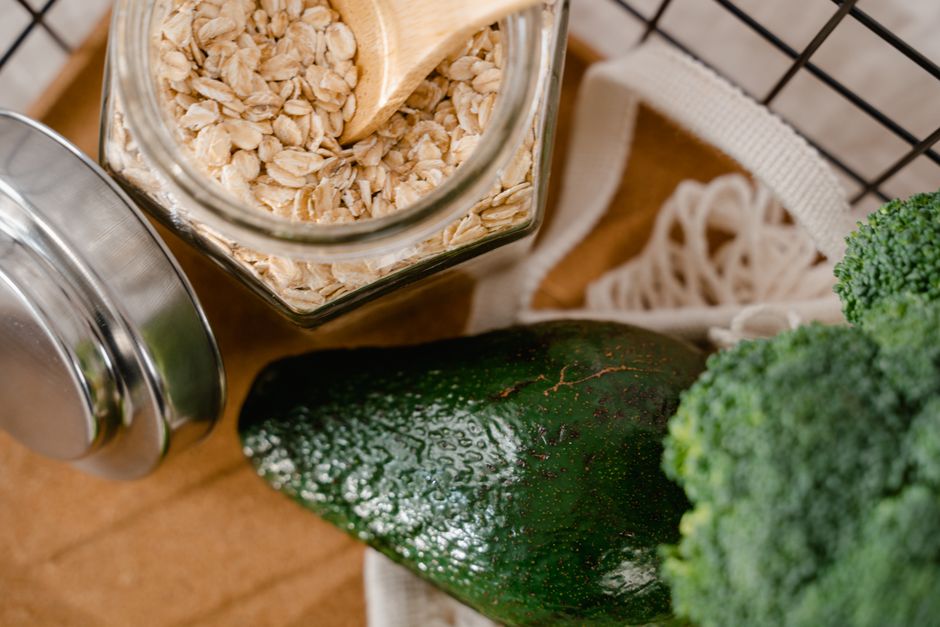
There is no single food or supplement that “clears” your gut. Your gut clears itself constantly through regular bowel movements, and the biggest levers you control are fiber, fluid, and movement. Probiotics can help in some situations, but the evidence is specific and narrower than most marketing suggests.
Fiber adds bulk and holds water in the stool, which makes it easier to pass. Fluid keeps that fiber working. Physical activity stimulates the muscles of the colon. Probiotics may shift the gut’s bacterial balance, but whether that translates into better digestion depends on the strain, the dose, and the person.
What Does “Clearing Your Gut” Actually Mean?
Your colon is not a storage tank that needs flushing. It is an active organ that moves waste along through rhythmic muscle contractions called peristalsis and expels it through the rectum. A healthy gut clears itself many times a week without any special product.
When people say they want to “clear their gut,” they usually mean one of three things: relieve constipation, recover after a stomach bug or course of antibiotics, or improve general digestion and bloating. These are different problems with different solutions.
Constipation is the most common. Clinically, it is often defined as fewer than three bowel movements per week, hard or lumpy stools, straining, or a feeling of incomplete emptying. The Rome criteria — a widely used set of diagnostic standards for functional bowel disorders — describe constipation in similar terms.
That distinction matters because a product marketed to “detox” or “cleanse” your gut is not treating constipation. It is selling a concept. The colon does not accumulate a layer of old waste that needs to be scraped away. That idea has been repeated for over a century and has no anatomical basis.
How Does Fiber Help You Clear Your Gut?
Fiber is the single most evidence-supported dietary tool for regular bowel function. It works in two main ways, and both matter.
Soluble fiber dissolves in water and forms a gel. It softens stool and slows digestion. Good sources include oats, barley, beans, lentils, apples, and psyllium husk.
Insoluble fiber does not dissolve. It adds bulk and speeds transit through the colon. Good sources include whole wheat, brown rice, vegetables, and nuts.
Most plant foods contain both types in varying amounts, so the practical advice is the same: eat a variety of plant foods. The general dietary guidance for adults in the United States is roughly 25 to 30 grams of fiber per day, though most people eat about half that. That figure comes from federal dietary guidelines, not from a supplement label.
Why Increasing Fiber Too Fast Backfires
If you jump from 12 grams of fiber a day to 30 overnight, you will likely feel worse before you feel better. Bloating, gas, and cramping are common when fiber intake rises quickly. The bacteria in your colon ferment fiber and produce gas as a byproduct. More fiber means more fermentation.
Increase gradually over a few weeks. Drink more water as you do. Fiber without adequate fluid can actually make constipation worse, because insoluble fiber needs water to soften stool rather than forming a hard mass.
Which Foods Are Best For Gut Clearance?
Whole plant foods are the foundation. No single food clears the gut, but a consistent pattern of fiber-rich eating supports regular bowel function better than any isolated product.
- Legumes. Beans, lentils, and chickpeas are high in both fiber types and support regular bowel movements.
- Whole grains. Oats, barley, and whole wheat provide soluble and insoluble fiber.
- Fruits with skin. Apples, pears, and berries add fiber and water.
- Vegetables. Leafy greens, broccoli, and carrots add bulk with minimal calories.
- Psyllium husk. A well-studied soluble fiber that forms a gel and is often used for constipation.
- Prunes and prune juice. Prunes contain fiber plus sorbitol, a sugar alcohol that draws water into the bowel. Some studies suggest prunes can help with mild constipation.
- Kiwifruit. Some research indicates kiwifruit can improve bowel frequency in people with constipation, though the evidence is not as strong as for fiber overall.
Fermented foods — yogurt with live cultures, kefir, sauerkraut, kimchi, miso — are sometimes grouped with “gut-clearing” foods. They do not clear the gut in a mechanical sense. They may introduce live microorganisms, and some studies suggest fermented foods can influence the gut microbiome, but the clinical effects on bowel function are not well established.
Do Probiotics Actually Help?
Probiotics help in some specific situations. The evidence is strongest for antibiotic-associated diarrhea, some cases of infectious diarrhea, and certain digestive conditions under medical supervision. For general “gut clearing” in healthy people, the evidence is much weaker.
The word “probiotic” covers a huge range of organisms. A strain that helps with one condition may do nothing for another. Effects are strain-specific and dose-specific. A product label that says “probiotics” tells you almost nothing about whether it will help you.
Some studies suggest certain probiotic strains can improve stool frequency or consistency in people with constipation. Results vary widely across studies, and no single strain has emerged as clearly superior. The evidence is mixed.
There is also a practical point many people miss. Probiotics are live microorganisms, and they do not permanently colonize the gut in most cases. They pass through. Benefits, when they occur, generally require continued use. Once you stop, the gut bacterial community tends to return toward its previous state.
For most healthy adults with mild digestive complaints, food sources of fermented products are a reasonable starting point. They are generally cheaper and provide additional nutrients. Supplements are worth discussing with a clinician if you have a specific condition.
What About Water, Movement, and Timing?
Fiber gets the attention, but three other factors matter just as much for regular bowel function.
Fluid. Fiber needs water to work. Drinking enough fluid — generally guided by thirst and urine color — supports softer stool. There is no universal “eight glasses” rule that applies to everyone, and needs vary with climate, activity, and diet.
Physical activity. Movement stimulates colonic muscle activity. Regular walking and general physical activity are associated with better bowel regularity. This is one of the more consistent findings in the literature.
Routine. The colon has its own rhythm. Trying to have a bowel movement at a consistent time, often after a meal when the gastrocolic reflex is strongest, can help establish regularity. The gastrocolic reflex is a normal physiological response in which eating stimulates colon activity.
None of these is dramatic. Together, they do more for most people than any single supplement.
When Should You See a Doctor?
Most constipation is manageable with diet and lifestyle. Some signs warrant medical attention rather than self-treatment.
- Blood in the stool or black, tarry stools
- Unexplained weight loss
- Severe abdominal pain
- Constipation that is new and persistent, especially after age 45
- A family history of colon cancer
- Constipation that does not improve with dietary changes
These do not mean something serious is present. They mean a clinician should evaluate the cause. Self-treating with fiber or probiotics is not appropriate when warning signs are present.
If you have been diagnosed with a digestive condition such as irritable bowel syndrome, inflammatory bowel disease, or a history of bowel surgery, talk to your clinician before making significant changes to fiber or probiotic intake. The general advice in this article may not apply to your situation.
What About Cleanses and Detox Products?
No clinical evidence supports the idea that commercial cleanses or detox products improve gut health. Many contain laxative ingredients such as senna or magnesium citrate. These force bowel movements but do not “clean” anything that a normal bowel movement would not.
Regular use of stimulant laxatives can lead to dependence, where the bowel becomes less responsive without them. This is a recognized clinical concern with chronic laxative use. Occasional use under medical guidance is different from routine “cleansing.”
The gut does not need to be reset. It maintains itself through mucus turnover, cell replacement, and regular transit. The best support is steady fiber, adequate fluid, movement, and medical attention when something is genuinely wrong.
Frequently Asked Questions
How long does it take to clear your gut with fiber?
Most people notice improvements in bowel regularity within one to two weeks of increasing fiber gradually. Rushing the increase can cause bloating, so slow changes tend to work better.
Are probiotics necessary for gut health?
No, probiotics are not necessary for most healthy adults. Food sources of fiber and fermented foods support gut function without supplements, though probiotics may help in specific situations like antibiotic-associated diarrhea.
What is the fastest way to relieve constipation?
For occasional constipation, increasing fluid and fiber, gentle activity, and over-the-counter osmotic laxatives like polyethylene glycol are commonly used. Persistent or severe constipation should be evaluated by a clinician.
Do detox teas and cleanses work?
No clinical evidence supports detox teas or cleanses for gut health. Many contain laxatives that force bowel movements but do not improve digestive function and can cause dependence with regular use.
