
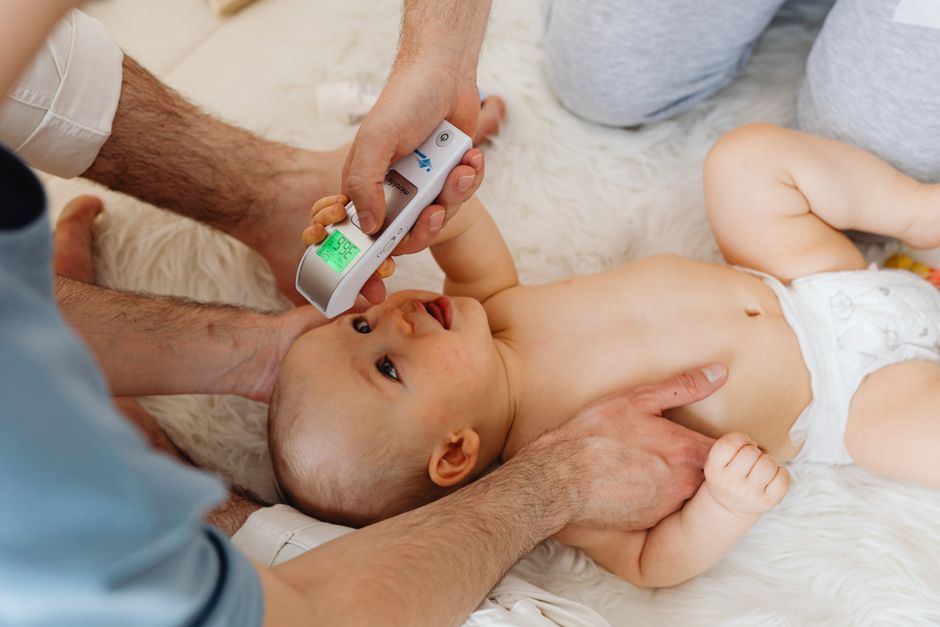
Baby acne looks alarming, but it is one of the most common and harmless newborn skin conditions. Most cases clear up on their own within a few weeks without any treatment. The best thing you can do is keep your baby’s skin clean and dry, resist the urge to pick or scrub the bumps, and avoid any lotions or creams unless your pediatrician recommends them. Patience is the real cure here.
What Does Baby Acne Look Like?
Baby acne appears as small red or white bumps on the skin. It usually shows up on the cheeks, forehead, and chin. Sometimes you will see it on the back or chest too.
The bumps can look worse when your baby is fussy or crying. Heat and saliva can also make the redness more noticeable. This does not mean the acne is getting worse. It just means blood flow to the skin has increased, which makes the red areas stand out more.
Baby acne is different from milia, which are tiny white cysts that many newborns also get. Milia look like small pearls under the skin and usually appear on the nose. Both conditions are harmless and both resolve on their own.
What Causes Baby Acne?
The exact cause is not fully understood, but hormones are the leading explanation. During pregnancy, hormones pass from mother to baby through the placenta. After birth, these hormones remain in the baby’s system for a while.
These maternal hormones can overstimulate the baby’s oil glands. The glands produce extra oil, which blocks the tiny pores in the skin. The blocked pores then become inflamed and turn into the bumps you see.
Some research suggests that a type of yeast on the skin may also play a role. However, this is not fully confirmed. What is clear is that baby acne is not caused by poor hygiene. It is not caused by anything you did or did not do during pregnancy or after birth.
How Long Does Baby Acne Last?
Baby acne typically appears between two and four weeks of age. It often peaks around the six-week mark. Most cases clear up completely by the time the baby is three to four months old.
Every baby is different. Some babies have only a few bumps that disappear in a week. Others have more noticeable acne that lingers for a couple of months. Both situations are normal.
If the acne lasts beyond four months, or if it spreads and becomes severe, talk to your pediatrician. Persistent acne in an older infant may have a different cause that needs evaluation.





How To Clear Up Baby Acne: What You Need To Do
The simplest approach is also the most effective: do very little. Baby acne is a self-limiting condition, meaning it resolves on its own without medical intervention.
Here is what you should do:
- Wash your baby’s face once a day with warm water and a mild baby soap.
- Pat the skin dry gently. Do not rub.
- Keep milk, formula, and spit-up off the face. Wipe it away promptly.
- Dress your baby in light cotton clothing to avoid overheating.
- Keep your baby’s nails trimmed so they cannot scratch the bumps.
That is the complete list. There is no evidence that anything else speeds up the process.
What Not To Do
Many products marketed for adult acne are dangerous for babies. Never use acne creams, washes, or spot treatments on an infant. Ingredients like benzoyl peroxide, salicylic acid, and retinoids are too harsh for newborn skin.
Do not scrub the bumps. Scrubbing irritates the skin and can make the acne worse. It can also break the skin and lead to infection.
Do not pick, squeeze, or pop the bumps. This can cause scarring and introduce bacteria into the skin.
Do not apply oils, petroleum jelly, or heavy moisturizers to the affected areas. These products can block pores further and prolong the condition. If your baby has dry skin elsewhere, use a gentle moisturizer only on the dry patches and avoid the acne-prone areas.
When To Call The Doctor
Baby acne is harmless, but some skin conditions look similar and require treatment. Contact your pediatrician if you notice any of the following:
- The bumps ooze fluid, crust over, or bleed.
- The skin becomes swollen or very red.
- Your baby develops a fever.
- The acne appears with other symptoms like poor feeding or lethargy.
- The rash spreads rapidly or looks different from typical baby acne.
These signs may indicate a bacterial or fungal infection rather than simple baby acne. Your pediatrician can examine the skin and determine the cause. They may prescribe a gentle topical treatment if an infection is present.
Can You Prevent Baby Acne?
No. Because the cause is hormonal, there is nothing you can do to prevent baby acne. It is not related to your diet, your skincare routine, or how often you bathe your baby.
What you can do is prevent the acne from getting worse. Keeping the skin clean and avoiding irritants will help. But even with perfect care, some babies will still develop acne. That is normal and not a reflection of your parenting.
Does Breastfeeding Cause Baby Acne?
No. Breastfeeding does not cause baby acne. There is a common myth that certain foods in a mother’s diet pass through breast milk and trigger acne in the baby. No clinical evidence supports this claim.
The hormones that cause baby acne come from the pregnancy itself, not from breast milk. You do not need to change your diet while breastfeeding to prevent or treat baby acne.
Frequently Asked Questions
Can I use breast milk on baby acne?
Some parents apply breast milk to baby acne, but no clinical studies confirm this works. Breast milk has antibacterial properties, but it has not been proven to clear acne faster than doing nothing.
Is baby acne itchy or painful for my baby?
Baby acne does not usually cause itching or pain. If your baby seems uncomfortable or is scratching the area constantly, have a pediatrician look at it because another skin condition may be present.
When should baby acne start to clear up?
Most baby acne clears by three to four months of age. If the bumps persist beyond four months or worsen significantly, consult your pediatrician.
Does baby acne leave scars?
No. Baby acne does not leave scars when left alone. Scarring only happens if the bumps are picked or scratched aggressively.
