
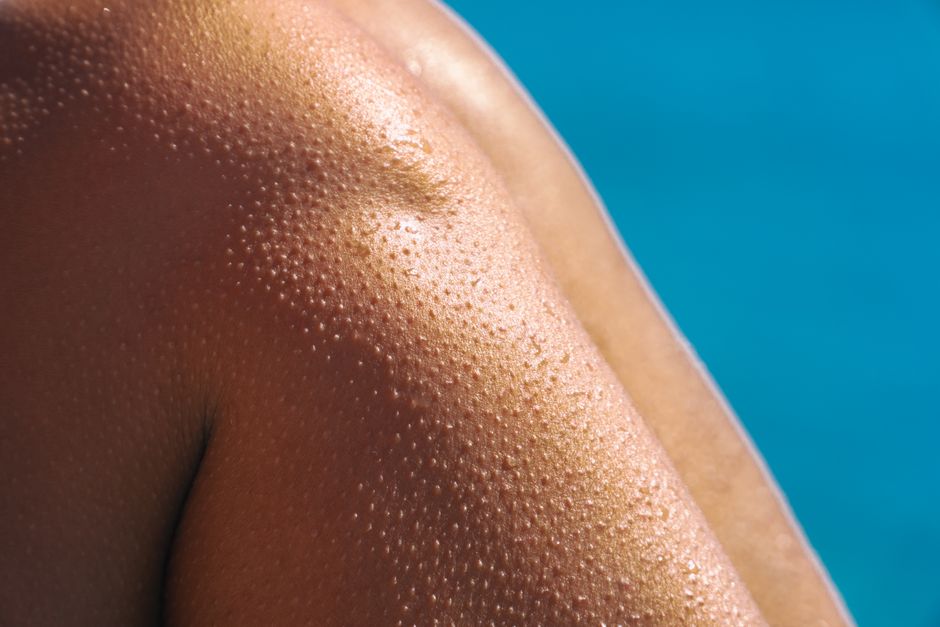
Heat rash — also called prickly heat or miliaria — happens when sweat ducts get blocked and sweat leaks into the skin instead of reaching the surface. The fastest way to clear it is to cool the skin, keep it dry, and stop the sweating that caused it. Most cases settle within a few days once you remove the heat and moisture, and the same steps that clear a rash are the ones that keep it from returning.
What Actually Causes Heat Rash?
Sweat travels from glands deep in the skin to the surface through narrow ducts. When those ducts get blocked, sweat gets trapped underneath. The trapped sweat triggers inflammation, and that inflammation shows up as the small red or clear bumps people call heat rash.
The blockage usually comes from a mix of heat, humidity, and friction. Tight clothing, heavy blankets, and skin folds that rub together all raise the odds. So does anything that keeps sweat sitting on the skin instead of evaporating.
Heat rash is not contagious and it is not an infection in its early form. That matters because it changes how you treat it. Antibiotics and antifungal creams do nothing for simple heat rash, and using them can irritate skin further.
Some people get heat rash far more easily than others. Newborns are prone because their sweat ducts are still developing. Adults who work outdoors, athletes, and anyone taking medication that increases sweating may also be more susceptible. Obesity raises risk because skin folds trap moisture and heat.
What Does Heat Rash Look Like and How Do You Know It Is Not Something Else?
Heat rash typically appears as tiny bumps — red, clear, or skin-colored — in areas where clothing traps heat. Common spots include the neck, upper chest, armpits, groin, and the creases of the elbows and knees.
The bumps usually come with an itchy or prickly feeling. That “pins and needles” sensation is where the name prickly heat comes from. Symptoms tend to be worse in heat and humidity and ease in cool, dry air.
Several skin conditions can look similar, so it helps to know what points away from heat rash:
- Heat rash: small bumps in sweat-prone areas, itching or prickling, improves when you cool down
- Fungal infection: often a ring-shaped or spreading rash, may have a defined edge, does not clear with cooling alone
- Contact dermatitis: follows contact with a specific product or fabric, can blister or weep
- Hives: raised, spreading welts that move around, often linked to an allergen
If the rash spreads, forms pus-filled blisters, feels hot to the touch, or comes with fever, that is no longer simple heat rash. Those signs point to a possible infection, and a clinician should look at it.
How To Clear Heat Rash Fast
Cooling the skin is the single most effective step. Everything else supports it.
Move to a cool, dry place — air conditioning, a fan, or shade. Remove extra layers and loosen anything tight. Let the skin air out rather than covering it back up right away.
A cool shower or bath can calm the itching and lower skin temperature. Pat the skin dry instead of rubbing, since friction can block ducts further. A cool compress held on the area for short periods can help too.
For itching, a plain calamine lotion is a traditional option that some people find soothing. Over-the-counter hydrocortisone cream is sometimes used for stubborn itching, but it should not be applied to broken skin, and it is not a treatment for the underlying blockage. If you are unsure whether a product is appropriate, ask a pharmacist.
Resist the urge to scratch. Scratching damages skin and opens the door to infection. Keeping nails short helps, especially for children.
Most uncomplicated heat rash fades within a few days with these steps. If it lingers beyond that or keeps flaring, the cause is usually ongoing heat and moisture exposure rather than something the rash itself needs.





Why Does Heat Rash Keep Coming Back?
Heat rash returns for one main reason: the conditions that blocked the sweat ducts are still there. If you clear the rash but go straight back into the same heat, tight clothing, and trapped moisture, it will come back.
There is a detail many people miss. Once sweat ducts are blocked, they can stay blocked for a while even after the visible rash fades. That means the skin may be primed to flare again with the next round of sweating. Giving the skin a longer stretch of cool, dry conditions helps break that cycle.
Another common trigger is over-correction. Some people pile on thick creams or ointments to soothe the rash, which can trap more moisture and heat and make blockage worse. Light, non-greasy products are generally a better fit for skin that is already struggling to release sweat.
Recurring rash in the same spot each summer is a pattern worth noticing. It usually points to a specific piece of clothing, a work condition, or a habit that keeps that area hot and damp.
How Do You Prevent Heat Rash From Coming Back?
Prevention comes down to keeping sweat moving and skin dry. These habits matter more than any product.
- Wear loose, light-colored clothing made from breathable fabrics. Cotton and moisture-wicking materials move sweat away from skin better than heavy synthetics.
- Change out of wet or sweaty clothes promptly after exercise or time in the heat.
- Shower and dry off thoroughly after sweating, paying attention to skin folds.
- Use a fan or air conditioning to keep skin cool during hot, humid weather.
- Avoid heavy lotions and ointments in areas prone to rash.
- Take breaks from the heat when working or exercising outdoors.
For babies, keep them in loose clothing and avoid over-bundling, which is a common cause of infant heat rash. Check skin folds during hot weather and let them air out.
If you take medication that increases sweating, talk with your prescriber about whether that is a factor. Do not stop any medication on your own.
When Should You See a Doctor?
Most heat rash clears on its own. See a clinician if the rash does not improve after several days of cooling and drying, or if it gets worse.
Watch for signs that the skin has become infected. Pus-filled bumps, increasing pain, warmth, swelling, or a spreading red area all warrant medical attention. Fever is another reason to get checked.
Infants, older adults, and people with weakened immune systems may need closer attention because their skin can be more vulnerable. If you are unsure, a quick visit is reasonable.
Does Heat Rash Need Special Treatment?
Simple heat rash does not need prescription treatment. The evidence supports cooling, drying, and reducing friction — not medication.
There is a form of heat rash called miliaria profunda that goes deeper into the skin. It is far less common and can look different from the typical bumpy rash. This form is more often seen in people repeatedly exposed to heat over time, and it is worth having evaluated by a clinician rather than self-treating.
Antibiotics, antifungals, and steroid creams are not first-line for ordinary heat rash. Steroid creams can reduce itching, but they do not unblock ducts, and using them long-term or on the wrong rash can cause problems. If a rash is not responding to basic care, the answer is usually a proper diagnosis, not a stronger cream.
Frequently Asked Questions
How long does heat rash usually last?
Most uncomplicated heat rash clears within a few days once you cool the skin and stop the sweating that caused it. If it lasts longer or keeps returning, ongoing heat and moisture exposure is the likely reason.
Does heat rash go away on its own?
Yes, simple heat rash usually fades on its own with cooling and drying. See a clinician if it does not improve after several days or shows signs of infection like pus or fever.
What is the fastest way to get rid of heat rash?
Move to a cool, dry place, remove tight clothing, and let the skin air out. A cool shower or compress can calm itching, and patting the skin dry instead of rubbing helps prevent further duct blockage.
Can heat rash come back in the same spot?
Yes, and it often does when the same conditions — heat, tight clothing, or trapped moisture — are still present. Blocked sweat ducts can stay blocked for a while even after the rash fades, so a longer stretch of cool, dry conditions helps.
