
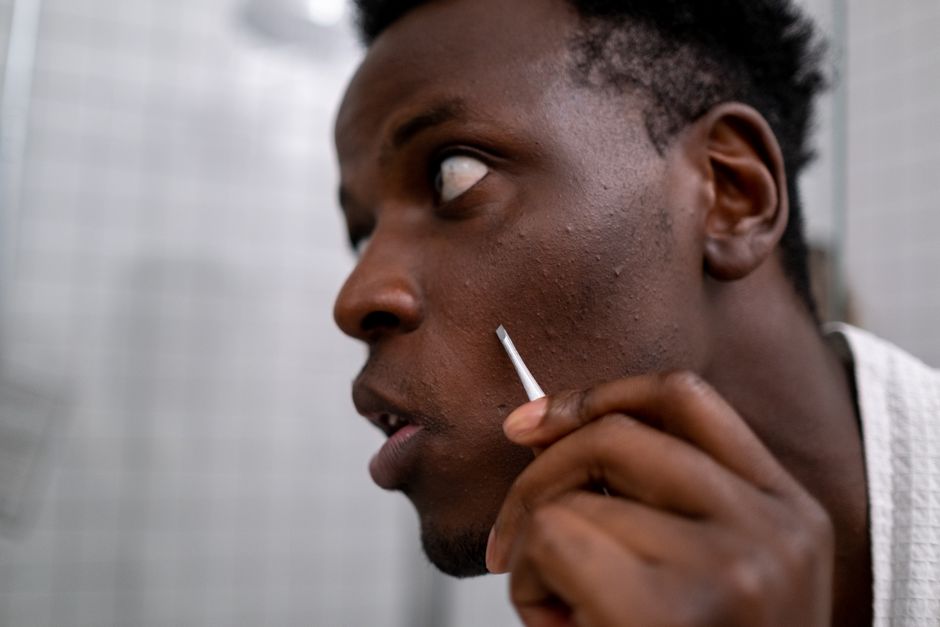
Acne is frustrating, especially when a breakout appears right before an important event. You can reduce the size and redness of a pimple within 24 to 48 hours using targeted treatments, but completely clearing your skin takes weeks. The fastest approach combines a gentle routine, proven spot treatments, and the discipline to stop picking at your skin.
What Actually Causes a Pimple to Form?
Acne starts when a hair follicle becomes blocked with oil and dead skin cells. Your skin naturally produces sebum, an oily substance that protects the surface. When sebum mixes with dead skin, it can plug the pore.
Bacteria called Cutibacterium acnes live on everyone’s skin. When a pore is blocked, these bacteria multiply inside the follicle. The immune system responds with inflammation, which causes the redness, swelling, and pain you see as a pimple.
Hormones drive most of this process. Androgens, hormones that increase during puberty and around menstrual cycles, signal the oil glands to produce more sebum. This explains why breakouts often cluster around certain times of the month.
How To Clear Acne Fast: The 48-Hour Plan
If you need a pimple reduced for a photo or a meeting, focus on these three steps. They work by shrinking the oil gland, reducing bacteria, and calming inflammation.
Benzoyl peroxide is the most reliable fast-acting spot treatment. It kills bacteria and helps clear the blocked pore. A 2.5% or 5% gel applied directly to the pimple once or twice daily is effective. Higher strengths like 10% work faster but cause more irritation and redness, which can make a pimple look worse temporarily.
Salicylic acid works differently. It dissolves the dead skin cells blocking the pore. This makes it useful for blackheads and whiteheads, but it does less for deep, painful cysts. Look for a 2% concentration in a leave-on product, not a cleanser that gets washed off.
Ice reduces swelling. Wrap an ice cube in a thin cloth and hold it on the pimple for 5 to 10 minutes. This constricts blood vessels and reduces the redness and puffiness. Do not apply ice directly to skin, as that can cause frostbite.
Can You Pop a Pimple Safely?
Dermatologists consistently advise against popping pimples. When you squeeze, you push bacteria and oil deeper into the skin. This often makes the pimple larger, more inflamed, and more likely to leave a dark mark or scar.
There is one exception. A whitehead that is ready to drain can be extracted with clean tools. Wash your hands, clean the area with alcohol, and use a sterile lancet to gently pierce the white tip. Apply light pressure with clean cotton swabs, not your fingers. If the contents do not come out easily, stop and let it heal naturally.
If you cannot resist touching your face, keep your hands busy or wear a pimple patch as a physical barrier. Hydrocolloid patches, sometimes called pimple patches, absorb fluid from open pimples and prevent you from picking. They work best on pimples that have already come to a head.



Why Your Daily Routine Matters More Than Spot Treatments
Spot treatments only address existing pimples. A consistent daily routine prevents new ones from forming. This is the difference between managing a breakout and actually clearing your skin.
Wash your face twice daily with a gentle cleanser. Harsh scrubs and abrasive cleansers strip the skin barrier, triggering more oil production and more breakouts. Look for a cleanser labeled “non-comedogenic,” meaning it will not clog pores.
Moisturizer is not optional, even for oily skin. When skin is dehydrated, it produces extra oil to compensate. A lightweight, oil-free moisturizer keeps the barrier healthy without adding grease.
Sunscreen matters for acne in two ways. Some acne medications increase sun sensitivity, and sun exposure darkens the red or brown marks that pimples leave behind. Use a non-comedogenic sunscreen with SPF 30 or higher every morning.
Over-the-Counter Options: What Actually Works
The acne aisle is crowded with products making bold claims. Stick to ingredients with clinical evidence behind them.
Adapalene 0.1% is the only retinoid available over the counter in the United States. Retinoids work by normalizing the way skin cells shed, preventing them from clumping together and blocking pores. Adapalene was prescription-only until 2016, and it remains the most effective non-prescription option for preventing breakouts. It takes 8 to 12 weeks to see full results, so it is not a quick fix, but it is the best long-term investment for acne-prone skin.
If your acne is mostly inflammatory — red, tender bumps rather than blackheads — azelaic acid at 10% is worth considering. It reduces inflammation and kills bacteria. Some research suggests it also helps fade the dark spots acne leaves behind.
Niacinamide, a form of vitamin B3, is popular in skincare. It has anti-inflammatory properties and helps strengthen the skin barrier. Evidence for its acne-fighting ability is modest compared to benzoyl peroxide or adapalene, but it is well-tolerated and pairs well with other treatments.
When To See a Dermatologist
Over-the-counter products work for mild acne. If you have tried a consistent routine for 8 to 12 weeks without improvement, or if your acne is severe, see a dermatologist.
Signs you need professional help include deep, painful nodules or cysts, acne that leaves permanent scars, or acne that affects your self-esteem significantly. Dermatologists have access to prescription-strength treatments that work faster and more effectively than anything over the counter.
Prescription options include stronger retinoids like tretinoin, oral antibiotics that reduce bacteria and inflammation, and spironolactone for hormonal acne in adult women. For severe cystic acne, isotretinoin — formerly known as Accutane — remains the most effective treatment available, but it requires close medical monitoring due to potential side effects.
In-office procedures can also help. Steroid injections into a large, painful cyst can shrink it within 24 to 48 hours. Chemical peels and extraction by a professional can clear stubborn comedones. These are not first-line treatments, but they are valuable tools for specific situations.
Myths That Make Acne Worse
Several popular beliefs about acne are not supported by evidence. Acting on them can delay real improvement.
Toothpaste is not a treatment for pimples. It dries out the skin and can cause chemical burns or irritation. The same goes for lemon juice and crushed aspirin. These home remedies are not tested, not sterile, and often make inflammation worse.
Dirty skin causes acne. Acne is not a hygiene problem. Washing more than twice a day strips the skin and worsens breakouts. The blockages that cause pimples form beneath the surface, where washing cannot reach.
Diet does not matter. This is more nuanced. High-glycemic foods and dairy, particularly skim milk, are associated with more acne in some studies. The evidence is not strong enough to recommend eliminating entire food groups, but if you notice a pattern between certain foods and your breakouts, reducing those foods is reasonable.
Sun exposure clears acne. Sunlight can temporarily dry out pimples and make them less visible, but it also thickens the skin, which leads to more blocked pores weeks later. The long-term effect is more acne, not less, plus skin damage.
How Long Until You See Real Results?
Be realistic about timelines. A single pimple can shrink noticeably within 48 hours with benzoyl peroxide and ice. But clearing overall skin takes longer.
Most acne treatments require 6 to 8 weeks to show meaningful improvement. Adapalene and other retinoids can take 12 weeks for full effect. Some people experience a “purging” phase in the first few weeks, where existing blockages come to the surface as pimples. This is not the treatment failing; it is the skin clearing out.
Consistency matters more than intensity. Using a strong product once a week is less effective than using a milder product daily. Find a routine you can maintain, and give it time to work.
If you are not seeing improvement after 12 weeks of consistent use, the product is not right for your skin type. Move on to a different active ingredient or see a professional.
Frequently Asked Questions
How can I get rid of a pimple overnight?
No treatment completely removes a pimple in one night, but benzoyl peroxide gel and ice can reduce its size and redness by morning. Manage your expectations — the goal is to make it less noticeable, not invisible.
Does toothpaste actually help acne?
No, toothpaste is not a safe or effective acne treatment. It can irritate and burn the skin, making the pimple worse.
What is the fastest way to clear acne scars?
Scar treatment depends on the scar type, but prescription retinoids and professional procedures like laser therapy are the most effective options. Over-the-counter creams can fade dark marks over several weeks but will not remove true scars.
Should I wash my face more if I have acne?
No, washing more than twice daily strips your skin and can worsen acne. Gentle cleansing twice a day is sufficient.
