
Salmonella is a bacterium that causes one of the most common foodborne illnesses in the United States. You cannot see, smell, or taste it. The only reliable way to remove it from surfaces and food is mechanical cleaning followed by proper heat or chemical treatment — washing with soap and water, cooking food to a safe internal temperature, and using a disinfectant that carries a claim against Salmonella on its label. There is no shortcut, no rinse that neutralizes it, and no home test that tells you whether a surface is clean.
What follows is what established food safety science and regulatory guidance actually support — and where common kitchen habits fall short.
How To Clean Salmonella Off Surfaces And Food
The core principle is simple: Salmonella is removed by cleaning and killed by heat or an appropriate disinfectant. Cleaning and disinfecting are two separate steps, and skipping either one leaves you with a weaker result.
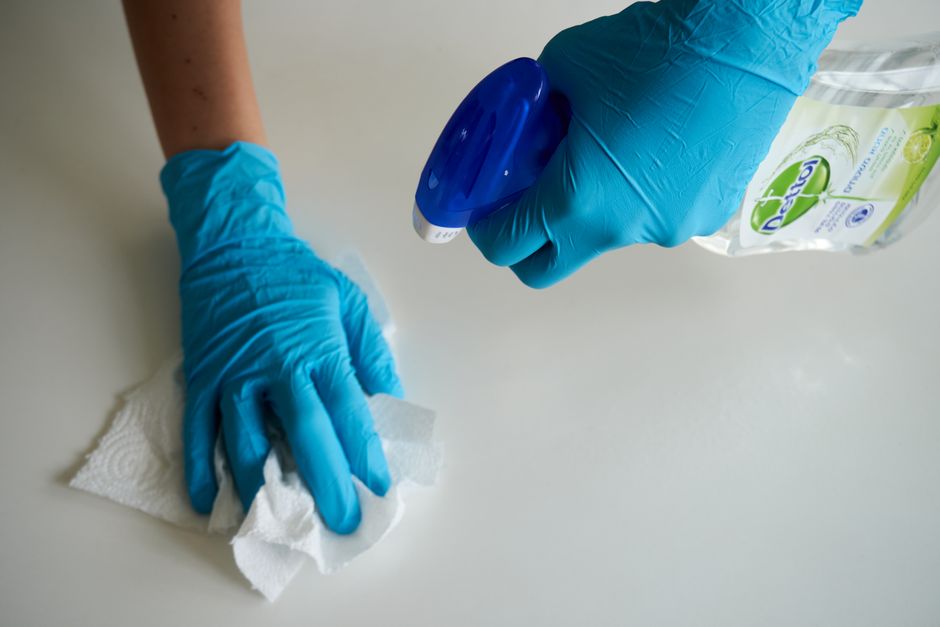
Cleaning means physically removing soil, grease, and food residue with soap and water. This step matters more than most people realize, because organic matter shields bacteria and can reduce how well a disinfectant works. A disinfectant applied to a greasy cutting board does not perform the way it does on a clean surface.
Disinfecting means treating the cleaned surface with a product that kills bacteria. For kitchen surfaces, look for an EPA-registered disinfectant with a label claim against Salmonella, or use a freshly prepared chlorine bleach solution. The standard guidance from the Centers for Disease Control and Prevention is one tablespoon of unscented household bleach per gallon of water for general surface disinfection, with the surface kept wet for the contact time listed on the product label. Bleach solutions lose strength over time, so mix fresh and discard what you do not use.
For food itself, heat is the reliable tool. The Food and Drug Administration sets these internal temperature targets:
- Poultry, including chicken and turkey: 165°F
- Ground meats, including beef, pork, and lamb: 160°F
- Whole cuts of beef, pork, veal, and lamb: 145°F with a rest time of at least 3 minutes
- Fish and shellfish: 145°F
- Eggs and egg dishes: 160°F
- Leftovers and casseroles: 165°F
Use a food thermometer. Color and texture are not reliable indicators of doneness, and this is one of the most common points where home cooks get it wrong.
Does Washing Raw Chicken Remove Salmonella?
No. Washing or rinsing raw poultry does not remove Salmonella, and public health agencies advise against it. The reason is contamination spread, not contamination removal.
When you rinse a raw chicken under the tap, water splashes carry bacteria onto nearby surfaces — the sink basin, faucet handles, countertops, dish towels, and anything within splash range. Research has documented that this splashing spreads bacteria well beyond the immediate area. Cooking the chicken to 165°F kills Salmonella throughout the meat. Rinsing adds risk without reducing it.
The same logic applies to raw eggs and unwashed produce that will be cooked. Rinsing does not sterilize, and the splashing can move bacteria around your kitchen.
What Kills Salmonella on Cutting Boards and Countertops?
Hot soapy water followed by a disinfectant kills Salmonella on hard, non-porous surfaces. The order matters. Scrub away visible residue first, rinse, then apply the disinfectant and let it sit for the full contact time on the label.
For wooden cutting boards, the picture is more complicated. Wood is porous, and bacteria can be drawn into the surface. Some studies have found that certain woods have antimicrobial properties, but the evidence is not strong enough to rely on. The practical answer: use separate boards for raw meat and ready-to-eat foods, wash wooden boards thoroughly and let them dry completely, and replace boards that are deeply scored or cracked, since those grooves are hard to clean.
Plastic boards are easier to disinfect but also develop knife grooves. Dishwasher-safe boards should go through a hot cycle. For hand washing, scrub with hot soapy water and follow with a disinfectant.
Sponges deserve a mention. They hold moisture and food particles and can harbor bacteria. Replace them often, and if you want to reduce bacterial load, run them through the dishwasher with a drying cycle or microwave a damp sponge briefly — though microwaving dry sponges is a fire risk, so wet it first.
Can You Wash Salmonella Off Fruits and Vegetables?
Washing fresh produce under running water removes some surface bacteria and dirt, but it does not eliminate Salmonella. The FDA recommends rinsing produce under running water before eating, and scrubbing firm-skinned items like melons and cucumbers with a clean produce brush.
Do not use soap or detergent on produce. Soap residues can be absorbed into porous skin, and the FDA advises against it because of the risk of ingestion. Commercial produce washes have not been shown to be more effective than plain running water.
Two points worth knowing. First, a melon’s rind can carry Salmonella even though you do not eat the rind — when you cut through it, the knife drags bacteria into the flesh. Wash melons before cutting. Second, sprouts are a special case. Sprouted seeds are grown in warm, humid conditions that favor bacterial growth, and Salmonella outbreaks have been linked to sprouts. Cooking sprouts reduces risk; raw sprouts carry risk that washing does not remove.
How Long Does Salmonella Survive on Surfaces?
Salmonella can survive on dry surfaces for weeks, and longer in moist environments or in food residue. This is why cleaning matters even when a surface looks clean and dry.
Survival is not the same as infectivity, and the relationship between how long the bacteria persist and the dose needed to make someone sick is not straightforward. What is clear is that surfaces used for raw meat and eggs should be treated as contaminated until cleaned and disinfected, and that cleaning should happen promptly rather than at the end of the day.
A non-obvious point: the infectious dose of Salmonella is relatively low compared with many other foodborne bacteria. That is one reason cross-contamination — a knife, a hand, a sponge moving bacteria from raw food to ready-to-eat food — accounts for a meaningful share of illness. You do not need visible contamination to transfer enough bacteria to cause illness.
What About Hands, Towels, and the Sink?
Handwashing is the single most effective step in the kitchen. Wet your hands, lather with soap, scrub for at least 20 seconds — including the backs of the hands, between fingers, and under nails — then rinse and dry with a clean towel. Wash after handling raw meat, poultry, eggs, or produce, and before touching anything else.
Towels and cloths are a weak point. A damp kitchen towel can spread bacteria from surface to surface. Use paper towels for drying hands and cleaning up raw meat juices, or change cloth towels frequently and wash them in hot water.
The sink basin itself should be cleaned and disinfected after preparing raw meat, since splashing and rinsing deposit bacteria there. Faucet handles and the area around the sink are easy to forget.
Does Refrigerating or Freezing Kill Salmonella?
No. Cold temperatures slow or stop bacterial growth but do not kill Salmonella. Freezing preserves the bacteria, and they can become active again when the food thaws. Refrigeration is for slowing growth, not for making food safe.
This means thawing raw meat in the refrigerator still requires the same careful handling — keep it on a plate or in a container on the bottom shelf so juices do not drip onto other food, and clean and disinfect any surface that comes into contact with the raw juices.
Frequently Asked Questions
Does vinegar kill Salmonella on surfaces?
Vinegar has some antimicrobial activity, but it is not a reliable disinfectant against Salmonella and is not a substitute for an EPA-registered disinfectant or a properly prepared bleach solution. Use it for cleaning, not for disinfection.
How long do you have to leave bleach on a surface to kill Salmonella?
Follow the contact time on the product label, which is typically around one minute for a freshly mixed bleach solution. The surface should stay visibly wet for the full time.
Can you get Salmonella from a clean-looking kitchen?
Yes. Salmonella is invisible, and cross-contamination can occur without any visible mess. Cleaning and disinfecting on a routine schedule, especially after handling raw meat and eggs, is what reduces risk.
Does cooking kill Salmonella completely?
Cooking food to the recommended internal temperature kills Salmonella. The FDA targets are 165°F for poultry and leftovers, 160°F for ground meats and egg dishes, and 145°F for whole cuts of meat, fish, and shellfish.
