
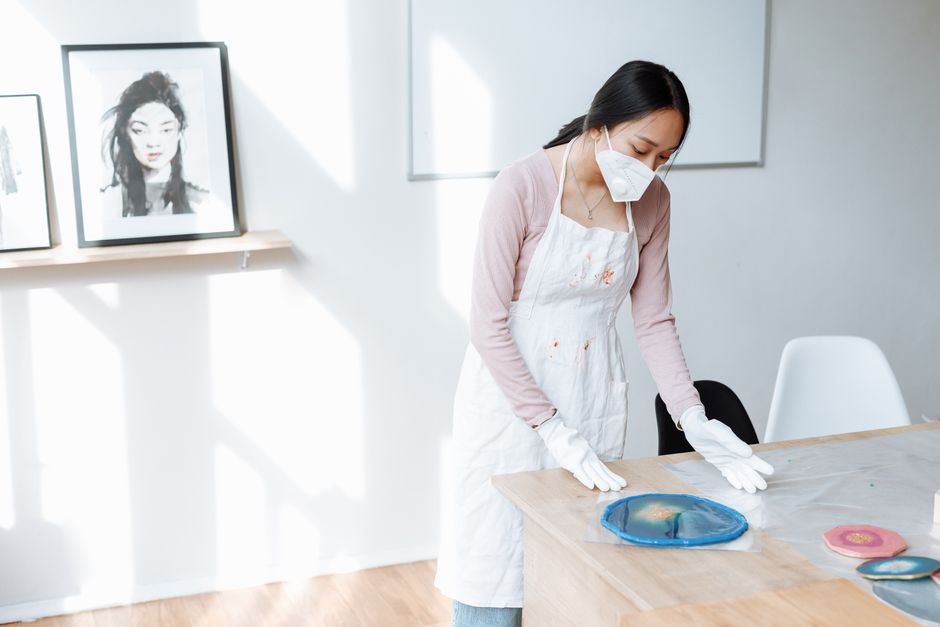
Cleaning a resin print with isopropyl alcohol means submerging it in a bath of the alcohol, gently agitating it, and letting the liquid dissolve the uncured resin still clinging to the surface. Most hobbyists use a concentration of 90 percent or higher, work in a ventilated space, and wear nitrile gloves. The steps themselves are simple. The details — concentration, soak time, handling, disposal — are where prints get ruined and skin gets irritated.
Why Does Isopropyl Alcohol Clean Uncured Resin So Well?
Resin printing works because a light source cures liquid photopolymer into a solid. What comes off the printer is not fully cured. A thin layer of sticky, semi-liquid resin remains on the surface, and that layer has to go before the print can be finished.
Isopropyl alcohol is a solvent. It dissolves the uncured resin without dissolving the cured part. The chemistry is straightforward: the liquid resin has not yet formed the cross-linked polymer network that gives the finished print its hardness. IPA can get between those loose molecules and wash them away. Once resin is fully cured, the network is tight enough that IPA has far less effect on it.
This is why concentration matters. IPA is usually sold as a percentage mixed with water. The 70 percent variety found in drugstores is a good disinfectant but a poor resin solvent. The water content slows dissolution and can leave a cloudy, tacky film. Most resin manufacturers specify 90 percent or higher, and many recommend 99 percent. That is a manufacturer instruction, not a laboratory finding, but it lines up with how the solvent behaves.
One clarification worth making: IPA does not “cure” anything. It only removes what is uncured. The actual hardening happens later, under UV light. People sometimes assume a long alcohol soak finishes the job. It does not.
How To Clean Resin Prints With Isopropyl Alcohol Step By Step
Work near an open window or under a fume hood, and put on nitrile gloves before you touch anything. Uncured resin is a skin sensitizer, meaning repeated exposure can trigger an allergic reaction that gets worse with each contact. IPA also defats skin and is flammable. Neither belongs on bare hands or near a flame.
Remove the print from the build plate with a scraper. Let excess resin drip back into the vat first — this saves material and reduces how quickly your alcohol gets saturated. Then follow these steps:
- Place the print in a container of IPA. A sealed jar or a dedicated wash station both work.
- Agitate gently. Swirl the container or use a soft brush. Do not scrub hard — uncured surfaces are soft and detail is easy to break.
- Soak briefly, not indefinitely. Many manufacturers suggest a short wash measured in minutes, and some specify exact times for their resin. Follow the resin maker’s instructions over any general rule.
- Lift the print out and inspect it. If it still feels slick or sticky, give it a second, shorter wash in fresh alcohol.
- Let it air dry completely before curing. Residual IPA trapped in hollows or crevices can interfere with the final cure.
- Cure under the recommended UV wavelength and time for your resin.
The most common mistake is over-washing. Leaving a print in alcohol for hours can soften fine details, cause whitening, and in some resins make the surface brittle or chalky. More time is not better here.
Can You Reuse Isopropyl Alcohol For Resin Cleaning?
Yes, and most people do. The alcohol does not stop working the moment it touches resin. What happens is that the bath gradually becomes saturated with dissolved resin until it can no longer pick up more.
A simple two-stage system solves most of this. Keep a dirty jar for the first wash, where most of the loose resin comes off, and a clean jar for the second rinse. The dirty jar does the heavy lifting so the clean jar stays usable much longer.
You can extend the life of a saturated bath by leaving it in sunlight. UV light cures the dissolved resin into solid particles, which then settle at the bottom. Pour off the clearer liquid on top and reuse it. The sludge at the bottom is cured resin waste.
When the alcohol is too cloudy to work, it is spent. Do not pour it down a drain. Uncured resin and resin-contaminated alcohol are hazardous waste in most jurisdictions. Check with your local household hazardous waste facility for disposal rules, since these vary by state and municipality.
What Concentration Of Isopropyl Alcohol Should You Use?
Higher is generally better for this job. The table below shows how the common concentrations behave in practice.
| Concentration | Typical Use | Behavior With Resin |
|---|---|---|
| 70% | Disinfecting skin and surfaces | Poor solvent action; leaves tacky residue |
| 91% | General cleaning, some resin use | Works, but slower than higher grades |
| 99% | Electronics, resin printing | Fastest dissolution; most manufacturer-preferred |
The 99 percent grade is sometimes sold as “anhydrous” isopropyl alcohol. It is the same chemical with almost no water. If you can only find 91 percent, it will still clean prints — it just takes longer and may need a longer final rinse.
Denatured alcohol and ethanol are sometimes suggested as substitutes. They can work, but formulations vary and some contain additives that react with resin. If you use an alternative, test it on a scrap print first.
Does IPA Damage Cured Resin Prints?
Fully cured resin is largely resistant to isopropyl alcohol. The cross-linked polymer network is stable, and short contact does not break it down. This is why the cleaning step is safe when done correctly.
The damage people report almost always traces back to one of three things. The print was not fully cured before or after washing. It sat in alcohol far longer than needed. Or the resin itself is one of the more solvent-sensitive formulations, which vary by brand and type.
Whitening is the most visible symptom. A print that looks chalky or frosted after washing was usually over-exposed to solvent, or washed in alcohol that was too saturated to clean effectively. Letting the print dry fully before curing and keeping wash times short prevents most of this.
Hollow prints need extra attention. If resin or alcohol is trapped inside a hollowed model, it can leak out later, soften the print from within, or cause cracking during cure. Drain and rinse hollow sections thoroughly, and consider drain holes if your model allows them.
Safety And Ventilation When Working With IPA And Resin
Isopropyl alcohol is flammable and gives off vapors that irritate eyes, nose, and throat. Uncured resin is a known skin sensitizer. Together they make a poorly ventilated room a bad place to work.
Use a space with moving air — an open window with a fan, a garage with the door up, or a dedicated ventilation setup. Keep alcohol away from open flames, pilot lights, and anything that sparks. Store it in a closed container, not an open tray.
Wear nitrile gloves, not latex. Latex does not hold up well against resin or solvent. Safety glasses protect against splashes, and a respirator rated for organic vapors is a reasonable addition if you work in an enclosed space.
If resin touches your skin, wash with soap and water. If it gets in your eyes, rinse for several minutes and seek medical attention. These are standard first-aid responses for chemical exposure, and they apply here.
Frequently Asked Questions
Can I use 70% isopropyl alcohol to clean resin prints?
You can, but it works poorly because the water content slows resin dissolution and often leaves a tacky film. Use 90 percent or higher, ideally 99 percent, for reliable results.
How long should I soak a resin print in isopropyl alcohol?
Most manufacturers specify short wash times, often just a few minutes, and their instructions should take priority over any general rule. Longer soaking risks softening details and causing a chalky white surface.
Is it safe to pour used isopropyl alcohol down the drain?
No. Alcohol that has been used to clean resin contains uncured photopolymer, which is hazardous waste in most places. Take it to a local household hazardous waste facility instead.
Do I need to cure a resin print after washing it in alcohol?
Yes. Washing only removes uncured resin; it does not harden the print. Final curing happens under UV light at the wavelength and time your resin manufacturer recommends.
