
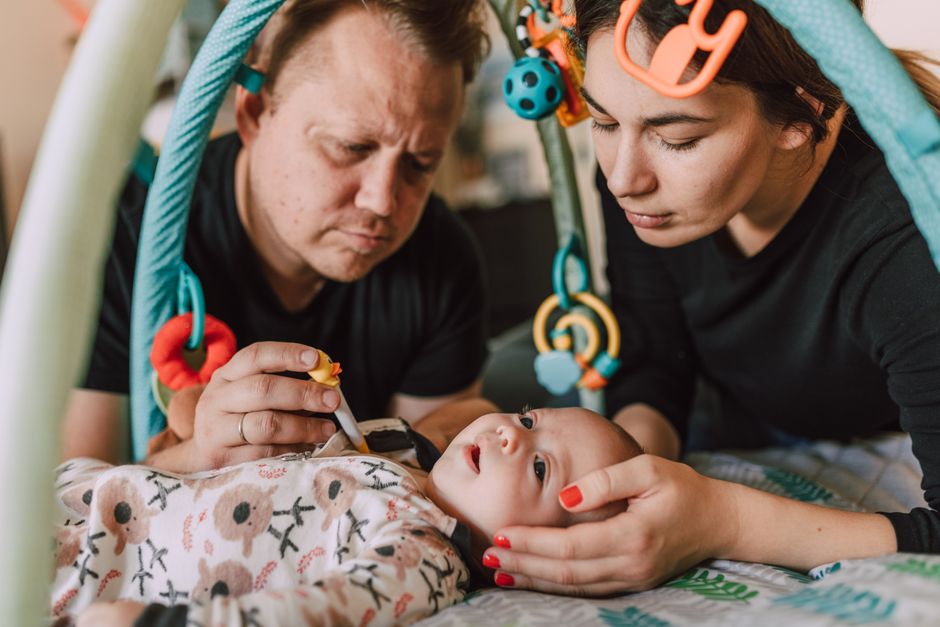
You do not need to clean inside a newborn’s ear canal. The ear is largely self-cleaning, and the safest approach is to wipe only the outer part of the ear with a soft, damp cloth during bath time — never insert cotton swabs, fingers, or any object into the ear canal. Earwax in newborns is normal, and in most cases it works its way out on its own without any help.
How To Clean Newborn Ears And Remove Earwax?
For routine care, you clean the outside of the ear only. A washcloth dampened with warm water is enough. Gently wipe the visible ridges and folds of the outer ear, then dry them. That is the whole job.
The inside of the ear canal does not need cleaning. Earwax, which doctors call cerumen, is produced by glands in the ear canal. It traps dust and debris, and it has mild antibacterial properties. The skin of the canal also migrates outward over time, slowly carrying wax with it. This is why ears generally clean themselves.
Newborns can have a small amount of visible wax near the opening of the ear canal. If you can see it sitting right at the edge, you can wipe it away with the corner of your damp cloth. Do not chase it inward. Anything you cannot reach with a cloth is meant to stay where it is or come out on its own.
Why You Should Never Use Cotton Swabs In A Newborn’s Ear
Cotton swabs are the single most common cause of ear injuries in young children, and newborns are especially vulnerable. Their ear canals are tiny and their skin is delicate.
When you push a swab into the canal, you usually do the opposite of what you intended. Instead of removing wax, you push it deeper and pack it against the eardrum. This can create a wax blockage that would not have happened otherwise.
There is also a real risk of injury. The eardrum sits close to the opening in a newborn. A slip, a sudden head turn, or a startled movement can push the swab against the canal wall or the eardrum. That can cause bleeding, pain, or a perforated eardrum.
The same warning applies to fingers, hairpins, tweezers, ear candles, and any over-the-counter tool marketed for ear cleaning. None of these belong in a newborn’s ear. Ear candles in particular have no evidence behind them and carry a risk of burns and wax being pushed deeper.
What Is Normal Earwax In A Newborn?
Earwax varies a lot in color and texture, and most of that variation is normal. It can be yellow, orange, brown, or gray. It can be soft and wet or dry and flaky.
Newborns often have very little wax at first. Some babies have a bit more in the days and weeks after birth. Both are expected.
Wax that is visible at the outer opening and looks soft is not a problem. It is doing its job. The presence of wax is not a sign of poor hygiene, and it is not something you need to fix.
One thing worth knowing: a newborn’s ear canal is short and angled differently than an adult’s. This makes it easier to see wax near the surface, and it also makes the canal easier to irritate. That is one more reason to leave it alone.





Signs Of An Ear Problem In A Newborn
Most earwax is harmless. The concern is not wax itself but what certain signs might indicate. Call your baby’s doctor if you notice any of the following.
- Fluid, pus, or blood coming from the ear
- Fever, especially in a baby under 3 months old
- Pulling, tugging, or rubbing at one ear repeatedly
- Unusual fussiness, poor feeding, or trouble sleeping
- Redness, swelling, or warmth around the ear
- Hearing seems off, or your baby does not startle to sound
- A hard, dark plug of wax blocking the canal
Fever in a newborn is a medical matter that needs prompt attention. For any baby under 3 months, a rectal temperature of 100.4°F (38°C) or higher warrants a call to the doctor right away. Do not wait to see if it passes.
Ear infections are less common in the first weeks of life than in older babies, but they can happen. Only a clinician can tell the difference between wax, fluid, and an infection by looking inside the ear. Do not try to diagnose it yourself, and do not put anything into the ear to treat it.
When A Doctor May Need To Remove Earwax
True wax blockage in a newborn is uncommon, but it does happen. If wax is packed tightly enough to block the canal, a doctor may need to remove it.
This is a clinical procedure, not a home one. Doctors have several options. They may use a small instrument called a curette to lift the wax out, or they may flush the canal with warm water or saline under controlled conditions. In some cases they use a suction device. Which method is used depends on the baby, the wax, and the doctor’s judgment.
Do not try to copy any of these at home. Flushing a newborn’s ear with a bulb syringe or a home kit is not safe. It can push wax deeper, irritate the canal, or, if the eardrum has a hole, cause more serious problems. Ear drops for wax removal are not appropriate for newborns unless a doctor specifically prescribes them.
If you think your baby has a blockage, the right move is a doctor visit, not a home remedy.
How To Keep A Newborn’s Ears Healthy Day To Day
Everyday ear care for a newborn is simple and takes seconds.
- Wipe the outer ear with a soft, damp washcloth during baths.
- Dry the outer ear gently afterward.
- Keep soap, shampoo, and water from pooling in the ear as best you can.
- Never put anything inside the ear canal.
- Leave wax alone unless a doctor says otherwise.
There is no need for special ear-cleaning products, drops, or devices for a healthy newborn. If a product claims to remove earwax safely at home in babies, be skeptical. The evidence for these products in newborns is limited, and some carry real risks.
One non-obvious point: a baby’s ears do not need to look perfectly clean inside to be healthy. A little visible wax is a sign the ear is working as it should. Trying to achieve a spotless ear canal usually causes more problems than it solves.
Does Earwax Cause Problems For A Newborn’s Hearing?
In most cases, no. Normal amounts of wax do not affect a newborn’s hearing.
A large, hard plug of wax can muffle sound, but this is uncommon in newborns. If a doctor finds a blockage and removes it, hearing typically returns to normal. Wax-related hearing changes are usually temporary and reversible once the wax is cleared.
If you are worried about your baby’s hearing for any reason, mention it at a well-baby visit. Newborn hearing screening is standard in US hospitals, and follow-up testing is available if needed. Do not assume wax is the cause of a hearing concern without a doctor checking.
Frequently Asked Questions
Can I use a cotton swab to clean my newborn’s ears?
No. Cotton swabs push wax deeper into the canal and can injure the eardrum or the delicate skin of the ear canal. They should never go inside a newborn’s ear.
How do I get earwax out of my baby’s ear?
You generally do not need to. If wax is visible at the outer opening, wipe it away with a soft, damp cloth. Anything deeper should be left alone or handled by a doctor.
Is it normal for a newborn to have earwax?
Yes. Earwax is normal and healthy, and it helps protect the ear canal. Most wax works its way out on its own without any cleaning.
When should I call the doctor about my baby’s ear?
Call if you see fluid, pus, or blood, or if your baby has a fever, seems to be in pain, or is unusually fussy. For any baby under 3 months, a rectal temperature of 100.4°F (38°C) or higher needs prompt medical attention.
