
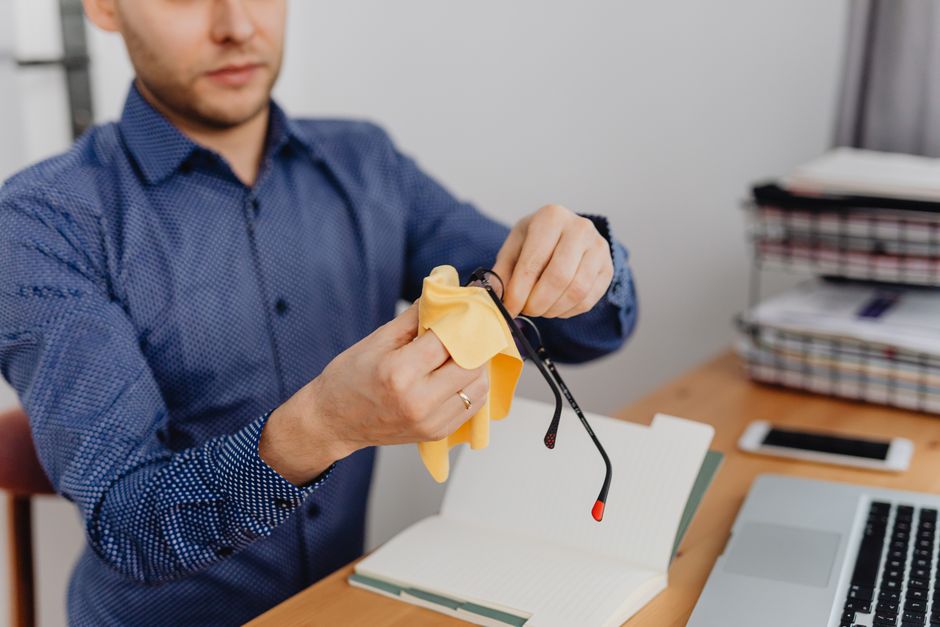
Dirty eyeglass cloths leave smears, not clean lenses. The fix is simple: hand wash them with mild dish soap and lukewarm water, rinse well, and let them air dry. Do not use fabric softener, dryer sheets, or bleach. Wash your cloth every one to two weeks, or whenever it leaves streaks on your glasses.
Why Your Microfiber Cloth Stops Working
Microfiber cloths trap oil, dust, and skin cells deep between their fine fibers. That is what makes them good at cleaning. But when the fibers get saturated, they stop picking up new dirt. Instead, they just push old oil and grit around on your lenses.
You will notice this as streaks that do not wipe away. Sometimes the cloth feels slightly greasy even when it looks clean. That film is exactly what you are transferring onto your glasses every time you use it.
Many people throw the cloth away at this point and buy a new one. That is not necessary. A proper wash restores the cloth’s ability to clean effectively.
How To Clean Eyeglass Cloth: Step-by-Step
Cleaning a microfiber cloth takes about five minutes of hands-on time. The process is gentle and safe for most cloths sold with eyeglasses.
- Rinse the cloth under lukewarm running water to remove loose dust and grit.
- Apply a drop of mild dish soap to the cloth. Dawn or similar gentle dish soaps work well.
- Work the soap into the fabric with your fingers. Do not wring or twist aggressively.
- Rinse thoroughly until no soap bubbles remain.
- Squeeze out excess water gently. Do not twist the fabric.
- Lay the cloth flat on a clean towel or hang it to air dry.
Do not put microfiber cloths in the washing machine with other fabrics. Lint from cotton towels or clothing embeds in the microfiber and ruins its cleaning ability. If you must machine wash, do it alone on a gentle cycle with cold water and skip the fabric softener.
Never use dryer sheets or fabric softener on microfiber. These products coat the fibers with a waxy residue that traps dirt and makes the cloth less absorbent. The residue also transfers to your lenses, leaving a film that is hard to remove.
What Not To Use On Microfiber Cloths
Some cleaning agents damage microfiber permanently. Avoid these entirely:
- Bleach and hydrogen peroxide break down the synthetic fibers.
- Fabric softeners coat fibers with residue that blocks their cleaning action.
- Dryer sheets leave the same waxy coating as liquid softeners.
- Heat from dryers or hot water can melt or warp the fine polyester and polyamide fibers.
- Solvents like acetone or rubbing alcohol can degrade the material over time.
If you accidentally wash your cloth with fabric softener, wash it again with dish soap. This sometimes removes the residue. If streaks continue after a second wash, the cloth is likely beyond repair.
Some eyeglass cleaning sprays contain alcohol or ammonia. These are designed for lenses, not for the cloth itself. Do not soak your cloth in lens cleaner as a substitute for washing it.
How Often Should You Wash Your Eyeglass Cloth?
Wash your cloth when it stops cleaning effectively. For daily glasses wearers, that usually means every one to two weeks. If you use the same cloth multiple times per day, it may need washing more often.
Signs your cloth needs a wash include visible smudges on the fabric, streaks left on your lenses after wiping, or a cloth that feels slick or greasy to the touch.
Having two or three cloths in rotation helps. You always have a clean one ready while another dries. It also extends the life of each cloth since they get used less frequently between washes.
Replace your cloth entirely when washing no longer restores its cleaning ability. Most microfiber cloths last several months with regular washing. Worn edges, fraying, or a persistent odor are signs it is time to toss it.
Cleaning Alternatives When You Do Not Have Soap
If you are away from home and your cloth needs attention, plain water helps but does not fully clean the fibers. Water alone removes loose dust but does not break down the oils that cause smearing.
A better option is to clean your lenses with a lens cleaning solution and use the cloth only for drying. This puts less oil into the cloth in the first place.
Do not use hand sanitizer, window cleaner, or vinegar on your cloth. These can damage the fibers or leave residues that transfer to your lenses. Wait until you can wash the cloth properly with dish soap.
How To Keep Your Eyeglass Cloth Clean Longer
Prevention reduces how often you need to wash your cloth. Store your glasses in their case when you are not wearing them. This keeps dust and debris off both the lenses and the cloth.
Keep your cloth in the case, not loose in a pocket or bag. Loose cloths pick up lint, pocket debris, and grit that scratch lenses during use.
Use your cloth only on your glasses. Using it to wipe your phone screen, computer monitor, or camera lens transfers oils and dirt that then end up on your eyewear.
Rinse your lenses with water before wiping them if they have visible dust or grit. Wiping dry, gritty lenses grinds particles into the glass and contaminates your cloth faster.
Can You Machine Wash Eyeglass Cloths?
Machine washing is possible but riskier than hand washing. If you choose to machine wash, use cold water on the gentlest cycle and place the cloth in a mesh laundry bag. This reduces friction with other items.
Wash microfiber cloths only with other microfiber items. Cotton, synthetics, and towels shed lint that clings to microfiber and reduces its effectiveness.
Never put microfiber in the dryer. The heat damages the split fibers that give microfiber its cleaning power. Air drying takes longer but preserves the cloth.
Skip the detergent or use a very small amount. Standard laundry detergents leave residues in microfiber that require multiple rinses to remove. If you use detergent, run an extra rinse cycle.
Frequently Asked Questions
Can I use soap to clean my eyeglass cloth?
Yes, mild dish soap is the best choice. Work it into the damp cloth with your fingers, rinse thoroughly, and air dry.
Why does my eyeglass cloth leave streaks on my glasses?
The cloth fibers are saturated with oils and dirt from previous use. Washing the cloth with dish soap removes the buildup and restores its cleaning ability.
Is it safe to put microfiber cloths in the washing machine?
Yes, but only with other microfiber items, on a cold gentle cycle, and never in the dryer. Hand washing is gentler and recommended for most cloths.
How long does a microfiber eyeglass cloth last?
With regular hand washing, most cloths last several months. Replace the cloth when washing no longer removes streaks or the fabric becomes frayed.
