
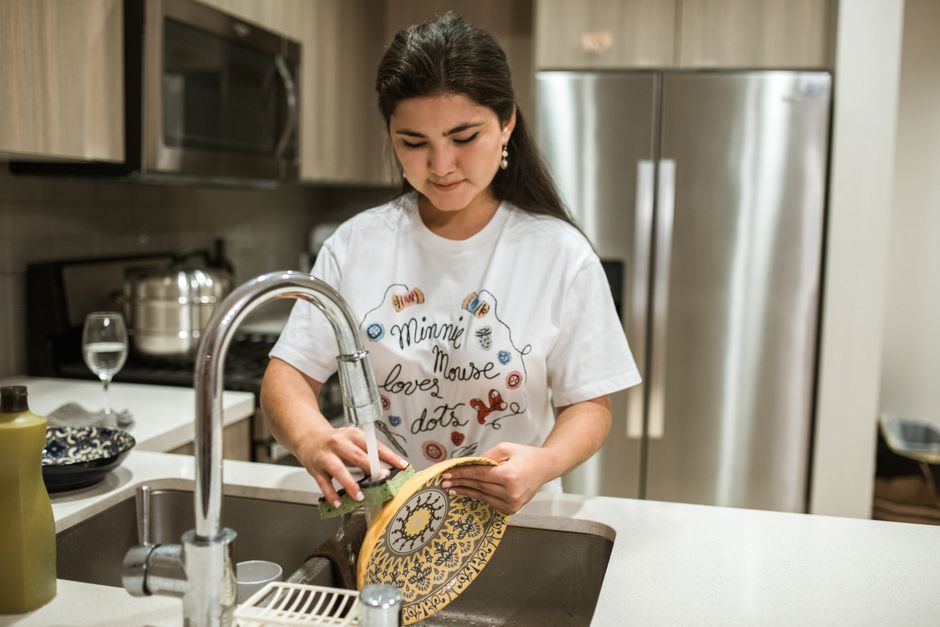
Microwaving a kitchen sponge is a fast, effective way to kill bacteria and reduce odors. To do it safely, you must wet the sponge thoroughly, heat it on high for one to two minutes, and let it cool completely before handling. This method uses high heat to kill many of the germs that live in the damp pores of a sponge, but it is not a substitute for replacing your sponge regularly.
How To Clean A Sponge In The Microwave? Step By Step
Follow these steps exactly. Skipping the water is the biggest mistake people make. A dry sponge can catch fire in the microwave.
- Rinse the sponge. Run it under cold water and squeeze it out. This removes loose food particles that can harbor bacteria.
- Soak the sponge. Get the sponge completely saturated with water. It should be dripping wet, not just damp. This is critical for safety.
- Place in the microwave. Put the wet sponge on a microwave-safe plate. Do not use a paper towel that could dry out and burn.
- Heat for one to two minutes. Set the microwave on high. One minute is enough for most standard sponges. Two minutes is fine for larger or thicker sponges. Watch it the entire time.
- Let it cool. Leave the sponge in the microwave with the door closed for several minutes. The water inside will be boiling hot.
- Squeeze and dry. Once cool enough to touch, squeeze out the excess water. Place the sponge on a drying rack so air can circulate around it.
If you see smoke or smell burning, stop the microwave immediately. The sponge is too dry. Let it cool before removing it.
Does Microwaving A Sponge Actually Kill Bacteria?
Yes, research consistently shows that microwaving a wet sponge kills a significant portion of bacteria. Studies have found that two minutes of microwave heating can eliminate most of the germs living in a kitchen sponge, including common culprits like E. coli and Salmonella.
The mechanism is straightforward. The microwave excites water molecules inside the sponge, generating steam. This steam heats the sponge to temperatures that denature bacterial proteins and disrupt cell membranes. The result is a sponge that is far cleaner than one rinsed with water alone.
However, there is an important caveat. While the heat kills most bacteria, it does not kill everything. Some heat-resistant microbes, including certain types of bacterial spores, can survive. This is why microwaving is a good hygiene step, but not a sterilization method.
What About The Smell?
A smelly sponge is a sign of bacterial growth. The odor comes from the waste products of bacteria breaking down food residue in the sponge pores. When you microwave a wet sponge, the heat kills these bacteria, and the smell typically disappears.
If the sponge still smells after microwaving, the bacteria were likely too deep inside the sponge for the heat to reach them. This is a strong sign that the sponge is too old and needs to be thrown out.



Are There Risks With Microwaving A Sponge?
The main risk is fire. A dry sponge can ignite in the microwave because the cellulose material heats up quickly without water to absorb the energy. This is why the sponge must be thoroughly wet before heating.
There is also a burn risk. The sponge and the water inside it become extremely hot. Touching the sponge immediately after heating can cause serious scalding. Always wait for it to cool.
Another concern is the release of chemicals. Some sponges contain antimicrobial agents or are made from synthetic materials. Heating these can potentially release compounds into the air. If you are concerned about this, check the label. If the sponge is not labeled as microwave-safe, consider using a different cleaning method.
How Often Should You Microwave Your Sponge?
Most experts recommend cleaning your sponge at least every few days if you use it daily. Some suggest doing it every day, especially if you cook with raw meat or poultry. The key is consistency. A sponge that is cleaned once a month is not meaningfully protected.
Microwaving does not replace the need to replace the sponge. The structure of a sponge breaks down over time. It develops deep cracks and crevices where bacteria can hide from heat and cleaning agents. Most manufacturers recommend replacing a sponge every two to four weeks. If a sponge starts to smell even after cleaning, replace it immediately.
Are There Better Alternatives To Microwaving?
Microwaving is effective, but it is not the only option. The dishwasher is another reliable method. Placing a sponge on the top rack of a dishwasher and running it through a heated dry cycle can kill bacteria effectively. This method is often easier because it requires no supervision.
Boiling is another option. Dropping a sponge into a pot of boiling water for five minutes will kill most bacteria. This is a simple, reliable method that does not carry the fire risk of a microwave.
Bleach solutions are also commonly used. Soaking a sponge in a diluted bleach solution can disinfect it. However, this requires careful handling of bleach and thorough rinsing afterward to avoid leaving chemical residue on the sponge.
Some people use vinegar or lemon juice. These can help with odor, but the evidence that they kill bacteria as effectively as heat is limited. Do not rely on them as your primary disinfection method.
What Type Of Sponge Is Best For Microwaving?
Standard cellulose sponges are the best candidates for microwaving. They absorb water well and hold up to repeated heating. The more water a sponge holds, the more steam it generates, and the more effective the cleaning process.
Sponges with scrubbing pads on one side can be trickier. The abrasive pad is often made from synthetic materials like nylon or polyester. These materials can melt or warp under high heat. If you use a sponge with a scrub pad, check the manufacturer’s instructions before microwaving. Some are safe, and some are not.
Natural sea sponges are an option, but they are more expensive and less commonly used. They can be microwaved when wet, but they tend to dry out faster, which increases the fire risk. Watch them closely.
Never microwave metal scrubbers or steel wool. Metal in a microwave can cause sparks and start a fire.
How Do You Keep A Sponge Clean Between Microwaving Sessions?
The best way to reduce bacterial growth is to keep the sponge dry between uses. Bacteria need moisture to multiply. A sponge left wet in the sink is a breeding ground for germs.
After each use, rinse the sponge thoroughly and squeeze out as much water as possible. Store it in a location where air can circulate around it. A sponge holder with drainage holes is better than leaving it sitting in a puddle on the counter.
Do not store a wet sponge next to other kitchen items. Keep it separate so it can dry fully. A dry sponge has significantly fewer live bacteria than a wet one.
Frequently Asked Questions
How long should I microwave a sponge?
One to two minutes on high power is the standard recommendation for a thoroughly wet sponge.
Can a sponge catch fire in the microwave?
Yes, a dry or nearly dry sponge can catch fire because the cellulose material heats up rapidly without water to absorb the energy.
Does microwaving a sponge kill all bacteria?
No, it kills most bacteria but not all. Some heat-resistant microbes and spores can survive the process.
How often should I replace my kitchen sponge?
Most manufacturers recommend replacing a sponge every two to four weeks, and sooner if it develops an odor that does not go away after cleaning.
