
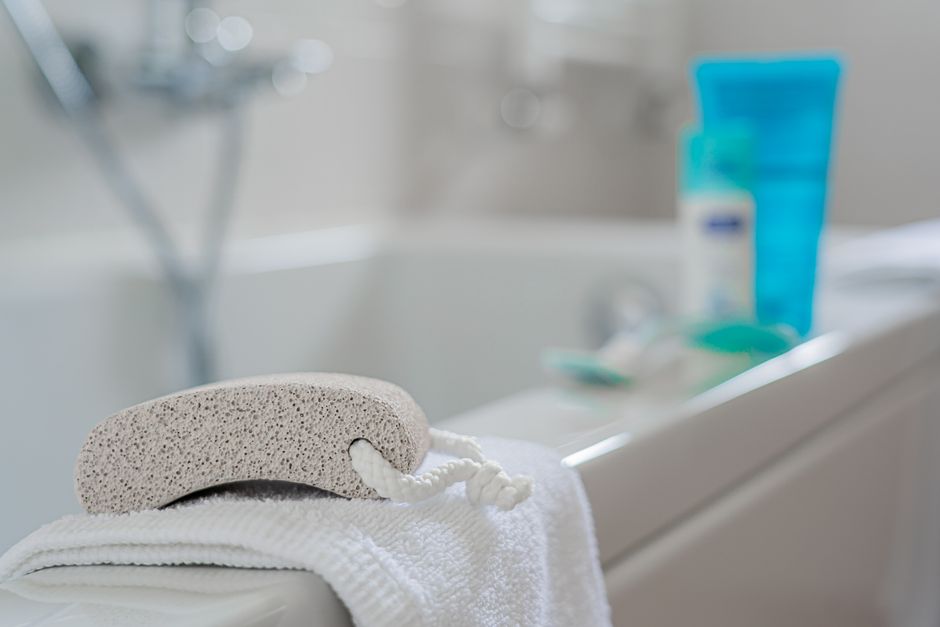
To clean a pumice stone, scrub it with a stiff brush under warm running water, then soak it for about 15 to 20 minutes in a mix of one part white vinegar to two parts water. Rinse it well and let it air-dry completely before you use it again. That routine removes soap residue, dead skin, and the mineral buildup that makes a stone feel slick or stop working. For heavier buildup, a brief soak in a diluted bleach solution is an option, but vinegar handles most household cleaning needs.
Pumice is volcanic rock. It is full of tiny holes, which is exactly why it works and exactly why it needs cleaning. Those pores trap skin cells, soap, and bacteria. A stone that looks fine on the surface can be holding onto material you would rather not rub against your skin.
How To Clean A Pumice Stone Step by Step
Start with the simplest method. Most pumice stones only need water, a brush, and a few minutes.
- Rinse first. Hold the stone under warm running water to loosen surface debris.
- Scrub the pores. Use a stiff-bristled brush, like a nail brush or an old toothbrush, and work it across every surface. Push the bristles into the holes rather than just skimming the top.
- Soak in vinegar. Mix one part white vinegar with two parts water. Soak the stone for 15 to 20 minutes. This breaks down mineral deposits and helps kill some surface bacteria.
- Scrub again. After soaking, brush the stone a second time. Loosened material comes out more easily now.
- Rinse thoroughly. Run clean water over the stone until no vinegar smell remains.
- Air-dry completely. Stand the stone upright somewhere with good airflow. Do not put it away damp.
Drying matters more than most people realize. Pumice stays wet inside its pores long after the surface feels dry. A stone stored in a damp shower caddy or a closed cabinet can grow mold and bacteria in those interior spaces. Let it dry in open air between uses, and you prevent most of the problem before it starts.
How Often Should You Clean a Pumice Stone?
Clean your pumice stone after every few uses, and give it a full vinegar soak about once a week if you use it regularly. Rinse it after each use and let it dry. That quick habit keeps the pores open and stops buildup from hardening.
How often you need the deeper clean depends on how you use the stone. Someone who uses it daily on rough heels will need more frequent cleaning than someone who reaches for it once a month. Hard water also plays a role. If your tap water is high in minerals, calcium and magnesium deposits will clog the pores faster, and you may notice the stone feeling smooth or slick sooner.
Replace the stone when cleaning no longer restores its texture. A pumice stone that stays smooth after a good scrub has worn out. Most stones last several months to about a year with regular use, though there is no fixed rule. The surface texture tells you more than the calendar does.
Can You Sanitize a Pumice Stone With Bleach?
Yes, a diluted bleach soak can sanitize a pumice stone, but it should be a rare step rather than a routine one. Use it when the stone has been shared, stored somewhere damp for a long time, or visibly grew mold.
Dilute household bleach with water following the ratio printed on the bleach label for disinfecting surfaces. Soak the stone briefly, then rinse it very thoroughly under running water. Bleach residue on a stone you will press against your skin is not something you want. Let the stone dry completely before the next use.
A few cautions are worth stating plainly. Never mix bleach with vinegar or any other acid. That combination releases chlorine gas, which is dangerous to breathe. If you have just done a vinegar soak, rinse the stone completely and let it dry before any bleach step. People with sensitive skin or breathing conditions may want to skip bleach entirely and rely on vinegar and hot water instead.
Boiling is sometimes suggested as a way to sanitize pumice. It can work, but pumice is porous and can trap water, and a stone that has developed cracks may break apart in boiling water. Vinegar soaking is gentler and handles the job for most people. If you do boil, use a pot you do not cook food in.





Why Does a Pumice Stone Stop Working?
A pumice stone stops working when its pores fill with dead skin, soap scum, and minerals from water. The surface turns smooth and slick, and it starts gliding over calluses instead of grinding them down. Cleaning restores the rough texture in most cases.
The mechanism is simple. Pumice works because its surface is abrasive. Every time you rub it against your skin, tiny amounts of skin and soap lodge in the holes. Over time those holes fill up. The stone is not worn out. It is clogged.
This is why a stone can feel different after a few weeks even though you have barely used it. It is also why cleaning with a brush alone sometimes is not enough. The brush clears the surface, but the vinegar soak is what dissolves the mineral component packed deeper in.
How Should You Store and Care for a Pumice Stone?
Store your pumice stone dry and in the open. A small dish or a hook with airflow works better than a closed shower caddy or a drawer. Moisture is the main enemy of a clean stone.
A few habits keep a stone in good shape:
- Rinse it after every use so skin and soap do not dry into the pores.
- Let it air-dry standing up, not lying flat where water pools underneath.
- Keep it out of standing water in the shower or tub.
- Do not share it with other people. Skin cells and any skin infections can pass between users.
- Replace it when the surface no longer feels rough after cleaning.
One point people often miss: a pumice stone is a personal hygiene item, not a household tool. Sharing one with a family member is a way to spread skin bacteria and fungal infections. If more than one person in your home uses pumice, each person should have their own.
When Should You Stop Using a Pumice Stone?
Stop using a pumice stone if the skin underneath becomes red, raw, cracked, or painful. Over-scrubbing is the most common problem, and it can turn a minor callus into an open wound that is slow to heal.
Pumice is meant for thick, hardened skin on heels and the balls of the feet. It is not meant for thin skin, and it should never be used on broken skin, open sores, or areas that look infected. People with diabetes or poor circulation in the feet should be especially cautious. Reduced sensation in the feet means you may not feel damage as it happens, and small injuries can become serious. Anyone in that group should check with a clinician before using a pumice stone at all.
If you notice a callus that keeps coming back, or skin that stays red and tender for more than a few days after use, that is worth a conversation with a healthcare provider. A recurring callus can point to how you walk or stand, and no amount of cleaning the stone will fix that.
Frequently Asked Questions
Can I clean a pumice stone with just hot water?
Hot water alone removes surface debris but does not dissolve the mineral buildup that clogs the pores. A vinegar soak every week or so does the deeper cleaning that water cannot.
How do I know when to throw away a pumice stone?
Replace it when the surface stays smooth after a full brush-and-soak cleaning. A stone that no longer feels rough has lost the abrasiveness that makes it useful.
Can I put my pumice stone in the dishwasher?
It is not recommended. The heat and prolonged water exposure can crack the stone and may not clean the interior pores effectively. Hand cleaning with a brush and vinegar soak is more reliable.
Is it safe to share a pumice stone?
No. A pumice stone can carry skin cells, bacteria, and fungi, so sharing one can spread skin infections. Each person should have their own stone.
