
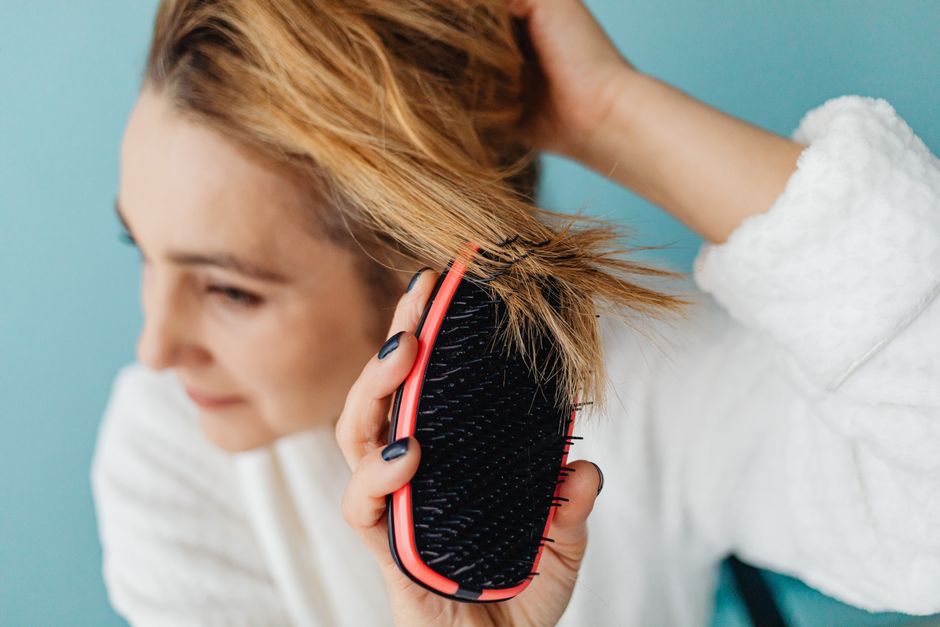
You can clean a hairbrush with baking soda by making a simple paste of baking soda and water, working it into the bristles and base with an old toothbrush, letting it sit for a few minutes, then rinsing thoroughly and drying completely before use. Baking soda (sodium bicarbonate) lifts oils and loosens product buildup, and it is mildly abrasive, which helps break down residue that plain water leaves behind. It works best as part of a routine that also removes loose hair and, for some brushes, uses soap for a deeper clean.
Why Does a Hairbrush Need Cleaning at All?
A hairbrush collects more than hair. Every pass through your scalp picks up sebum (the oil your skin produces), dead skin cells, styling product, dust, and whatever else is in your hair that day.
Over time this mixture builds up at the base of the bristles and on the cushion of the brush. That buildup doesn’t just make the brush look dirty. It reduces how well the bristles grip and distribute your hair’s natural oils, and it gives a place for microbes to sit. Some research suggests brushes and combs can carry fungi and bacteria, though the health significance for most healthy people is not well established.
If you have scalp conditions like dandruff or seborrheic dermatitis, a dirty brush can reintroduce material to your scalp each time you use it. Cleaning it regularly is a reasonable hygiene habit. How often depends on your hair type, how much product you use, and how much you shed — weekly to monthly is a common range.
How To Clean A Hairbrush With Baking Soda
The baking soda method is straightforward and uses things you likely already have. Here is the sequence that works for most plastic and nylon-bristle brushes.
What you need
- Baking soda
- Warm water
- An old toothbrush or a small stiff brush
- A bowl or the sink
- A towel or rack to dry the brush
- Optional: a few drops of mild shampoo or dish soap
Step by step
1. Remove loose hair first. Pull out as much hair as you can by hand. A comb or the tail of a rat-tail comb helps lift hair from between bristles. This step matters — baking soda can’t do its job if it’s fighting a mat of hair.
2. Make a paste or a soak. For a paste, mix about three parts baking soda to one part water until it forms a thick, spreadable consistency. For a soak, add a few tablespoons of baking soda to a bowl of warm water.
3. Apply it. Work the paste into the base of the bristles and the cushion with the old toothbrush. For a soak, submerge the bristle side in the water and let it sit for several minutes. Don’t leave wooden brushes soaking — more on that below.
4. Scrub gently. Use the toothbrush to get between bristles and around the base. This is where most of the buildup lives.
5. Rinse well. Rinse under warm running water, bristles pointing down so water doesn’t pool in the base or handle.
6. Dry completely. Shake off excess water and stand the brush bristles-down on a towel or rack. Let it air dry fully before you use it again. A damp brush left in a drawer can grow mildew.
Does Baking Soda Actually Work, or Is Soap Better?
Baking soda helps, but it is not a disinfectant and it is not a complete cleaner on its own. It is mildly abrasive and slightly alkaline, which helps break up oily residue and product film. That is a real mechanical and chemical effect, not a marketing claim.
What baking soda does not do well is kill germs. It is not an antimicrobial in the way that soap and water physically removing microbes is. If your goal is a deeper clean, a few drops of mild shampoo or dish soap added to the baking soda paste does more. Soap lifts oils and helps rinse away debris that baking soda alone leaves behind.
Some people use vinegar after baking soda, expecting a fizzing “deep clean.” The fizz is just an acid-base reaction producing carbon dioxide. It looks impressive and does little extra cleaning. Skip it unless you have a specific reason.
Is there a case where baking soda is the wrong choice? Yes. It can be abrasive on delicate bristle materials and it can dull or dry out wood and some natural-bristle brushes over time. For those, mild soap and water is the safer bet.
Which Brushes Should Not Be Cleaned With Baking Soda?
Not every brush tolerates a baking soda soak. The material matters more than the method.
| Brush type | Baking soda suitable? | Notes |
|---|---|---|
| Plastic handle, nylon bristles | Yes | Most tolerant; paste or short soak is fine |
| Wooden handle or base | Use paste only, briefly | Soaking can warp or crack wood; dry immediately |
| Boar or natural bristles | Limited | Abrasion and drying can damage bristles; mild soap preferred |
| Vented or cushioned base | Yes, with care | Water can trap inside the cushion; dry bristles-down thoroughly |
| Brushes with electronic parts | No soaking | Wipe surfaces only; never submerge |
If you’re unsure about a brush, check the manufacturer’s care instructions. When in doubt, a damp cloth and mild soap on the surface is lower risk than a full soak.
How Often Should You Clean Your Hairbrush?
There is no official guideline, and recommendations vary. A practical approach most dermatologists and hair professionals suggest is to remove loose hair every week and do a fuller wash every few weeks to monthly.
Clean more often if you use a lot of styling product, have an oily scalp, exercise heavily, or have a scalp condition. Clean less often if you have a brush you rarely use. The brush you use daily is the one that needs attention.
One detail people miss: clean your brush after any scalp infection or lice treatment, and consider replacing it if it has damaged bristles or a cracked base where moisture and debris collect.
What About the Rest of Your Brush Care Routine?
Cleaning is one part of keeping a brush in good shape. A few habits extend its life and keep it more hygienic between washes.
- Remove loose hair weekly — this alone prevents most buildup
- Store brushes bristles-up or in a clean drawer, not loose in a bag with other items
- Don’t share brushes, especially if either person has a scalp condition
- Replace brushes with worn, bent, or broken bristles — they don’t clean or detangle as well
None of this is complicated. The baking soda method is a useful tool in the rotation, especially for plastic brushes with oily buildup. Paired with regular hair removal and an occasional soap wash, it keeps a brush working the way it should.
Frequently Asked Questions
Can I clean my hairbrush with just baking soda and water?
Yes, a paste of baking soda and water works for most plastic and nylon brushes. Adding a few drops of mild soap improves the clean because baking soda alone does not remove oils as effectively.
How long should I leave baking soda on a hairbrush?
A few minutes is enough for a paste, and a short soak of several minutes works for plastic brushes. Avoid long soaking for wooden or natural-bristle brushes, which can be damaged by prolonged water exposure.
Does baking soda disinfect a hairbrush?
No, baking soda is not a disinfectant and does not reliably kill microbes. Soap and water physically removing debris is the main cleaning mechanism; baking soda helps break down oily residue.
Can I use baking soda on a wooden hairbrush?
Use a brief paste application rather than a soak, and dry the brush immediately. Prolonged moisture can warp or crack wood, so check the manufacturer’s care instructions first.
