
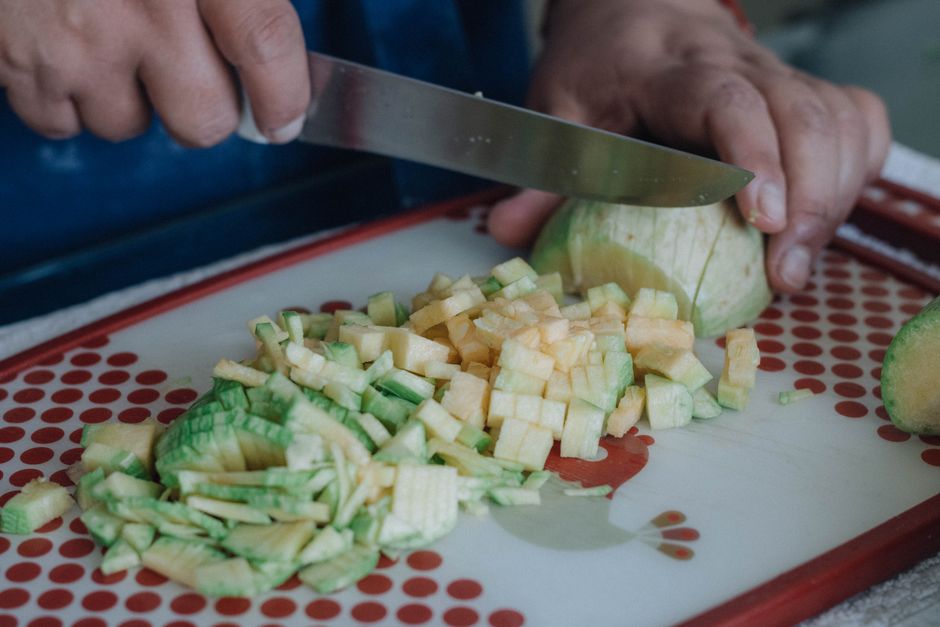
Zucchini is mostly water, and that single fact shapes how you should cut it. The best way to chop zucchini is to wash and dry it, trim both ends, cut it into planks or rounds of even thickness, then stack and slice those pieces to the size your recipe needs. A sharp knife and a steady, even cut matter more than fancy technique. Below are the details that keep the pieces crisp, uniform, and not soggy.
What Do You Need Before You Start Chopping Zucchini?
A sharp chef’s knife, a stable cutting board, and a clean kitchen towel cover almost everything. Zucchini skin is thin but tough enough to slip under a dull blade, and a dull knife is the most common reason home cooks struggle with squash.
Wash the zucchini under cool running water and rub the skin gently. Dry it well with a towel. Surface water makes the squash slippery and also causes it to steam rather than brown when it hits a hot pan.
Leave the skin on. It contains most of the vegetable’s fiber and much of its color, and there is no culinary reason to peel zucchini unless a specific recipe calls for it. The flesh is soft and the seeds are edible in standard grocery-store zucchini.
Trim a thin slice off both ends. This gives you a flat, stable base so the zucchini does not roll while you cut.
How To Chop Zucchini Into Even Pieces
Cut the zucchini crosswise into sections first, then work each section into the shape you need. This two-step approach gives you control and keeps pieces the same size, which matters because uneven pieces cook at different speeds.
For a medium zucchini, cut it into two or three crosswise blocks, each a few inches long. Stand a block on its flat cut end. Slice downward into planks of the thickness you want. Lay the planks flat and cut them lengthwise into strips, then crosswise into cubes.
Keep the pressure light. Zucchini flesh is soft, and pressing hard squashes it and releases water. Let the knife do the work with a smooth slicing motion rather than a heavy chop.
If you are cutting several zucchini, do them one at a time. Piling them up makes the board crowded and the cuts uneven.
What Size Should You Cut Zucchini For Different Dishes?
Match the cut to how long the zucchini will cook and what else is in the pan. Zucchini cooks fast, so smaller pieces need only a few minutes.
- Rounds: About 1/4 inch thick for roasting, grilling, or quick sautéing. Good for skewers and sheet-pan dinners.
- Half-moons: Cut rounds in half. A common choice for stir-fries and pasta.
- Planks: Lengthwise slices about 1/4 to 1/2 inch thick for grilling or layering in lasagna in place of noodles.
- Cubes: Roughly 1/2 inch for soups, stews, and ratatouille, where they hold shape during longer cooking.
- Fine dice: Small pieces for fritters, stuffings, and sauces where the zucchini should blend in.
- Noodles or ribbons: Thin lengthwise strips made with a peeler or spiralizer for raw or lightly cooked dishes.
Thinner cuts cook faster and release more water. Thicker cuts stay firmer. Neither is better on its own; it depends on the recipe.
Why Does Chopped Zucchini Get Watery?
Zucchini is roughly 95 percent water by weight, according to USDA food composition data. When you cut it, you expose cells and the water inside can escape. Heat speeds this up, which is why a pan of zucchini can turn soupy if you crowd it.
There are a few practical ways to manage the water:
- Cut pieces evenly so they cook at the same rate and do not sit and release water while others finish.
- Use a wide pan and avoid overcrowding. Steam trapped by too much food keeps the zucchini from browning.
- Salt sliced zucchini lightly and let it sit for about 15 minutes, then pat it dry. This draws out some water before cooking. It is a common technique, though results vary by zucchini and recipe.
- For fritters, gratings, and baked dishes, squeeze shredded zucchini in a clean towel to remove excess liquid.
Salting is widely used but not mandatory. For a quick sauté, simply drying the cut pieces well is often enough.
Should You Peel Zucchini Before Chopping?
No, in most cases you should not. The skin is edible, adds fiber, and helps the pieces hold their shape. Peeling is only worth doing if a recipe specifically asks for it or if the skin is unusually thick and tough.
Large, older zucchini can have tougher skin and bigger seeds. You can scoop out the seedy center with a spoon before chopping if the texture bothers you, but this is a preference, not a rule.
Smaller zucchini tend to be more tender and have fewer developed seeds. They are also easier to cut cleanly.
How Do You Store Chopped Zucchini?
Chopped zucchini keeps in the refrigerator for a few days, but it softens and releases water over time. Store it in a sealed container lined with a paper towel to absorb moisture.
Do not wash chopped zucchini again before storing. Extra water speeds spoilage. Cut only what you plan to use soon, since whole zucchini keeps far longer than cut pieces.
For longer storage, chopped zucchini can be frozen, though the texture changes. Freezing breaks down cell walls, so thawed pieces turn soft and watery. They work in soups and baked dishes but not for sautéing or grilling, where firm texture matters.
Common Mistakes When Chopping Zucchini
Most problems come down to a few habits. Fixing them makes the job faster and the results better.
- Using a dull knife. It slips on the skin and crushes the flesh instead of slicing cleanly.
- Cutting uneven pieces. Some pieces overcook while others stay raw.
- Pressing too hard. Zucchini bruises and releases water under heavy pressure.
- Cutting on a wet board. The squash slides and the knife can slip.
- Chopping too far ahead. Cut zucchini loses firmness and water the longer it sits.
A sharp knife and a dry board solve most of these. The rest is just paying attention to even thickness.
Is There a Faster Way to Chop Zucchini?
A food processor can chop zucchini quickly, but it tends to produce uneven, mushy pieces because the flesh is so soft. It works best for grating or for recipes where the texture does not matter, like fritters or baked goods.
For neat, even pieces, a knife is still the better tool. A mandoline can make uniform slices quickly, but use the hand guard, since the blade is very sharp and zucchini is slippery.
If you chop zucchini often, keep your knife sharp and your board stable. Those two habits save more time than any gadget.
Frequently Asked Questions
Do you need to peel zucchini before chopping it?
No, the skin is edible and adds fiber and structure. Peel only if a recipe calls for it or the skin is unusually tough.
How do you keep chopped zucchini from getting soggy?
Cut even pieces, dry them well, and cook in a wide pan without overcrowding. For shredded zucchini, squeeze out excess water in a clean towel.
Can you chop zucchini ahead of time?
Yes, but it keeps best for only a few days in a sealed container in the refrigerator. Cut zucchini softens and releases water the longer it sits.
What size should zucchini pieces be for stir-fry?
About 1/4 inch thick, cut into half-moons or thin rounds, so they cook quickly and evenly. Thicker pieces stay firm and may need more time.
