
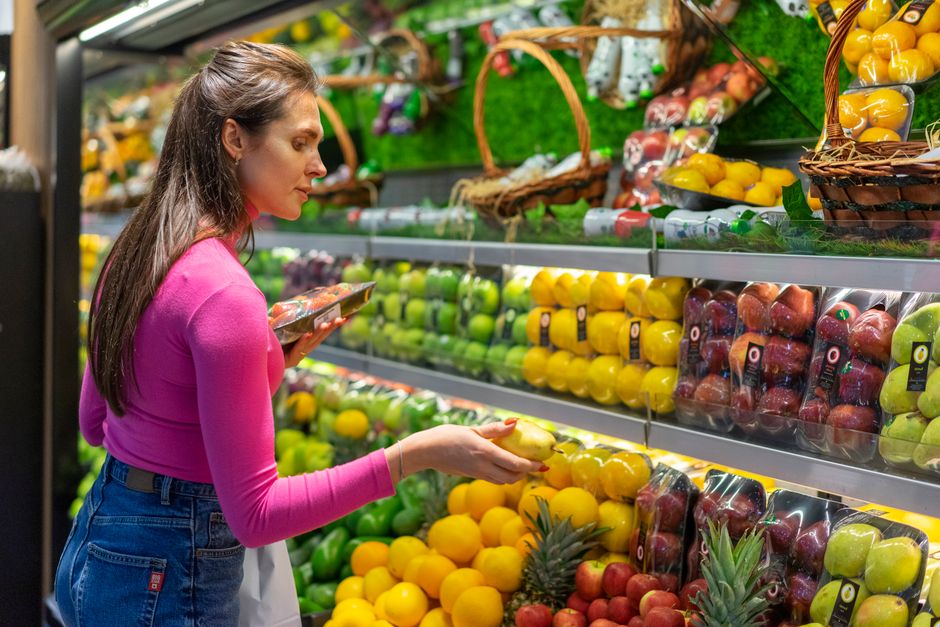
Pick up a pineapple, look at its base, and smell it. A ripe pineapple smells sweet at the bottom, gives slightly when you press the sides, and feels heavy for its size. Color matters less than most people think — a green shell can still be perfectly ripe. Those three checks take about ten seconds and beat any single rule you have heard.
How To Choose A Pineapple? Step by Step
Start with weight. A ripe pineapple is mostly water and sugar, so it should feel heavy for its size. A light one was likely picked early or has dried out. This is the single most reliable signal you have in a store.
Next, squeeze it gently. Press the sides with your palm. A ripe fruit gives a little under light pressure, the way a ripe avocado does. A rock-hard pineapple is underripe. A mushy one is past its peak.
Then smell the base. Turn the pineapple upside down and put your nose near the bottom, where the sugars concentrate. You want a sweet, floral scent. No smell means it is not ready. A sour or fermented smell means it is overripe.
Finally, check the base and the leaves. The bottom should look dry and clean, not wet or moldy. Leaves should be green and snap when you tug one. Brown, dry leaves suggest the fruit sat too long.
One note on color. A green shell does not mean the pineapple is unripe. Pineapples do not ripen much after harvest, so a green one that passes the weight, squeeze, and smell tests is ready to eat. Relying on color alone is the most common mistake shoppers make.
Does A Pineapple Ripen After You Buy It?
Mostly no. This is the fact that changes how you shop. A pineapple is a non-climacteric fruit, which means it does not continue ripening after it is picked the way a banana or peach does.
What can change after harvest is texture and acidity, not sugar content. The starch-to-sugar conversion that sweetens a banana does not happen in a pineapple. Once it is cut from the plant, its sugar level is essentially set.
So if you buy a hard, scentless pineapple, waiting a few days on the counter will not turn it sweet. It may soften slightly and lose some acidity, which can make it taste a bit better. But it will not become the ripe fruit you were hoping for.
This is why the smell and squeeze tests matter so much at the store. You are not choosing a fruit that will improve at home. You are choosing the one that is already as good as it will get.
How To Tell If A Pineapple Is Ripe
Ripe pineapples share a few consistent traits. Use them together, not one at a time.
- Weight: heavy for its size, with no hollow feel
- Firmness: gives slightly under gentle pressure, not hard or mushy
- Smell: sweet and floral at the base, not faint or sour
- Base: dry and clean, with no soft dark spots or mold
- Leaves: green and firm, snapping when pulled
- Eyes: the small bumps on the skin look flat and full, not shriveled
The eyes are the individual flower sites on the surface. On a ripe pineapple they are fairly flat and uniform. On an underripe one they can look sunken or spaced apart.
If you can only check one thing, check the smell at the base. It is the fastest way to separate a ripe pineapple from a bland one.
What Do The Different Pineapple Varieties Look Like?
Most pineapples sold in US stores are one variety: the Smooth Cayenne, often labeled simply as “pineapple.” It has a rough, spiky shell and a yellow interior when ripe.
You may also see the MD-2, sometimes sold as “Extra Sweet” or “Gold.” It has a slightly more golden shell, higher sugar content, and a milder acidity. It has largely replaced older varieties in commercial production.
Specialty stores sometimes carry smaller varieties with different shapes and flavors. The selection rules do not change. Weight, squeeze, and smell still apply.
Do not assume a golden color guarantees sweetness. Color varies by variety, and a green MD-2 can be sweeter than a yellow Smooth Cayenne. The variety tells you what to expect, but the fruit in your hand tells you what you are getting.
Should You Buy A Whole Pineapple Or Pre-Cut?
A whole pineapple is usually cheaper per pound and keeps longer. Cut fruit is more convenient but loses quality faster and costs more.
Whole pineapples keep at room temperature for a few days and in the refrigerator for about five to seven days. Once cut, refrigerated chunks are best eaten within three to four days.
Pre-cut pineapple is also harder to judge. You cannot smell the base or feel the weight. If you buy it, look for bright, uniform color, no brown edges, and juice that is clear rather than cloudy. Cloudy juice or a fermented smell means it is past its best.
Buying whole gives you the chance to use all the checks above. If convenience matters more, that is a reasonable trade. Just know you are giving up your best tools for judging ripeness.
Can You Judge A Pineapple By Its Leaves?
The leaf-pull test is popular, but it is one of the weaker signals. The idea is that a ripe pineapple’s leaves pull out easily from the crown. In practice, this varies a lot by variety and how the fruit was handled.
What the leaves can tell you is freshness. Green, firm leaves suggest the pineapple was harvested recently. Brown, dry, or wilted leaves suggest it has been off the plant longer.
Do not rely on the leaf test alone. A pineapple with stubborn leaves can still be perfectly ripe. Use it as a supporting check, not your main one.
Some people also tap the side and listen for a dull, solid sound rather than a hollow one. This is a traditional method, but it is subjective and not a reliable way to judge ripeness on its own.
What About Canned And Frozen Pineapple?
Canned and frozen pineapple are picked at peak ripeness and processed quickly, so their flavor is often consistent. The trade-off is added sugar and texture.
Canned pineapple in heavy syrup contains added sugar. If you want the fruit without it, look for cans packed in juice or water. Frozen pineapple is usually just fruit, with no added sugar, and works well in smoothies and cooked dishes.
Neither compares to a fresh, ripe pineapple for eating raw. But for cooking, baking, or blending, both are practical and reliable choices.
How To Store A Pineapple So It Lasts
Whole and uncut, a pineapple can sit on the counter for a few days. If you are not eating it soon, move it to the refrigerator. Cooler temperatures slow spoilage.
Once you cut it, refrigerate the chunks in a sealed container. Eat them within three to four days. Pineapple does not freeze well as a raw chunk for snacking because the texture turns soft, but frozen pieces are fine for smoothies and cooking.
Do not leave cut pineapple at room temperature for long. Like any cut fruit, it is a good environment for bacterial growth once the skin is broken.
If you notice a fermented smell, slimy texture, or cloudy juice on stored pineapple, throw it out. Those are signs of spoilage, not ripeness.
A Quick Word On Pineapple And Health Claims
Pineapple contains bromelain, an enzyme that breaks down protein. This is why fresh pineapple can make your mouth tingle or tenderize meat. Some research suggests bromelain has anti-inflammatory properties, and it is used in some clinical settings.
What pineapple does not do is “burn fat” or “detox” the body, despite what some marketing claims suggest. No clinical evidence confirms those claims. Pineapple is a source of vitamin C and manganese, and it is a fine fruit to include in a balanced diet. That is the honest summary.
If you take a blood thinner, talk to your doctor before making pineapple or bromelain supplements a regular part of your routine. This is a conversation worth having with a clinician rather than guessing.
Frequently Asked Questions
How do you pick a good pineapple?
Choose one that feels heavy for its size, gives slightly when you press the sides, and smells sweet at the base. Color matters less than these three checks.
How can you tell if a pineapple is ripe without cutting it?
Smell the bottom for a sweet, floral scent and press the sides for a slight give. A heavy feel and a dry, clean base are also good signs.
Does a pineapple get sweeter after you buy it?
No. Pineapples do not ripen after harvest, so their sugar content is set once picked. Waiting on the counter may soften it slightly but will not make it sweeter.
Is a green pineapple ripe?
It can be. Shell color varies by variety, and a green pineapple can be fully ripe. Trust the weight, feel, and smell instead of color alone.
