
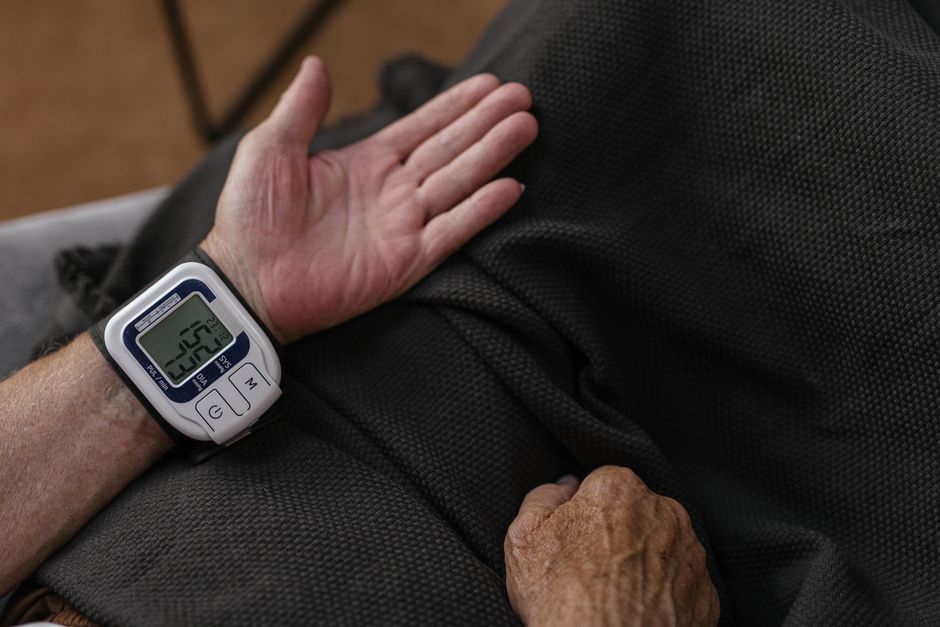
Checking your own pulse is a simple skill that takes about 30 seconds to learn. You place two fingers on your wrist or neck, count the beats for 30 seconds, and multiply by two. That number is your resting heart rate, and for most healthy adults, a normal range sits between 60 and 100 beats per minute.
How To Check Your Own Pulse And Read The Results
Your pulse is the physical expansion of an artery each time your heart pumps blood. Feeling it tells you how fast your heart is beating right now. It also reveals something about the rhythm — whether beats come at regular intervals or feel uneven.
To find your pulse on the wrist, hold one hand palm-up. Place the index and middle fingers of your other hand on the inner wrist, just below the base of the thumb. Press gently until you feel a tapping sensation. Do not use your thumb — it has its own pulse and will confuse the count.
For the neck pulse, place the same two fingers on the side of your windpipe, just below the jawbone. Press lightly. Pressing too hard on the neck can trigger a reflex that slows your heart rate, so the wrist is usually the better choice for beginners.
Once you feel the beats clearly, look at a clock or phone timer. Count the beats for 30 seconds. Multiply that number by two to get your beats per minute. If your pulse feels irregular, count for a full 60 seconds instead so you capture the pattern more accurately.
What Is a Normal Resting Heart Rate?
A normal resting heart rate for adults ranges from 60 to 100 beats per minute. That range comes from clinical guidelines and applies to people sitting quietly who are not under physical or emotional stress.
Well-conditioned athletes often have resting heart rates below 60. This is not a problem. A trained heart pumps more blood per beat, so it needs fewer beats per minute. Rates in the 40s are common in elite endurance athletes and are generally considered healthy in that specific population.
A resting rate consistently above 100 beats per minute is called tachycardia. If you measure this while sitting calmly, it is worth discussing with a doctor. A rate below 60 in someone who is not physically trained — and who feels dizzy, fatigued, or short of breath — also deserves medical attention.
How To Measure Your Pulse Accurately
Accuracy depends on timing and technique. The most reliable moment to measure is first thing in the morning, before you get out of bed or drink coffee. At that point, your heart rate reflects your true resting baseline without the influence of activity, caffeine, or stress.
Sit or lie still for at least five minutes before measuring if you are checking during the day. Do not measure right after exercise, a meal, or a stressful conversation — these all raise your heart rate temporarily and will not represent your resting value.
When you count, use a timer with a seconds display rather than estimating time. Guessing 30 seconds tends to run long or short, which skews the final number. A 30-second count multiplied by two is generally accurate enough for routine tracking. Counting for 15 seconds and multiplying by four introduces more error, especially if your rhythm is slightly irregular.





What Your Pulse Rhythm Tells You
Beyond the speed, pay attention to whether the beats feel evenly spaced. A regular pulse has a steady, predictable gap between beats. Most people have slight natural variation with breathing — the rate speeds up a little on inhale and slows on exhale. This is normal and called sinus arrhythmia.
An irregular pulse means beats come at uneven intervals. Some irregularities are harmless. Occasional skipped beats or extra beats are common and usually benign, especially if they happen rarely and you have no other symptoms.
However, a persistently irregular rhythm — one that never settles into a steady pattern — warrants medical evaluation. The most common significant cause is atrial fibrillation, a condition where the upper chambers of the heart beat chaotically. Atrial fibrillation increases stroke risk, so identifying it matters. If your pulse feels consistently irregular, a doctor can confirm the pattern with an electrocardiogram.
What Affects Your Pulse Throughout the Day
Your heart rate is not a fixed number. It shifts constantly in response to your body’s demands. Exercise raises it, sleep lowers it, and even digestion requires a temporary increase in blood flow.
Caffeine and nicotine both stimulate the heart and raise pulse rate. Dehydration thickens the blood slightly and forces the heart to work harder, which also increases beats per minute. Fever raises heart rate as the body works to regulate temperature — roughly an increase of about 10 beats per minute for each degree of fever, though this varies by individual.
Emotional states matter too. Anxiety, fear, and excitement trigger the sympathetic nervous system, which releases adrenaline and accelerates the heart. This is a normal stress response, not a sign of heart disease. The pulse should return to baseline within minutes once the emotional trigger passes.
Certain medications affect heart rate directly. Beta-blockers slow it down. Some asthma medications, thyroid medications, and decongestants speed it up. If you take any of these, your “normal” pulse may fall outside the standard range, and that is expected.
When To Be Concerned About Your Pulse
Most pulse variations are benign, but some patterns deserve medical attention. Seek evaluation if your resting heart rate stays above 100 beats per minute for no clear reason, especially if accompanied by shortness of breath, chest discomfort, or fainting.
A resting rate below 60 beats per minute in someone who is not an athlete — and who feels weak, dizzy, or confused — also warrants a medical check. This combination may indicate the heart is not pumping enough blood to meet the body’s needs.
Sudden changes matter. If your pulse was consistently in the 70s for years and suddenly sits in the 90s or 110s without explanation, that shift deserves attention. Likewise, a pulse that becomes newly irregular — flipping between fast and slow, or skipping beats frequently — should be evaluated rather than watched.
Palpitations that come with chest pain, pressure, or pain radiating to the arm or jaw require immediate emergency care. These symptoms can indicate a heart attack, and calling emergency services is the appropriate response.
Pulse vs. Blood Pressure: What Each Number Means
People often confuse pulse with blood pressure, but they measure different things. Pulse counts how many times your heart beats per minute. Blood pressure measures the force of blood against your artery walls with each beat.
You cannot estimate blood pressure from your pulse. A strong, fast pulse does not necessarily mean high blood pressure, and a weak pulse does not mean low blood pressure. The only way to know your blood pressure is to measure it with a blood pressure cuff.
Both numbers matter for cardiovascular health, but they are tracked separately. Home blood pressure monitors do not replace pulse checks, and pulse oximeters — the devices that clip on your finger — measure oxygen saturation and pulse rate, not blood pressure.
How To Track Your Pulse Over Time
Tracking trends matters more than any single reading. A single high or low measurement could reflect a temporary state — stress, a recent meal, or poor sleep. A consistent pattern over weeks tells a more meaningful story.
Record your morning resting pulse daily for at least a week before drawing conclusions. Note the date, time, and any factors that might influence it, such as illness, poor sleep, or new medications. After a week, you will have a personal baseline that is more useful than a generic range.
Fitness trackers and smartwatches can measure pulse continuously, but they are not always precise. Wrist-based optical sensors occasionally miscount during movement or in people with darker skin tones. If a device reading seems off, verify it with a manual count before acting on the number.
Frequently Asked Questions
Where is the best place to check your own pulse?
The wrist is the best place for most people. Place your index and middle fingers on the inner wrist below the base of the thumb and press gently until you feel the beat.
How long should you count your pulse for?
Count for 30 seconds and multiply by two for a routine check. Count for a full 60 seconds if your pulse feels irregular or you want maximum accuracy.
What is a dangerous resting heart rate?
A resting rate consistently above 100 beats per minute or below 60 with symptoms like dizziness or fainting warrants medical evaluation. Any pulse with chest pain or difficulty breathing requires emergency care.
Can you check your own pulse with your thumb?
No, you should not use your thumb. The thumb has its own pulse that can interfere with your count, so always use your index and middle fingers instead.
