
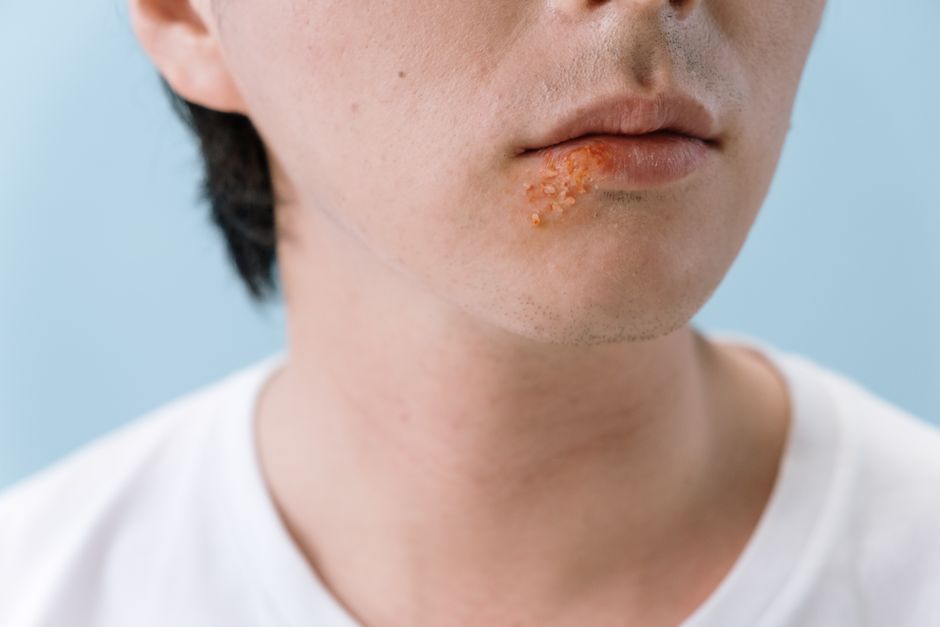
Most people who have herpes do not know it. That single fact explains why testing is more complicated than it sounds. There is no single test that tells you whether you have herpes. What you can do depends on whether you have visible sores, what type of virus you are looking for, and how long it has been since you were exposed. Here is how herpes testing actually works, with and without symptoms.
What Does It Mean to Have Herpes?
Herpes is caused by two related viruses. Herpes simplex virus type 1 (HSV-1) and herpes simplex virus type 2 (HSV-2). Both can infect the mouth or the genitals.
HSV-1 is extremely common. The World Health Organization estimates that roughly two-thirds of adults under 50 worldwide carry it. Most got it in childhood through ordinary skin-to-skin contact, like a kiss from a relative. It usually shows up as cold sores, but it can also cause genital infections.
HSV-2 is less common and is mostly transmitted sexually. It prefers the genital area, though it can infect the mouth too.
The virus never leaves the body. After the first infection, it travels to nerve clusters near the spine and stays there. It can reactivate from time to time. Sometimes that causes a visible sore. Often it causes nothing you would notice.
That silent reactivation is why herpes spreads so easily. A person can shed virus from their skin without any sore, any tingling, or any idea it is happening.
How Do You Check for Herpes When You Have Symptoms?
Visible sores are the easiest situation to test. A clinician can swab the sore and send the sample to a lab.
Two swab methods are used. A viral culture tries to grow the virus from the sample. A PCR test looks for the virus’s genetic material. PCR is more sensitive, meaning it catches more true infections, and it is generally preferred when available.
Timing matters. A swab works best when taken within about 48 hours of a sore appearing. The longer a lesion has been present, the less likely a culture is to come back positive, even when the person truly has herpes.
If the sore has already started healing, a negative swab does not rule herpes out. It may simply mean the sample was collected too late.
What a Symptomatic Outbreak Typically Looks Like
Not everyone gets the classic picture. When symptoms do appear, common ones include:
- Small blisters or open sores around the mouth, genitals, or rectum
- Tingling, burning, or itching in the area before a sore shows up
- Painful urination, especially with genital sores
- Flu-like feelings during a first episode, such as fever, body aches, and swollen lymph nodes
A first episode tends to be the worst. Later outbreaks are usually milder and shorter, and some people stop having noticeable outbreaks altogether.
How Do You Check for Herpes When You Have No Symptoms?
Without a sore to swab, testing relies on blood. A blood test looks for antibodies your immune system made against HSV-1 or HSV-2.
Antibodies take time to develop. For HSV-2, most people who are going to test positive will do so by about 12 weeks after exposure. Testing too early can produce a false negative because the immune response has not formed yet.
Blood tests can also produce false positives, especially for HSV-2, when the result falls in a low-positive range. Some labs now offer a confirmatory test for these borderline results. If you get a low positive, it is worth asking your clinician whether a confirmation test is appropriate before you accept the result.
One important limitation: a standard blood test cannot tell you where on your body the infection is. A positive HSV-1 antibody result, for example, does not reveal whether you carry it orally or genitally. Most HSV-1 is oral and acquired in childhood, so a positive result often reflects an old mouth infection rather than a new genital one.





Which Herpes Test Should You Ask For?
Not all herpes tests are equal, and some are not recommended at all.
For someone with an active sore, a PCR swab is the most accurate option.
For someone without symptoms, a type-specific blood test is the tool. This test distinguishes HSV-1 from HSV-2. Older tests that only say “herpes positive” without specifying the type are less useful because the two viruses behave differently.
The CDC does not recommend routine herpes blood screening for everyone, including all pregnant women. The reason is practical. A positive result without symptoms can cause real distress, and there is no treatment that eliminates the virus. Testing is generally most useful when a person has symptoms, has a partner with known herpes, or has specific reasons to want the information.
If you want to be tested, ask your clinician which test they are ordering and why. That conversation matters more than the test name.
Can You Test Yourself at Home?
Home testing kits exist, but their accuracy varies and many are not held to the same standards as clinical lab tests.
Most at-home kits work by having you collect a blood sample and mail it to a lab. The lab does the actual analysis, so the result depends on the lab’s methods, not the kit itself. Some kits use a finger-prick sample, which can be less reliable than a venous blood draw.
The bigger issue is interpretation. A home result arrives without a clinician to explain what a low positive means, whether a confirmatory test is needed, or how the result relates to your actual risk. For herpes, that context is not optional. It is the difference between a useful answer and a frightening one that may not even be correct.
If you use a home kit and get a positive result, treat it as a starting point and confirm it with a clinician.
Why Timing and Test Choice Change Your Result
Two people can take a herpes test on the same day and get different answers for reasons that have nothing to do with whether they have the virus.
The window period is the main one. Test too soon after exposure and antibodies may not be detectable yet. For HSV-2, that window can stretch to around 12 weeks.
Test choice is the second. A viral culture is less sensitive than PCR. A non-type-specific blood test tells you less than a type-specific one. A low-positive blood result may need confirmation before it means anything.
This is why a single negative test is not always the final word, and a single positive test is not always the whole story. The result has to be read alongside your symptoms, your timing, and the specific test used.
What Happens After a Positive Result?
A positive herpes result is not the end of anything. It is information.
Antiviral medications can reduce how often outbreaks happen and how severe they are. They can also lower the chance of passing the virus to a partner. These medications do not cure herpes and do not remove the virus from the body.
For many people, the hardest part of a diagnosis is the stigma, not the symptoms. Genital herpes is common, most people with it have mild or no symptoms, and it is manageable. Talking with a clinician who can explain your specific situation is more useful than searching for answers alone.
If you are pregnant or planning to become pregnant, tell your clinician about any herpes diagnosis. There are specific steps that can reduce the risk of passing the virus to a newborn, and that conversation should happen with a clinician, not a search engine.
Frequently Asked Questions
Can you test for herpes if you have no symptoms?
Yes, through a type-specific blood test that looks for antibodies against HSV-1 or HSV-2. The test is most reliable when taken at least 12 weeks after possible exposure, since antibodies take time to develop.
How accurate is a herpes blood test?
Type-specific blood tests are generally reliable, but they can produce false negatives if taken too early and false positives when results fall in a low-positive range. A confirmatory test may be needed for borderline results.
Can a swab test miss herpes?
Yes. A swab works best when taken within about 48 hours of a sore appearing, and its accuracy drops as a lesion heals. A negative swab does not always rule herpes out.
Does a positive HSV-1 blood test mean I have genital herpes?
No. A blood test cannot tell you where the infection is on your body. Most HSV-1 infections are oral and were acquired in childhood, so a positive result often reflects an old mouth infection rather than a genital one.
