
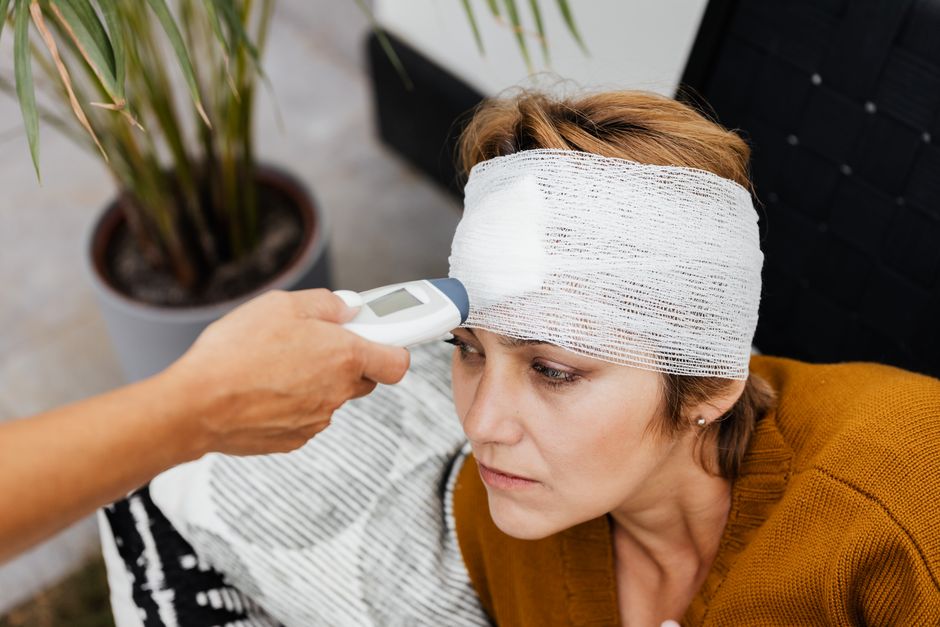
A concussion is a mild traumatic brain injury that changes how the brain works, and the signs do not always show up right away. To check for one, look for confusion, headache, dizziness, nausea, balance problems, blurry vision, and memory gaps about the event itself. Symptoms can appear within minutes or take hours to develop, so watching the person for the rest of the day matters as much as the first check.
Anyone who loses consciousness, vomits repeatedly, has a worsening headache, or cannot stay awake needs emergency medical care. That is not a concussion check you do at home. That is a 911 call.
What Actually Happens to the Brain in a Concussion?
A concussion is a functional injury, not a structural one. The brain is soft tissue floating in fluid inside a hard skull. A hit to the head, or a hit to the body that snaps the head back and forth, makes the brain move inside that skull.
That movement stretches and twists nerve cells. The result is a temporary disruption in how brain cells communicate. Ion levels shift, the cells work harder to restore balance, and blood flow can be briefly thrown off. This is why symptoms like confusion and dizziness show up.
The key point: a standard CT scan or MRI usually looks normal after a concussion. That does not mean nothing happened. It means the injury is at the cellular level, below what those scans can see. This is also why imaging is not routinely used to diagnose a concussion — it is used to rule out bleeding or a skull fracture.
Most people recover fully with rest and a gradual return to activity. A minority have symptoms that last weeks or longer. Researchers do not yet fully understand why recovery varies so much between people.
How To Check For A Concussion What To Look For?
The most reliable signs fall into four groups: thinking and memory, physical symptoms, emotional changes, and sleep. Checking all four gives you a fuller picture than watching for a headache alone.
Thinking and memory signs
- Confusion or feeling “in a fog”
- Not remembering what happened right before or after the hit
- Repeating the same question over and over
- Slowed thinking or trouble concentrating
- Answering questions slowly
Physical signs
- Headache or pressure in the head
- Nausea or vomiting
- Dizziness or problems with balance
- Blurry or double vision
- Sensitivity to light or noise
- Feeling tired or sluggish
Emotional signs
- Irritability or quick frustration
- Sadness or anxiety that was not there before
- Feeling more emotional than usual
Sleep signs
- Sleeping more or less than normal
- Trouble falling asleep
Any one of these after a blow to the head or body is enough to suspect a concussion. You do not need all of them.
How Do You Check Someone Right After a Hit?
Start by checking whether the person is alert and oriented. Ask simple questions they should know the answer to: What is your name? What day is it? Where are you? What happened?
Watch how they answer. Slowness, blank stares, or wrong answers are red flags. Ask a memory question about the event itself — “What do you remember right before you fell?” Not being able to recall the moment of impact is a common concussion sign.
Then check physical function:
- Ask them to follow your finger with their eyes. Trouble tracking or double vision is a concern.
- Ask them to stand and walk a few steps. Unsteadiness matters.
- Check that both pupils are the same size and react to light.
- Ask about headache, nausea, and whether light or noise bothers them.
If the person is unconscious, do not move them. Call 911. If they are awake but something feels off, treat it as a concussion until a medical professional says otherwise.
One thing worth knowing: symptoms often get worse over the first few hours, not better. A person who seems fine ten minutes after a hit can feel much worse an hour later. That is why observation matters more than a single check.
When Is a Head Injury an Emergency?
Some signs mean the injury may be more than a concussion. Get emergency care immediately if you see any of these:
- Loss of consciousness, even briefly
- Repeated vomiting
- A headache that keeps getting worse
- Cannot be woken up, or is very hard to wake
- Slurred speech
- Weakness or numbness on one side of the body
- One pupil larger than the other
- A seizure
- Clear fluid or blood coming from the nose or ears
- Unusual behavior or increasing confusion
These can point to bleeding in the brain or a skull fracture, which are medical emergencies. Do not wait to see if things improve. Do not drive the person yourself if symptoms are severe — call 911.
This is especially true for anyone on blood-thinning medication, anyone over 65, and young children. In these groups, even a minor-looking bump deserves a medical evaluation.
Can You Check for a Concussion at Home?
You can watch for symptoms at home, but you cannot diagnose a concussion at home. There is no reliable home test that confirms or rules one out.
What you can do is track symptoms over the first 24 to 48 hours. Note when the headache started, whether nausea comes and goes, how the person sleeps, and whether they seem like themselves. This log helps a doctor if you end up seeking care.
Apps and online quizzes that claim to check for concussion are not a substitute for medical evaluation. Some are based on symptom checklists that can be useful for tracking, but none can confirm a diagnosis.
If you suspect a concussion, the standard advice is to have the person seen by a healthcare provider. That is true even if symptoms seem mild. A clinician can assess things you cannot check at home, like eye movement, balance, and neurological function.
Why Do Symptoms Sometimes Show Up Later?
Concussion symptoms often build rather than appear all at once. The brain’s chemical and metabolic changes take time to unfold. Swelling, if any, develops gradually.
Adrenaline also masks symptoms right after an injury. A person who is fired up from a game or an accident may not notice a headache until they calm down hours later. This is a well-known pattern in sports medicine.
Because of this delay, the standard guidance in sports and many clinical settings is to remove the person from activity right away and keep watching them. Returning to play or work before symptoms resolve is linked to longer recovery and, in rare cases, more serious injury if a second impact happens before the first heals.
What Should You Do If You Suspect a Concussion?
Stop all activity. Physical and mental rest in the first day or two is the standard approach, followed by a gradual return to normal activity as symptoms allow.
Get the person evaluated by a healthcare provider. This is not optional if there was any loss of consciousness, vomiting, or worsening symptoms.
Avoid alcohol and avoid driving until cleared. Both can worsen symptoms and raise the risk of another injury.
Do not use this article as a substitute for medical care. If you are unsure whether a head injury is serious, err on the side of getting it checked. The cost of a needless evaluation is far lower than the cost of missing a brain bleed.
Frequently Asked Questions
How long after a head injury can concussion symptoms appear?
Symptoms can start within minutes, but many people do not notice them for hours. Watch for at least 24 to 48 hours after any significant hit to the head or body.
Can you have a concussion without losing consciousness?
Yes. Most concussions do not involve losing consciousness at all. Confusion, headache, and memory problems are more common signs.
What is the single most reliable sign of a concussion?
No single sign confirms it, but confusion or memory loss about the event is one of the most consistent indicators. Any change in thinking, balance, or vision after a hit should be taken seriously.
Should you let someone sleep after a possible concussion?
Current guidance allows sleep, but someone should check on the person through the night for worsening symptoms. If they cannot be woken normally or symptoms get worse, seek emergency care.
