
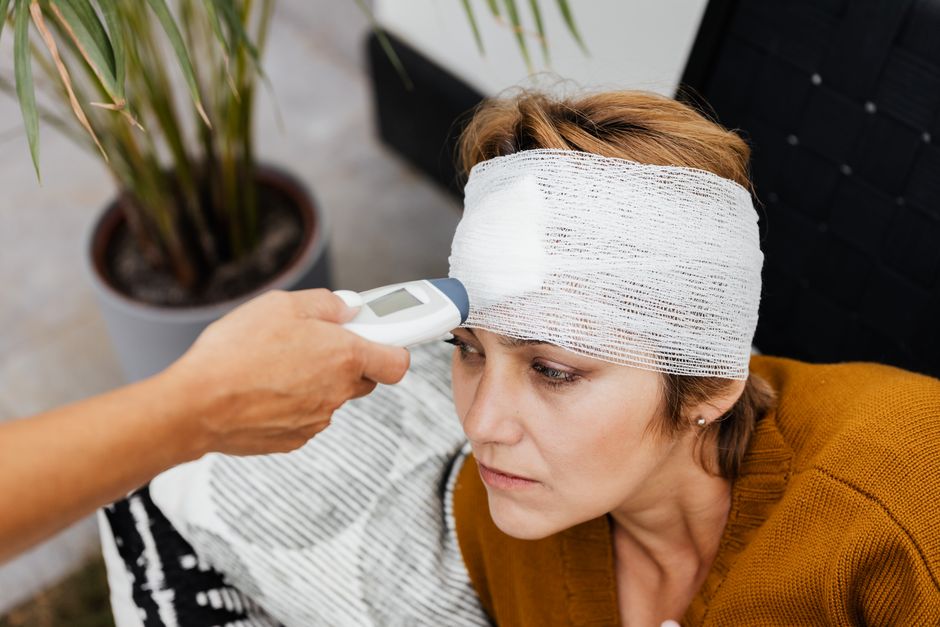
A concussion is a mild traumatic brain injury that happens when a blow to the head or body makes the brain move quickly inside the skull. Checking for one means watching for specific symptoms, testing memory and balance, and knowing when to get emergency medical help. You cannot diagnose a concussion yourself with certainty, but you can recognize the warning signs that require immediate evaluation by a healthcare professional.
What Are the First Signs of a Concussion?
Symptoms usually appear right after the injury, but they can also develop over the following hours or days. The most common early signs include a headache, dizziness, confusion, and feeling like you are in a fog. Some people report ringing in the ears, nausea, or sensitivity to light and noise.
Physical signs are often easier to spot in someone else. Watch for a person who appears dazed, answers questions slowly, forgets what happened right before or after the injury, or shows mood changes. Loss of consciousness happens in only about 10 percent of concussions, so do not assume someone is fine just because they stayed awake.
In children, symptoms may be harder to identify. A young child who cannot describe how they feel might cry more than usual, refuse to eat, seem unusually sleepy, or lose interest in favorite toys.
How To Check For A Concussion Symptoms And Tests at Home
You can do a basic symptom check at home, but this does not replace a medical evaluation. Ask the person simple questions like “What day is it?” or “Where are we?” and have them repeat a short list of three words back to you. Difficulty with these tasks suggests cognitive impairment that warrants medical attention.
Check their balance by having them stand with feet together and arms extended, then close their eyes. Trouble maintaining balance for a few seconds can indicate a problem. Also ask them to follow your finger with their eyes as you move it side to side; jerky eye movements or complaints of pain doing this are concerning signs.
These informal checks are screening tools only. They cannot rule out a concussion. The only reliable way to confirm a concussion diagnosis is through clinical examination by a doctor or trained healthcare provider who can assess neurological function and rule out more serious injuries.
What Tests Do Doctors Use to Diagnose a Concussion?
Doctors do not rely on a single test. They use a combination of clinical evaluation, symptom checklists, and standardized assessment tools to make a diagnosis. The Sport Concussion Assessment Tool, often called SCAT, is widely used in sports settings and includes memory tests, balance checks, and symptom scoring.
Neurological examination is the core of diagnosis. The doctor checks pupil response, eye movement, coordination, reflexes, and strength. They also take a detailed history of the injury and ask about risk factors like previous concussions, which can affect recovery time.
Imaging tests like CT scans or MRIs are typically not used to diagnose a concussion itself. These scans cannot detect the microscopic changes that occur in a concussion. Doctors order them only when they suspect a more serious injury such as bleeding in the brain, skull fracture, or swelling. Warning signs that trigger imaging include worsening headache, repeated vomiting, seizures, or unequal pupil size.
When Should You Go to the Emergency Room?
Certain symptoms require immediate emergency care. Do not wait to see if they improve. Go to an emergency room if the person loses consciousness for more than a minute, has repeated vomiting, experiences a seizure, or complains of a worsening headache that will not go away.
Other red flags include weakness or numbness in any part of the body, slurred speech, confusion that gets worse, difficulty waking up, or unusual behavior changes. In infants, look for a bulging soft spot on the top of the head or inconsolable crying. These signs may indicate bleeding or swelling in the brain, which can be life-threatening.
If there is any doubt, seek medical care. It is always safer to have a professional evaluate the injury than to assume it is mild. Even a seemingly minor head injury can have serious complications, especially in older adults, people taking blood thinners, or those with a history of previous brain injuries.
What Should You Do Immediately After a Suspected Concussion?
The first step is to stop all physical activity immediately. Continuing to play or exercise after a head injury increases the risk of second impact syndrome, a rare but potentially fatal condition where a second concussion occurs before the first has healed. Remove the person from the situation and do not let them return to sports or strenuous activity.
Do not give medication without medical advice. Over-the-counter pain relievers like ibuprofen or aspirin may increase the risk of bleeding if there is an undetected intracranial injury. Acetaminophen is sometimes recommended for headache, but only after a healthcare provider has ruled out more serious injury.
Monitor the person closely for the first 24 to 48 hours. Wake them periodically during the night to check that they respond normally. Do not leave them alone for extended periods during this window. If symptoms worsen at any point, seek medical care immediately.
How Long Does Concussion Recovery Take?
Most adults recover from a concussion within 7 to 14 days. Children and teenagers often take longer, sometimes up to four weeks. Recovery time varies based on the severity of the injury, age, history of prior concussions, and whether the person rests properly during the early phase.
Physical and cognitive rest is the foundation of early recovery. This means limiting screen time, avoiding reading for extended periods, and taking breaks from school or work tasks that require concentration. Complete rest in a dark room is not necessary for most people, but reducing stimulation helps the brain heal.
Return to normal activities should happen gradually. Most healthcare providers recommend a stepwise approach where the person returns to daily activities first, then light exercise, then sport-specific training, and finally full contact activity. Each step should be symptom-free before moving to the next level. A healthcare professional should clear athletes before they return to play.
What Are the Risks of Repeated Concussions?
Having one concussion increases the risk of having another. This is partly because the brain is more vulnerable during the healing period, and partly because some people may return to activity too soon. Each subsequent concussion may require longer recovery time and produce more severe symptoms.
Research has linked repeated concussions to long-term cognitive problems, though the exact relationship is still being studied. Chronic traumatic encephalopathy, or CTE, is a degenerative brain disease found in some athletes and military veterans with a history of repeated head trauma. However, not everyone who experiences concussions develops CTE, and the condition cannot currently be diagnosed in living people with certainty.
The safest approach is prevention. Wear appropriate helmets for sports and cycling, use seatbelts in vehicles, and address fall hazards in the home, especially for older adults. A concussion is not something to push through. Taking recovery seriously protects long-term brain health.
Frequently Asked Questions
Can you check for a concussion without seeing a doctor?
You can check for symptoms at home, but you cannot rule out a concussion without a professional evaluation. Home checks can identify warning signs that require medical care, but they are not diagnostic tools.
What is the concussion test called?
The most commonly used standardized test is the Sport Concussion Assessment Tool, known as SCAT. Doctors also use symptom checklists and neurological examinations to make a diagnosis.
How soon do concussion symptoms appear?
Symptoms usually appear within minutes of the injury but can take hours or days to develop. Delayed symptoms do not mean the injury is less serious.
Can you sleep after a concussion?
Sleeping after a concussion is safe if the person has been evaluated and does not have red flag symptoms. You should wake them periodically during the first 24 to 48 hours to check their responsiveness.
