
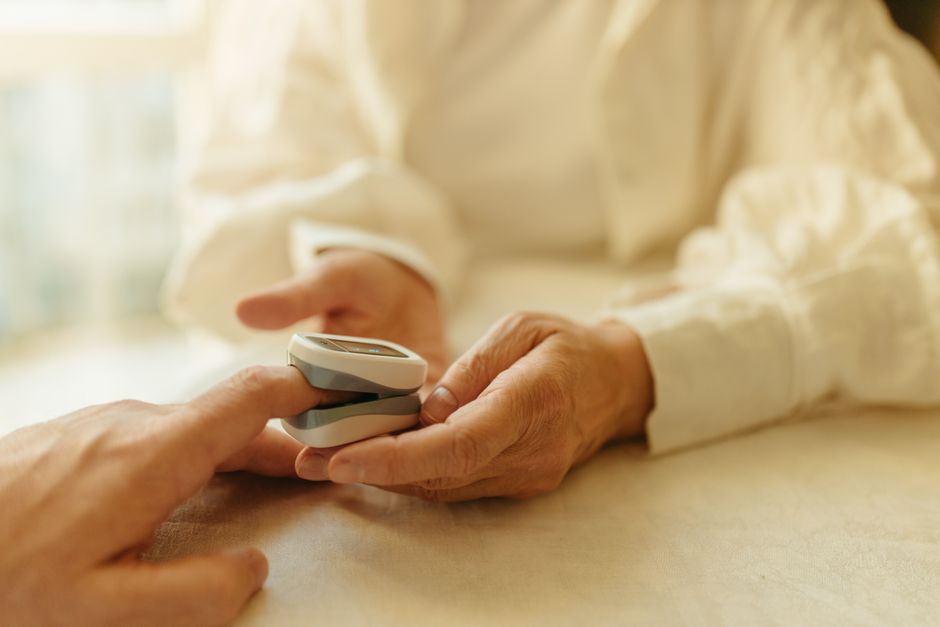
Checking your A1C at home is now a realistic option for many people. You can buy a kit online or at a pharmacy, do a simple finger-prick test, and get a result in about five minutes. These home tests are reasonably accurate for tracking trends, though they are not a perfect substitute for a lab test. The most important thing to understand is what the number means, how the test works, and when you should still see a doctor for a lab-based A1C.
What Does an A1C Test Actually Measure?
An A1C test measures your average blood sugar over the past two to three months. It does not measure your blood sugar at a single moment like a glucose meter does. Instead, it looks at how much glucose has attached to your red blood cells. Red blood cells live for about 90 to 120 days, so the test reflects that entire span.
The result is reported as a percentage. A normal A1C is below 5.7%. A result between 5.7% and 6.4% indicates prediabetes. A result of 6.5% or higher indicates diabetes. These thresholds are well established and used consistently by medical organizations worldwide.
How Do Home A1C Kits Work?
Home A1C kits use a small blood sample from a finger prick. The kit includes a lancet, a test cartridge, and a small electronic reader. You place a drop of blood on the cartridge, insert it into the reader, and wait for the result to appear on a screen.
The technology behind these kits is similar to what clinics use for rapid point-of-care testing. The test measures the percentage of glycated hemoglobin in your blood sample. Glycated hemoglobin is simply hemoglobin with glucose attached to it. The higher your average blood sugar, the more glycated hemoglobin you have.
Most home kits are cleared by the FDA for over-the-counter use. That clearance means the manufacturer has demonstrated the test works as intended for self-testing. It does not mean the test is identical in accuracy to a lab test. It means it is accurate enough to be clinically useful for most people.
How To Check A1C At Home Steps Kits Accuracy
The process for checking your A1C at home is straightforward, but following the instructions exactly matters. Here are the standard steps for most home A1C kits:
- Wash your hands with warm soapy water and dry them completely. Warm water helps blood flow.
- Prepare the test cartridge and reader according to the package instructions. Do this before you prick your finger.
- Use the lancet to prick the side of your fingertip, not the pad. The side is less painful and produces a better drop of blood.
- Gently squeeze your finger to form a large enough drop. Do not smear the blood onto the cartridge. Most kits require a specific drop size.
- Touch the drop of blood to the designated spot on the cartridge. Avoid trapping air bubbles.
- Insert the cartridge into the reader and wait for the result. This usually takes about five minutes.
- Record your result with the date and time. Tracking trends over time is more useful than a single reading.
Accuracy depends heavily on technique. A small blood sample, air bubbles, or testing on cold hands can all affect the result. If you get a result that does not match how you feel, or if it is very different from a recent lab test, repeat the test before acting on it.




How Accurate Are Home A1C Kits Compared to Lab Tests?
Home A1C kits are generally accurate, but they are not as precise as laboratory tests. Lab tests use a method called high-performance liquid chromatography, or HPLC, which is considered the gold standard. Home kits use a different method that is slightly less precise.
Most home kits have a margin of error of about plus or minus 0.5 percentage points. That means a home result of 7.0% could be anywhere from 6.5% to 7.5% in the lab. For most people managing diabetes, this level of accuracy is sufficient to spot trends and adjust lifestyle habits. For making medication decisions, you need a lab test.
Research has shown that home A1C tests correlate well with lab results when used correctly. Some studies suggest certain brands perform better than others. The FDA clearance process helps ensure a minimum standard, but it does not guarantee that every brand is equally reliable.
One important limitation is that home kits can be less accurate in certain situations. People with anemia, kidney disease, or hemoglobin variants like sickle cell trait may get inaccurate results. If you have any of these conditions, you should rely on lab tests instead.
When Should You Use a Home A1C Test?
Home A1C testing is most useful for people who already have a diabetes diagnosis and want to monitor their progress between doctor visits. It can help you see if lifestyle changes, diet, or exercise are moving your numbers in the right direction.
It can also be useful for people with prediabetes who are working to prevent progression to diabetes. Checking every few months can show whether your efforts are working. It is not a substitute for regular lab testing, but it fills the gap between appointments.
If you have never been diagnosed with diabetes and are just curious about your blood sugar, a home test can give you a rough idea. However, if the result is above 6.5%, you need a lab test to confirm before any diagnosis is made. A single home test is not enough to diagnose diabetes.
For people with diabetes, testing frequency depends on your treatment plan. Some clinicians recommend checking A1C every three months if your treatment has changed or your numbers are not at target. If your numbers are stable, every six months may be enough. Your doctor will decide what interval is right for you.
Limitations of Home A1C Testing You Should Know
Home A1C tests have real limitations. They are not as precise as lab tests, and they do not measure day-to-day blood sugar fluctuations. A person with wide swings between very high and very low blood sugar can have a normal-looking A1C. The average can hide dangerous extremes.
Home kits also cannot tell you about your blood sugar patterns. They do not show when your blood sugar spikes after meals or drops at night. For that information, you need a continuous glucose monitor or regular finger-prick glucose testing throughout the day.
Another limitation is that home kits may not be covered by insurance. Costs vary by brand, but you can expect to pay somewhere between $30 and $80 per kit. Some kits include multiple tests, while others are single-use. Compare prices and read reviews before choosing a brand.
Finally, home testing does not replace the clinical context your doctor provides. Your A1C is one piece of your overall health picture. Blood pressure, cholesterol, kidney function, and other factors all matter for diabetes management. A home test cannot assess those.
How Often Should You Check A1C At Home?
There is no official guideline for how often to use a home A1C test. The reason is that A1C measures a three-month average. Testing more often than every two to three months gives you essentially the same information, because red blood cells have not turned over yet.
If you are using a home kit to track progress, testing every two to three months is reasonable. Testing weekly or monthly is not useful because the number will not change meaningfully in that time. You would be spending money to see the same result.
Some people test more frequently when they are making major changes, like starting a new medication or a strict diet. Even then, the A1C number will not shift quickly. It takes weeks for changes to show up in the percentage. Be patient and consistent rather than frequent.
Frequently Asked Questions
Can a home A1C test diagnose diabetes?
No, a home A1C test cannot diagnose diabetes on its own. You need a lab test to confirm any result before a diagnosis is made.
How long does a home A1C test take?
Most home A1C kits give results in about five minutes. The finger prick and sample collection take only a minute or two.
Do I need to fast before a home A1C test?
No, fasting is not required for an A1C test. The test measures your average blood sugar over months, not your current blood sugar level.
Are home A1C tests covered by insurance?
Coverage varies by insurance plan. Many plans do not cover home A1C kits, so check with your provider before purchasing one.
