
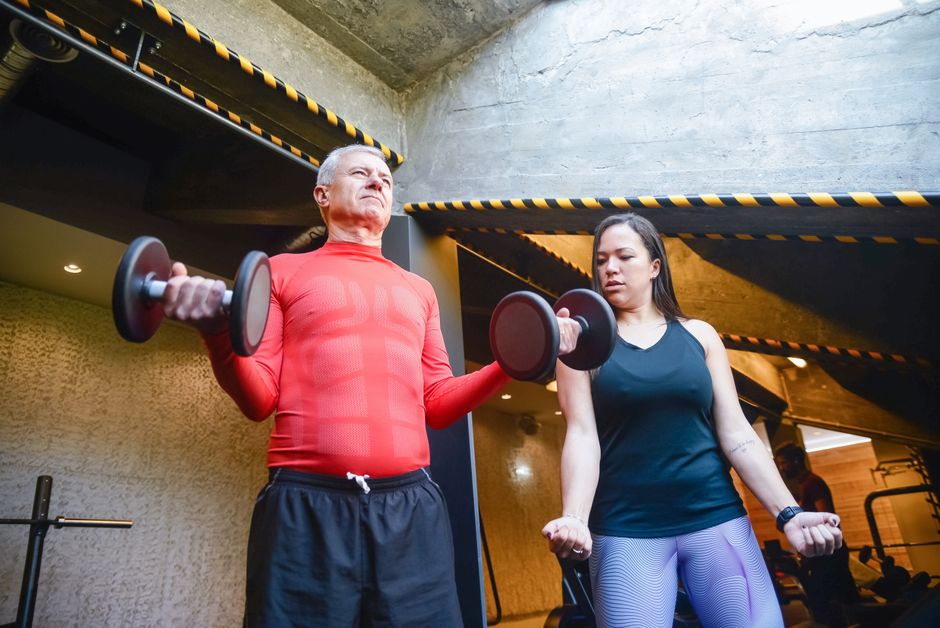
You can change your body. Muscle grows when you stress it and let it recover. Fat drops when you eat fewer calories than you burn. Flexibility improves when you stretch consistently. These are not opinions. They are measurable outcomes that researchers have tracked for decades.
What science cannot do is tell you it will be fast, easy, or permanent without continued effort. The body adapts to what you ask of it. Stop asking, and it adapts back. That is the honest starting point.
How To Change Yourself Physically What Science Shows About Muscle Growth
Muscle tissue responds to mechanical tension, metabolic stress, and muscle damage. When you lift something heavy enough to challenge a muscle, you create tiny disruptions in the muscle fibers. The body repairs those disruptions and, over time, builds the fibers back slightly thicker.
This process is called hypertrophy. It requires three things working together: enough resistance to trigger the response, enough protein to rebuild tissue, and enough rest for repair to actually happen.
Resistance training is the most studied method for building muscle. Research consistently shows that progressive overload — gradually increasing weight, reps, or both — drives growth. Without progression, the body has no reason to adapt further.
Protein matters. The general range discussed in sports nutrition research is roughly 1.6 to 2.2 grams per kilogram of body weight per day for people actively trying to build muscle. For a 150-pound person, that is about 109 to 150 grams daily. Individual needs vary based on training intensity, age, and overall health.
Sleep is not optional here. Growth hormone release peaks during deep sleep. Studies have found that chronic sleep restriction reduces muscle protein synthesis and impairs recovery. If you train hard and sleep five hours a night, you are fighting your own biology.
Can You Actually Change Your Body Fat Percentage?
Yes. Fat loss follows the law of energy balance. Eat fewer calories than you expend, and the body pulls from stored fat for fuel. This is well established.
What is less straightforward is how much of that loss comes from fat versus muscle. Without resistance training and adequate protein, a significant portion of weight lost can come from lean tissue. That is one reason crash diets often leave people looking softer at a lower weight.
The general guideline for sustainable fat loss is a deficit of roughly 500 calories per day, which tends to produce about one pound of loss per week. Larger deficits can work short-term but are harder to maintain and increase the risk of muscle loss.
Some research suggests that the rate of fat loss slows as you lose more weight. The body adjusts its energy expenditure downward in response to sustained deficits. This is sometimes called metabolic adaptation. It does not mean fat loss is impossible. It means the last few pounds often require more patience and precision than the first few.
Spot reduction — trying to lose fat from one specific area by exercising that area — does not work. Studies have tested this repeatedly. Sit-ups do not burn belly fat specifically. The body mobilizes fat from stores throughout the body, and where you lose it first is largely determined by genetics and hormones.
How Does Exercise Change Your Body Beyond Muscle and Fat?
Exercise changes far more than what you see in a mirror. The cardiovascular system adapts to regular aerobic activity by increasing stroke volume — the amount of blood the heart pumps per beat. Resting heart rate often drops as the heart becomes more efficient. A normal resting heart rate for adults is 60 to 100 beats per minute, and trained individuals frequently fall at the lower end of that range or slightly below.
Bone density responds to weight-bearing activity. This matters most during the decades when bone mass naturally declines, particularly after menopause in women. Resistance training and weight-bearing cardio are both associated with slower bone loss.
Blood sugar regulation improves with regular physical activity. Muscle contractions increase glucose uptake independent of insulin, which is one reason exercise is consistently recommended as part of type 2 diabetes management.
Even skin changes. Some research indicates that exercise increases blood flow to the skin and may support collagen production, though the evidence here is less robust than for muscle or cardiovascular adaptations.





What Role Does Nutrition Play in Physical Change?
Nutrition determines whether your training pays off or gets wasted. You cannot out-train a poor diet, and you cannot build muscle without adequate raw materials.
Protein provides the amino acids needed for muscle repair. Carbohydrates fuel intense training and replenish glycogen stores. Fats support hormone production, including testosterone and estrogen, which influence muscle growth and fat distribution.
Micronutrients matter too, though the effects are less visible. Iron deficiency impairs oxygen delivery and reduces exercise capacity. Vitamin D plays a role in bone health and muscle function. Calcium and magnesium are involved in muscle contraction and recovery.
No single diet works for everyone. What matters is total calorie intake, adequate protein, and enough micronutrients to support the systems you are asking to adapt. Extreme diets that eliminate entire food groups often create deficiencies that undermine progress.
How Long Does It Take to See Physical Changes?
Visible muscle changes typically take longer than people expect. Most research suggests that noticeable muscle growth becomes apparent after about eight to twelve weeks of consistent training. Strength gains often come faster — within the first few weeks — because the nervous system learns to recruit muscle fibers more efficiently before the fibers themselves grow.
Fat loss is often visible sooner. A loss of one to two pounds per week can show in the face and waist within a month for some people. The rate depends on starting body composition, diet adherence, and activity level.
Cardiovascular adaptations begin within weeks. Resting heart rate may drop, and stamina improves, often before any visible change in body shape.
Flexibility gains can appear within two to four weeks of regular stretching, though significant changes in connective tissue take longer. Connective tissue adapts more slowly than muscle.
These timelines are general. Genetics, age, hormones, sleep quality, stress, and medical conditions all affect how quickly the body responds.
What Limits How Much You Can Change?
Genetics set boundaries. Height is largely determined by genetics. Bone structure determines shoulder width, hip width, and limb length. Muscle fiber type distribution — the ratio of fast-twitch to slow-twitch fibers — is also influenced by genetics and affects whether you are naturally better at sprinting or endurance activities.
These limits are real but often overstated. Most people have not trained consistently enough or long enough to approach their genetic potential. The difference between what you look like now and what you could look like with years of dedicated training is usually larger than people assume.
Age slows change but does not stop it. Older adults can build muscle and improve cardiovascular fitness. The rate of progress is often slower, and recovery takes longer, but the adaptation still occurs.
Hormones play a significant role. Testosterone, estrogen, growth hormone, and cortisol all influence muscle growth, fat storage, and recovery. Thyroid function affects metabolic rate. These are not things you can fully control through willpower alone.
Medical conditions can also limit physical change. Anemia, hypothyroidism, chronic stress, and sleep disorders all impair the body’s ability to adapt. If progress stalls despite consistent effort, a medical evaluation may be warranted.
What Does Not Work for Physical Change
Many products and programs promise physical transformation with minimal effort. Most do not hold up under scrutiny.
Fat-burning supplements are a common example. Some ingredients have shown modest effects in small studies, but the overall evidence for most commercial products is weak or absent. No supplement has been shown to produce meaningful fat loss without dietary change.
Passive exercise devices — belts that vibrate, machines that claim to tone muscles without effort — have not been shown to produce significant muscle growth or fat loss in controlled studies.
Detoxes and cleanses do not change body composition. The body already has organs dedicated to removing waste products. There is no evidence that commercial detox programs enhance this process or lead to lasting physical change.
Spot reduction remains a persistent myth. No exercise has been shown to preferentially burn fat from the area being worked.
What Actually Works, According to the Evidence
The fundamentals are not exciting, but they are supported by decades of research.
- Resistance train consistently, with progressive overload
- Eat enough protein to support muscle repair
- Maintain a modest calorie deficit for fat loss
- Sleep seven to nine hours per night
- Manage stress, since chronic cortisol elevation impairs recovery
- Stay patient — physical change takes months, not weeks
No single intervention produces dramatic results on its own. The combination of training, nutrition, sleep, and consistency is what drives change. There is no shortcut that bypasses these requirements.
The science is clear on what works. The challenge is doing it long enough for the body to respond.
Frequently Asked Questions
Can you change your body shape without surgery?
Yes. Muscle growth and fat loss can significantly alter body shape over time. However, bone structure and genetic factors set limits on how much certain proportions can change.
How long does it take to see muscle growth?
Most people notice visible muscle changes after about eight to twelve weeks of consistent resistance training. Strength gains often appear sooner because the nervous system adapts before muscle fibers grow.
Does spot reduction work for belly fat?
No. Research has repeatedly shown that exercising a specific area does not preferentially burn fat from that area. Fat loss occurs throughout the body based on genetics and hormones.
Can you build muscle after 50?
Yes. Older adults can build muscle and strength with resistance training. Progress may be slower and recovery takes longer, but the adaptation still occurs.
