
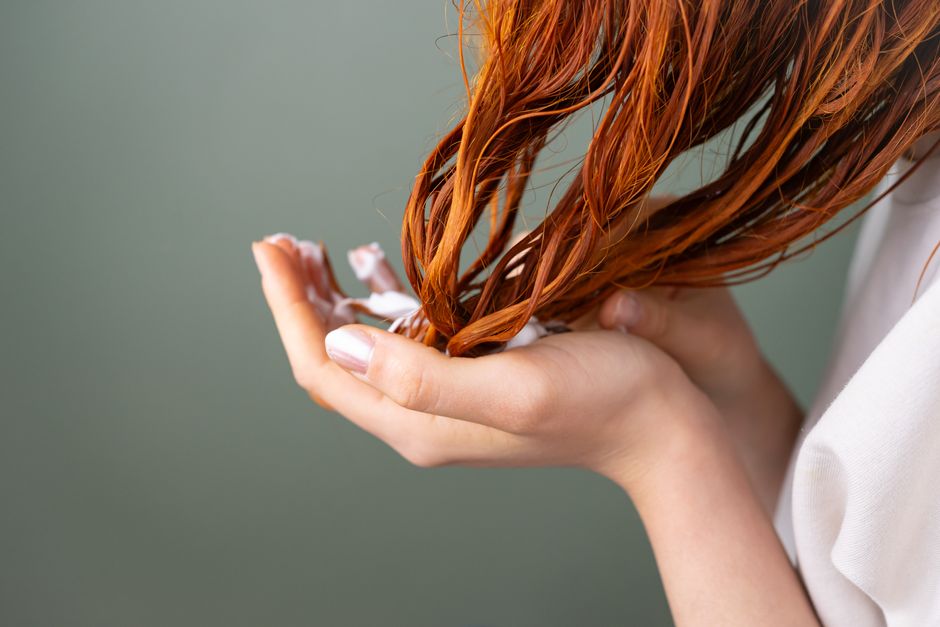
You cannot permanently change the texture you were born with. Hair texture is determined by the shape of the hair follicle and the bonds inside each strand, and those are set by genetics. What you can do is change how your hair feels and behaves day to day. You can smooth the surface, reduce friction, add temporary softness, and in some cases loosen the curl pattern for weeks or months at a time.
What Actually Determines Hair Texture?
Texture comes down to two things: the shape of the follicle and the structure of the strand it produces.
Round follicles grow straight hair. Oval follicles grow wavy hair. Flat, elliptical follicles grow curly or coily hair. That shape is genetic and fixed. No product changes it.
The second factor is the bonds inside the hair shaft. Hair is mostly made of a protein called keratin, held together by several types of chemical bonds. Disulfide bonds are the strongest. They give hair its shape and strength. Hydrogen bonds are weaker and break with water and heat. That is why wet hair can be reshaped and why heat styling works.
This distinction matters. Hydrogen bonds reform constantly. Disulfide bonds only break with chemicals. Any real change to curl pattern requires breaking disulfide bonds, and that process is either temporary or damaging. There is no third option.
How To Change Your Hair Texture To Silky Without Damaging It
The most reliable way to make hair feel silky is to smooth the outer layer of each strand. That layer is called the cuticle. When cuticles lie flat, light reflects evenly and hair feels soft. When they are raised or damaged, hair feels rough and looks dull.
Several approaches flatten the cuticle. None of them change your actual texture. They change surface feel, which is what most people mean by silky.
- Conditioner deposits ingredients that smooth the cuticle and reduce friction between strands.
- Cold water rinse at the end of washing can help the cuticle lie flatter. The effect is small and temporary.
- Leave-in products with silicones or oils coat the strand and add slip.
- Heat with care can temporarily smooth hair by breaking hydrogen bonds, but high heat causes lasting damage to the cuticle and the proteins inside.
The honest limit here: conditioners and oils improve how hair feels. They do not repair damaged hair. Hair is not living tissue. Once the cuticle is stripped or the cortex is damaged, it does not heal. Products can only coat and temporarily fill gaps.
Can You Permanently Change Curly Hair To Straight?
Chemical straightening is the only method that produces a lasting change in curl pattern. It works by breaking disulfide bonds and reforming them in a new shape. The result can last until new hair grows in.
This is also the most damaging option. The same chemical process that reshapes the bonds weakens the hair shaft. Damage ranges from dryness and breakage to significant hair loss, depending on the product, the technique, and how often it is repeated.
Some straightening products contain formaldehyde or chemicals that release formaldehyde when heated. Formaldehyde is a known carcinogen. Regulatory agencies have raised concerns about these products, and some countries have restricted or banned certain formulations. If you are considering a chemical straightener, the specific ingredients matter, not just the label on the box.
Relaxers use a different chemistry but the same basic principle. They also carry risk of damage and, in some cases, scalp injury. Neither method is risk-free, and neither should be described as safe simply because it is common.
Do Keratin Treatments Make Hair Silky?
Keratin treatments coat the hair and can make it feel smoother for a period of weeks to months. How long depends on the formula, your hair type, and how you care for it afterward.
What they do not do is replace the keratin already in your hair or permanently change its structure. The word “keratin” on a label describes an ingredient, not a guaranteed outcome. Many keratin smoothing products rely on other ingredients to achieve the smoothing effect.
Some keratin treatments have historically contained formaldehyde or formaldehyde-releasing ingredients. Others do not. The evidence on long-term safety of repeated treatments is limited. This is a case where the marketing often outruns what studies have shown.
What About At-Home Methods Like Oils and Masks?
Oils and masks can improve how hair feels. They cannot change texture.
Coconut oil, for example, has been studied for its ability to reduce protein loss from hair during washing. Some research suggests it penetrates the hair shaft better than many other oils. That is a real finding, but it does not mean coconut oil straightens hair or repairs damage. It means it may reduce some protein loss compared to washing without it.
Deep conditioning masks add moisture and slip. The effect is temporary. If your hair feels silky after a mask, that is the coating and the added moisture, not a structural change.
Be skeptical of any at-home method described as permanently changing texture. No oil, mask, or kitchen ingredient breaks disulfide bonds. If a claim says otherwise, the claim is wrong.
Does Diet or Supplements Change Hair Texture?
Diet affects hair growth and strength, not texture. The shape of your follicles and the bonds in your hair are genetic. No nutrient changes them.
That said, severe nutritional deficiencies can affect hair quality. Protein deficiency, iron deficiency, and certain vitamin deficiencies are associated with hair shedding and brittleness. Correcting a deficiency can improve how hair looks and feels. But if you are not deficient, supplements are unlikely to change anything about your hair.
There is no established evidence that any supplement changes hair from curly to straight, or from coarse to fine. Claims to that effect are not supported by clinical research.
What Actually Works and What Does Not
| Method | What It Does | How Long It Lasts | Main Risk |
|---|---|---|---|
| Conditioner and leave-in products | Smooths cuticle, adds slip | Until next wash | Minimal |
| Heat styling | Temporarily reshapes hydrogen bonds | Until moisture or sweat resets it | Heat damage with repeated use |
| Keratin smoothing treatment | Coats and smooths strand | Weeks to months | Formaldehyde exposure in some formulas; limited long-term safety data |
| Chemical straightening or relaxer | Breaks and reforms disulfide bonds | Until new hair grows in | Significant damage, breakage, possible hair loss |
| Oils and masks | Coats strand, adds moisture | Temporary | Minimal |
The pattern is clear. The more lasting the change, the higher the risk. There is no method that permanently changes texture without trade-offs.
How to Get Silky Hair Without Chasing a Texture Change
If your goal is hair that feels soft and looks smooth, focus on cuticle health rather than texture change.
- Wash less often if your scalp tolerates it. Frequent washing strips oils.
- Use conditioner every time you wash.
- Limit heat tools. When you use them, keep the temperature as low as the style allows.
- Avoid rough towel drying. It raises the cuticle and causes friction.
- Trim damaged ends. Split ends travel up the strand and cannot be repaired.
- Protect hair from sun and chlorine, both of which damage the cuticle.
None of this changes your texture. All of it can make the hair you have feel noticeably softer.
Frequently Asked Questions
Can hair texture change permanently?
No. The shape of your hair follicles and the disulfide bonds in your strands are set by genetics and do not change permanently from products or treatments. Chemical straightening can alter curl pattern until new hair grows in, but it does not change the follicle.
Does coconut oil change hair texture?
No. Coconut oil can reduce protein loss during washing and add softness, but it does not change the structure of your hair or its curl pattern. Any smoothing effect is temporary.
Is keratin treatment safe for making hair silky?
Safety depends on the specific formula. Some keratin treatments have contained formaldehyde or formaldehyde-releasing ingredients, which are a health concern. Long-term safety data on repeated treatments is limited, so the evidence does not support calling them risk-free.
Why does my hair feel silky after a mask but rough again later?
Masks coat the cuticle and add moisture, which improves feel temporarily. Once the coating washes off or the moisture evaporates, the hair returns to its previous state because the underlying structure has not changed.
