
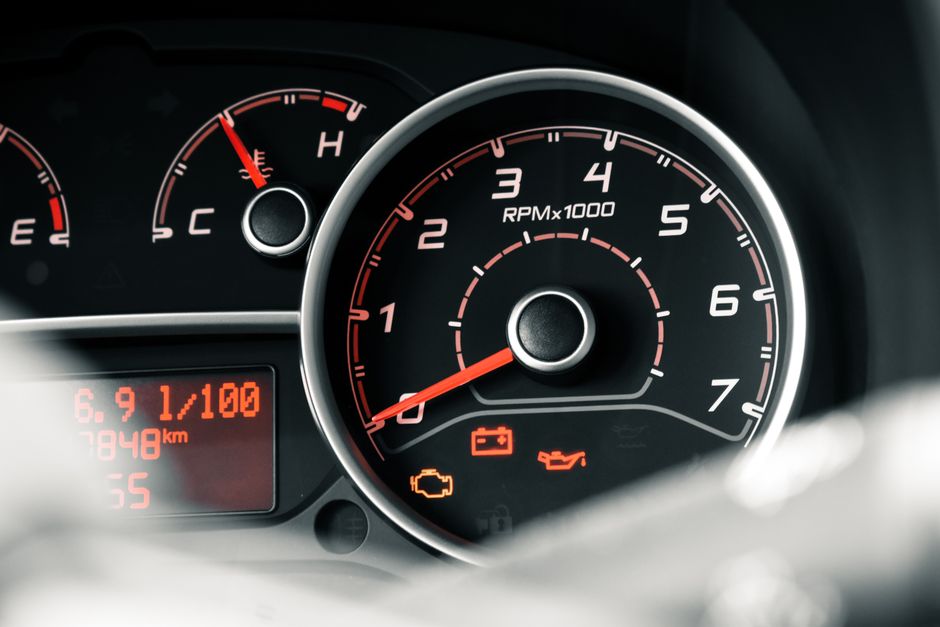
A failing speed sensor usually announces itself with a warning light, an erratic speedometer, or a transmission that shifts at strange moments. Replacing one is a job most home mechanics can handle with basic hand tools, but the exact steps depend on where the sensor sits and what it does. This guide covers how to change a speed sensor, the signs it has failed, the tools you need, and the steps for the most common locations.
What Does a Speed Sensor Actually Do?
A speed sensor measures how fast a rotating part is turning and sends that information to your car’s computer. There is no single “speed sensor” in most modern vehicles. There are several, and they do different jobs.
The most common types are the vehicle speed sensor (VSS), the wheel speed sensors used by anti-lock braking and traction control systems, and the transmission input and output speed sensors. The VSS typically reports vehicle road speed. Wheel speed sensors report how fast each individual wheel is spinning. Transmission sensors report how fast the transmission’s internal shafts are turning.
Each sensor usually works on one of two principles. A magnetic (variable reluctance) sensor generates its own voltage as a toothed ring passes near it. A Hall-effect sensor needs a power supply and produces a clean digital square-wave signal. Hall-effect sensors are more common on newer vehicles because they work down to very low speeds and the computer can read them more reliably.
When a sensor fails, the computer loses a data stream it depends on. What happens next depends on which sensor went bad and how the vehicle is programmed to respond.
What Are the Signs of a Bad Speed Sensor?
The warning signs vary by sensor type, but a handful of symptoms show up again and again. Recognizing them early can save you from chasing the wrong repair.
- Check engine light or a dedicated ABS, traction control, or transmission warning light
- Speedometer problems — it reads zero, jumps around, or reads inconsistently
- Harsh or erratic shifting because the transmission computer no longer knows road speed
- ABS light on with possible loss of anti-lock braking function
- Speedometer works but odometer does not, or the cruise control quits
- Torque converter clutch problems on some vehicles, causing shudder or stalling at stops
One important point: these symptoms overlap heavily with other faults. A harsh shift can come from low transmission fluid, a bad solenoid, or a wiring problem. An ABS light can be triggered by a wheel bearing, a tone ring, or a brake issue. Do not assume the sensor is at fault just because a symptom matches. Reading the diagnostic trouble codes is the only reliable way to narrow it down.
The most common trouble codes related to speed sensors start with P0500 (vehicle speed sensor), P0720 to P0722 (output speed sensor), and various C-codes for wheel speed sensors. A basic scan tool can read these. Some codes require an ABS-capable scanner.
How To Change A Speed Sensor: Signs, Tools, Steps
Once you have confirmed the sensor is the problem, the replacement itself is usually straightforward. The main variables are the sensor’s location and whether it is held by a single bolt or pressed into the housing.
Tools you will need
- Socket set with the correct sizes for your sensor’s mounting bolt
- Ratchet and extensions, especially for hard-to-reach locations
- Jack and jack stands, or ramps, if you need to get under the vehicle
- Wheel chocks
- Safety glasses and gloves
- Penetrating oil for rusted bolts
- Torque wrench for the final tightening
- Replacement sensor and, on some vehicles, a new O-ring or seal
- Scan tool to clear codes after the repair
General steps
- Disconnect the battery. Remove the negative terminal first. This prevents accidental shorts and clears the computer’s memory of the fault.
- Locate the sensor. Common locations include the transmission tail housing, the rear differential, the transaxle, or at each wheel hub. Consult a service manual or online repair database for your specific make and model.
- Raise and secure the vehicle if the sensor is underneath. Use jack stands or ramps. Never work under a car supported only by a jack.
- Disconnect the electrical connector. Press the release tab and pull straight out. Do not yank on the wires.
- Remove the mounting bolt. Most sensors use a single bolt, often 10mm or 8mm. Apply penetrating oil and let it sit if the bolt is rusty.
- Pull the sensor out. It may come out by hand or need gentle prying. If it is stuck, twist it slightly as you pull. Never hammer on the sensor or the housing.
- Inspect the old sensor and the mounting hole. Look for metal shavings, debris, or damage to the tone ring or reluctor wheel inside. If the tone ring is damaged, the new sensor may not fix the problem.
- Install the new sensor. Lubricate the O-ring with a small amount of clean transmission fluid or the lubricant specified in the manual. Insert it fully and seat it by hand.
- Reinstall the bolt and tighten to the manufacturer’s torque specification. Do not overtighten — many sensor housings are plastic or thin metal.
- Reconnect the electrical connector until it clicks.
- Reconnect the battery and start the vehicle. Clear the codes with a scan tool.
- Test drive the vehicle and confirm the speedometer reads correctly and the warning lights stay off.
Some vehicles require a relearn procedure after replacing certain sensors. This is more common with wheel speed sensors that interact with stability control and with transmission sensors that need to be re-adapted. Without the relearn, the light may stay on even though the sensor is fine. Check your service information before assuming the repair failed.





Is Replacing a Speed Sensor a DIY Job?
For most vehicles, yes. A single-bolt sensor on the transmission or differential is one of the easier repairs a home mechanic can do. Wheel speed sensors are usually similar — one bolt and one connector at the hub.
Where it gets harder is when the sensor is buried, when the bolt is seized, or when the sensor is integrated into a hub assembly that must be replaced as a unit. Some front-wheel-drive vehicles use wheel speed sensors that are part of the wheel bearing hub. On those, you are replacing the whole hub, which is a bigger job.
If you are not comfortable raising the car, working underneath it, or reading diagnostic codes, a shop is the safer choice. The labor time for a simple sensor swap is often under an hour. For an integrated hub, expect more.
What Are the Risks of Doing It Yourself?
The biggest risk is misdiagnosis. Replacing a sensor that was not the problem wastes money and leaves the real fault in place. Always confirm with codes and, where possible, live data before buying parts.
Other risks include:
- Breaking the sensor during removal. Old plastic and metal can be brittle. If it breaks off in the hole, extraction becomes much harder.
- Damaging the tone ring or reluctor wheel. This is a common cause of a new sensor not working.
- Overtightening the mounting bolt and cracking the housing.
- Pinching or stretching the wiring harness during installation.
- Failing to clear codes and assuming the repair did not work.
- Working under an improperly supported vehicle. This is the most serious risk and the one most likely to cause injury.
None of these are reasons to avoid the job. They are reasons to slow down, read the procedure for your specific vehicle, and use the right tools.
How Much Does a Speed Sensor Replacement Cost?
Sensor prices vary widely by vehicle and sensor type. A basic VSS or transmission speed sensor is often inexpensive. A wheel speed sensor may cost more, and an integrated hub assembly costs significantly more because you are buying the whole unit.
Labor is usually the smaller part of the bill for a simple sensor swap. The total cost depends mostly on parts and how accessible the sensor is. For a rough idea, call a local shop with your year, make, and model. Online parts retailers list sensor prices by vehicle, which gives you a sense of the parts cost before you decide whether to do it yourself.
If the diagnosis points to a wiring problem rather than the sensor itself, the repair is different. Chafed or corroded wiring can mimic a failed sensor. A technician with a multimeter can test the circuit and confirm whether the sensor or the wiring is at fault.
Can You Drive With a Bad Speed Sensor?
In many cases the vehicle will still move, but driving with a failed speed sensor is not a good idea. The transmission may shift poorly, the ABS and traction control may be disabled, and the speedometer may be inaccurate. An inaccurate speedometer means you cannot reliably judge your speed, which is a safety concern.
Some vehicles enter a limp mode that limits speed or gear selection. Others continue to drive almost normally but with warning lights on. The behavior depends on the vehicle and which sensor failed.
If the ABS or traction control is affected, the vehicle may handle differently in emergency braking or on slippery surfaces. Get the fault diagnosed and repaired rather than driving on it indefinitely.
Frequently Asked Questions
How do I know if my speed sensor is bad?
The most reliable way is to read the diagnostic trouble codes with a scan tool and look for codes related to vehicle speed, output speed, or wheel speed. Symptoms like an erratic speedometer or harsh shifting can point to the sensor, but they can also come from other faults.
Can I replace a speed sensor myself?
Yes, most speed sensors are held by a single bolt and one electrical connector, making them a manageable DIY repair for someone with basic tools. The job becomes harder if the sensor is seized, hard to reach, or integrated into a wheel hub assembly.
Do I need to disconnect the battery to change a speed sensor?
Disconnecting the negative battery terminal is a sensible precaution before working on any electrical component. It reduces the risk of short circuits and clears the computer’s stored fault memory, which helps when you clear codes afterward.
Will a new speed sensor fix my speedometer?
If the speedometer fault was caused by a failed sensor, replacing it should restore normal operation. If the problem is in the wiring, the connector, or the instrument cluster, a new sensor will not fix it, so confirming the diagnosis first matters.
