
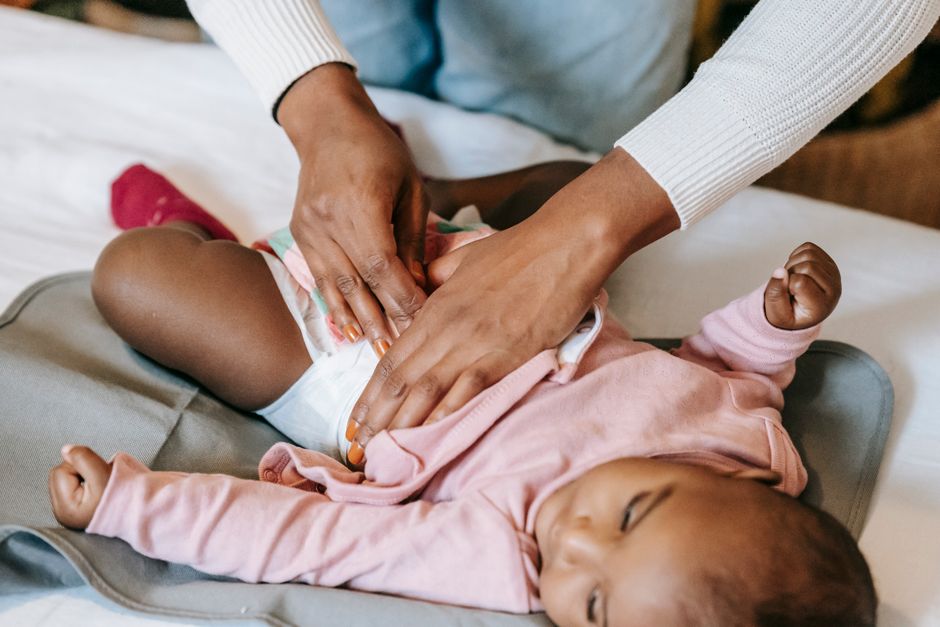
Changing a baby girl’s diaper is a basic skill, but doing it correctly matters for her comfort and health. The key steps are to gather your supplies, lay her on a safe surface, remove the dirty diaper, clean her from front to back, and put on a fresh diaper. Cleaning from front to back is the single most important rule because it prevents bacteria from the rectal area from reaching the urinary tract, which reduces the risk of urinary tract infections. Here is the complete step-by-step process.
What Supplies Do You Need Before You Start?
Having everything within reach before you begin makes the process faster and safer. You should never leave a baby alone on a changing table, even for a second, so preparation is not optional.
- A clean diaper in the correct size
- Wipes or a soft washcloth with warm water
- A changing pad or clean towel
- Diaper rash cream if needed
- Clean clothes if the outfit is soiled
If you are using a changing table, keep one hand on the baby at all times. If you are changing her on the floor, that is also fine and often safer once she starts rolling. Never use a bed or couch without keeping a hand on her the entire time.
How To Change A Baby Girls Diaper Step By Step?
Start by laying your baby girl on her back on the changing surface. Unfasten the diaper tabs and pull the front of the diaper down. If the diaper is heavily soiled, use the front of the diaper to wipe away any stool before you begin cleaning with wipes.
Lift her legs gently by holding both ankles with one hand. Use this position to slide the dirty diaper out from underneath her. Fold the dirty diaper over on itself and set it aside, but keep it within reach if you need it for disposal after the new diaper is on.
Now clean her genital area. Always wipe from front to back, meaning from the pubic area toward the anus. Never wipe in the opposite direction. Use a fresh wipe for each swipe and discard it. For girls, gently clean the folds of the labia, but do not pull them apart or wipe inside. Wipe the inner thighs and then the buttocks last.
Allow the area to air dry for a few seconds before putting on a new diaper. Moisture left on the skin can contribute to diaper rash. If she has any redness, apply a thin layer of diaper cream.
Slide the clean diaper under her bottom with the back of the diaper at her waist level. The front of the diaper should come up between her legs and over her belly. Fasten the tabs snugly but not tightly. You should be able to fit two fingers between the diaper and her waist. If the tabs stick to her skin, the diaper is too tight.
Why Is Front-To-Back Cleaning So Important for Girls?
Female anatomy makes the front-to-back rule non-negotiable. The urethra, which is the opening where urine leaves the body, sits very close to the anus in baby girls. The distance is much shorter than in boys.
Stool contains bacteria, including E. coli. If you wipe from back to front, you can move those bacteria directly toward the urethra. Once bacteria enter the urethra, they can travel up into the bladder and cause a urinary tract infection. Research consistently shows that wiping front to back is one of the most effective ways to reduce UTI risk in infant girls.
UTIs in babies are not minor. They can cause fever, irritability, and poor feeding. In severe cases, untreated infections can spread to the kidneys. This is why the direction of wiping is not a small detail. It is the core of safe diaper changing for girls.





How Often Should You Change Her Diaper?
Newborns need frequent changes. A baby under one month old may urinate every one to three hours and have several bowel movements per day. Expect to change her diaper 8 to 10 times daily in the first weeks.
Change the diaper promptly after every bowel movement. Stool left against the skin for even a short time can cause irritation. For urine, change her every two to three hours during the day.
At night, you do not need to wake a sleeping baby to change a wet diaper unless it is soiled with stool. Modern diapers absorb urine well and keep it away from the skin. However, if she wakes up and the diaper is wet, change it before feeding or settling her back down.
Leaving a wet diaper on for too long increases the risk of diaper rash. It also makes the skin more vulnerable to breakdown, which can lead to infection.
What Is Normal and What Is Not in a Baby Girl’s Diaper?
In the first few days after birth, a baby girl may have a thick, dark substance called meconium in her diaper. This is normal. It transitions to a lighter, yellowish stool as she begins feeding.
Some parents worry about a pink or reddish stain on the diaper. In newborn girls, this can be a normal sign called pseudomenstruation. Hormones from the mother can cause a small amount of vaginal discharge or light spotting in the first week of life. This is harmless and resolves on its own.
However, blood in the stool or persistent blood in the urine is not normal. If you see bright red blood that is not explained by a known diaper rash or irritation, contact your pediatrician.
Frequent urination is a good sign. It suggests she is well hydrated. If you notice she is urinating less than usual, or if her urine looks dark and concentrated, speak with your healthcare provider.
How To Prevent and Handle Diaper Rash
Diaper rash is common in babies, and most infants will experience it at least once. It appears as red, irritated skin in the diaper area. It is usually caused by prolonged contact with moisture, friction, or irritation from stool or urine.
Prevention starts with frequent changes and thorough cleaning. Letting the skin air dry completely before putting on a new diaper is one of the most effective steps. If you are at home, letting her spend some time without a diaper on a towel can help irritated skin heal.
Barrier creams contain zinc oxide or petrolatum. These create a protective layer between the skin and moisture. They are most effective when applied to clean, dry skin. Some parents use them at every change, while others only apply them at the first sign of redness. Both approaches are acceptable.
If a rash does not improve after three days of consistent care, or if it spreads, oozes, or develops blisters, see a doctor. These signs can indicate a yeast infection or bacterial infection that needs specific treatment. Do not assume every rash is the same.
How To Dispose of Dirty Diapers Safely
Wrap the dirty diaper tightly and place it in a diaper pail or a sealed trash bag. Never flush diapers or wipes down the toilet. They do not break down in water and can cause serious plumbing blockages.
Wash your hands thoroughly with soap and water after every diaper change. Handwashing is the most effective way to prevent the spread of germs, including those that cause gastrointestinal illness.
If you are using cloth diapers, shake solid stool into the toilet before storing the diaper in a wet bag or pail. Wash cloth diapers according to the manufacturer’s instructions, typically in hot water with a gentle detergent.
Frequently Asked Questions
How do I clean a baby girl’s private area?
Wipe gently from front to back using a fresh wipe for each swipe. Clean the folds of the labia without pulling them apart, and wipe the buttocks last.
How tight should a diaper be on a baby girl?
The diaper should be snug enough to prevent leaks but loose enough that you can fit two fingers between the diaper and her waist. Tabs should not stick to her skin.
Can I use baby powder on my baby girl?
Most pediatricians recommend avoiding baby powder because the particles can be inhaled and irritate the lungs. A barrier cream is a safer option for preventing diaper rash.
When should I call the doctor about a diaper rash?
Call if the rash does not improve after three days of regular care, or if it spreads, oozes, blisters, or is accompanied by a fever. These signs may indicate an infection that needs treatment.
