
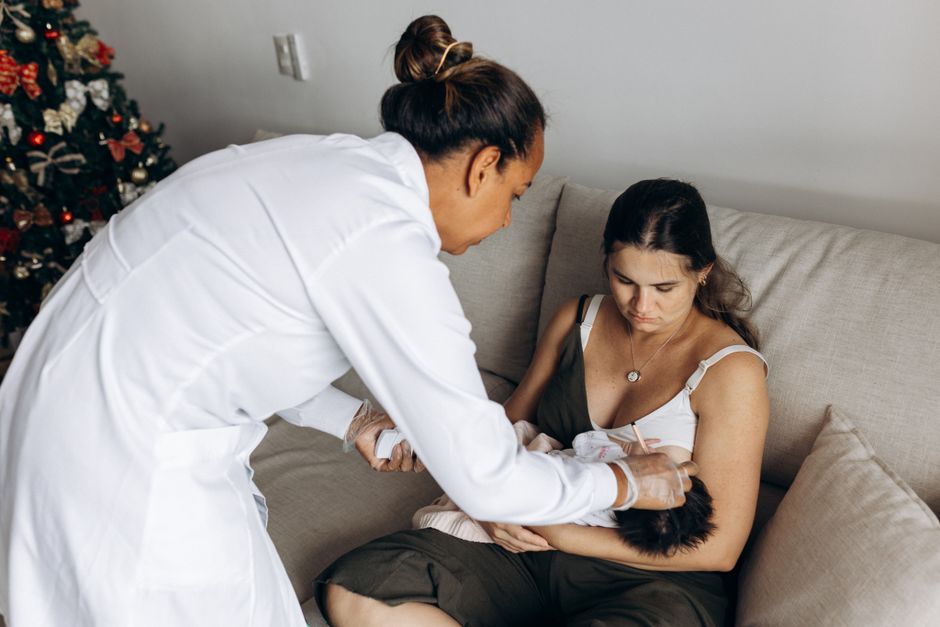
Caring for a mother means paying attention to her physical health, her mental load, and her practical needs — not just on Mother’s Day, but as an ongoing habit. It starts with noticing what she actually carries: appointments, meals, worry, memory, logistics. The most useful care is specific, consistent, and matched to what she says she needs rather than what you assume she needs.
This guide covers what maternal care looks like across different life stages, why mothers often put their own health last, and what the evidence does and does not support.
Why Do Moms Often Put Their Own Health Last?
Mothers are frequently the family’s default health manager. They track everyone else’s appointments, symptoms, and medications, and that role tends to push their own needs down the list.
This pattern shows up in the data. Research on caregiver burden consistently finds that people who coordinate care for others are more likely to delay their own medical visits and report worse sleep and higher stress. Mothers are not immune to this; they are often the group most exposed to it.
There is also a practical barrier. A doctor’s appointment requires childcare, time off work, or both. For many mothers, the logistics of getting care are harder than the care itself.
What helps is making her health concrete and scheduled rather than optional. A standing appointment on the calendar is harder to skip than a vague intention to “take better care of myself.”
How Do You Support a Mom’s Mental Health?
Mental health support for mothers starts with asking directly and listening without fixing. Most people respond to distress by offering solutions. Mothers often need to be heard first.
Perinatal mood and anxiety disorders are common and well documented. Postpartum depression affects a meaningful share of women who give birth, and it can appear anytime in the first year, not just the first few weeks. Anxiety symptoms are also common and sometimes more prominent than sadness.
These conditions are treatable. Therapy and, in many cases, medication are supported by substantial evidence. A mother who is struggling is not failing at motherhood; she may have a condition that responds to treatment.
Warning signs worth taking seriously include:
- Persistent sadness, irritability, or numbness lasting more than two weeks
- Loss of interest in things she used to enjoy
- Sleep problems that persist even when the baby is sleeping
- Intrusive frightening thoughts or excessive worry
- Withdrawing from people she normally trusts
If she talks about harming herself or her baby, that is an emergency. In the US, the 988 Suicide and Crisis Lifeline is available by call or text, 24 hours a day.
For mothers not in the postpartum period, the same principles apply. Depression and anxiety are not limited to new mothers. They can surface at any stage, and they are not a character flaw.
What Does Physical Health Care for Moms Actually Look Like?
Physical care for mothers is mostly about not skipping the basics. Routine screenings, sleep, movement, and nutrition matter at every stage, and they are the things most likely to be dropped when life gets busy.
Recommended screenings vary by age and history. Blood pressure, cholesterol, cervical cancer screening, and mammography all have established guidelines, though the exact starting age and interval for some of these has changed over time and can differ between organizations. The most reliable approach is for her to confirm current recommendations with her own clinician, since personal and family history change the picture.
Sleep is often the hardest thing to protect. Short sleep is linked to worse mood, impaired immune function, and higher risk of several chronic conditions over time. For mothers of young children, this is not always fixable, but it can be shared. A partner or family member taking one night feed or one morning shift makes a measurable difference to sleep debt.
Movement does not need to be intense to help. Regular physical activity is associated with lower risk of heart disease, type 2 diabetes, and depression. The general public health recommendation for adults is at least 150 minutes of moderate activity per week, plus muscle-strengthening activity on two or more days. That can be broken into short blocks.
Nutrition matters, but the goal is adequacy, not perfection. Iron, calcium, vitamin D, and adequate protein are common shortfalls. For women who are pregnant or breastfeeding, nutrient needs are higher and specific. Established guidance from obstetric organizations covers these cases, and a clinician or registered dietitian is the right source for individual advice.





How Can Partners and Family Share the Load?
Sharing the load means taking ownership of tasks, not just helping with them. The difference matters. A partner who “helps” still leaves the mother as the person who remembers, plans, and checks.
The mental load — the invisible work of noticing what needs doing — is often the heaviest part. Taking over a category completely, such as all medical appointments for the children or all grocery planning, removes that mental tracking from her plate.
Practical ways to shift the balance:
- Own whole tasks end to end, including the remembering
- Take a specific, recurring time slot so it becomes routine
- Handle at least one night waking or morning routine consistently
- Ask what would actually help rather than assuming
- Notice and name what she does, without making it a performance review
For single mothers, the equivalent is building a small reliable network — a neighbor, a friend, a family member — who can be called on for specific, bounded help. Vague offers (“let me know if you need anything”) rarely convert into real support. Specific offers (“I’ll take the kids Saturday morning”) do.
What About Caring for Older Mothers?
Caring for an aging mother brings a different set of needs. The focus shifts toward safety, independence, social connection, and coordination of medical care.
Falls are a leading cause of injury in older adults, and most falls are preventable with attention to vision, medication side effects, strength, and home hazards. Strength and balance training has good evidence for reducing fall risk.
Polypharmacy — taking multiple medications — is common and a frequent source of problems. Reviewing medications with a clinician or pharmacist at least once a year can catch interactions and drugs that are no longer needed.
Social isolation is a real health risk in older adults, associated with worse outcomes for both mental and physical health. Regular contact, whether in person or by phone, matters more than most people assume.
It also helps to have the practical conversations early — about driving, finances, advance care planning, and where she wants to live as her needs change. These conversations are easier before a crisis forces them.
How Do You Care for a Mom Who Says She’s Fine?
When a mother insists she is fine, the most useful move is to make help easy to accept and hard to refuse. Many mothers decline help because accepting it feels like a burden or a loss of control.
Instead of asking whether she needs anything, offer something specific and low-effort. “I’m bringing dinner Thursday” lands differently than “Can I bring you something?”
It also helps to watch for changes rather than wait for complaints. Mothers who minimize their own needs often show it in behavior — pulling back from activities, sleeping more or less, losing weight, or seeming flat. Those changes are worth naming gently.
If she continues to decline help and you are worried about her health or safety, it may be worth involving her clinician, with her knowledge where possible. In situations involving clear risk of harm, that becomes a safety issue rather than a preference.
Frequently Asked Questions
How can I support my mom’s mental health?
Ask directly how she is doing and listen without jumping to solutions. If she shows signs of depression or anxiety lasting more than two weeks, encourage her to talk to a clinician, since these conditions are treatable.
What health screenings should mothers get?
Recommended screenings depend on her age, personal history, and family history. Blood pressure, cholesterol, cervical cancer screening, and mammography all have established guidelines, but the exact timing varies, so she should confirm current recommendations with her own clinician.
How do I help a mom who won’t accept help?
Offer something specific and easy to accept rather than asking if she needs anything. If you are genuinely worried about her health or safety and she keeps declining, involving her clinician is a reasonable next step.
What is the mental load and why does it matter?
The mental load is the invisible work of noticing, planning, and remembering what needs to be done. It is often the heaviest part of caregiving, and taking over whole tasks — not just helping — is what actually reduces it.
