
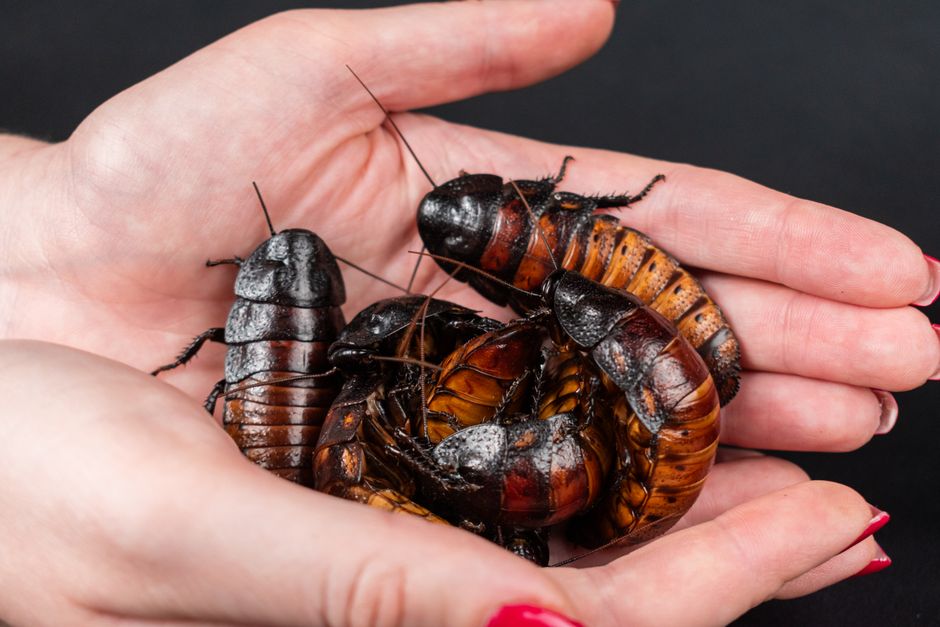
Madagascar hissing cockroaches are one of the most forgiving pet invertebrates you can keep. They need a dark enclosure with plenty of surface area, temperatures in the mid-70s to mid-80s Fahrenheit, moderate humidity, a substrate they can burrow into, and a diet of fresh produce plus a protein source. They do not need heat lamps, live plants, or tank mates. Get those basics right and a hissing cockroach can live for several years.
This guide covers what actually matters for their health: enclosure setup, heat and humidity, feeding, handling, and the handful of mistakes that shorten their lives. It also covers what these animals are not — because a lot of what circulates about them online is wrong.
What Is a Madagascar Hissing Cockroach?
It is a large, wingless cockroach native to the island of Madagascar, and it is one of the few insects that has been genuinely domesticated. The scientific name is Gromphadorhina portentosa. Adults commonly reach 2 to 3 inches in length, with males growing larger than females.
They hiss. That is not a defensive bluff — it is how they communicate. The sound comes from air forced through modified spiracles, the breathing openings along the sides of the abdomen. Males hiss during territorial disputes and courtship. Both sexes hiss when startled or disturbed. It is a normal behavior, not a sign of distress in itself.
Unlike most cockroach species, this one cannot climb smooth surfaces and cannot fly. It also does not infest homes. It is a tropical forest floor species that needs warm, humid conditions to survive, and it will not establish itself in a typical North American house. That distinction matters, because a lot of people assume any cockroach is a household pest. This one is not.
What Kind of Enclosure Does a Madagascar Hissing Cockroach Need?
A glass or plastic terrarium with a secure lid works well. Size matters less than floor area, because these animals spend most of their time on the ground. A 10-gallon tank comfortably houses a small group. For a single adult, a smaller container is fine as long as it has enough floor space to move around.
Ventilation is the part people get wrong. You need airflow, but you also need to hold humidity. A screen lid on a glass tank loses moisture fast. Many keepers cover most of the screen with a solid panel and leave a smaller vented area open. That balances the two needs without turning the enclosure into a swamp or a desert.
Key setup elements:
- Substrate: Two to three inches of a moisture-holding material. Coconut coir, peat, or a chemical-free soil mix all work. Avoid cedar and pine shavings, which contain aromatic compounds that are harmful to many invertebrates.
- Hides: Cork bark, half-round logs, or stacked flat stones. They are thigmotactic, meaning they seek tight spaces where their bodies touch surfaces on multiple sides. Give them somewhere to wedge themselves.
- No standing water: A shallow water dish is a drowning risk, especially for nymphs. They get moisture from food and substrate instead.
- No heat lamp: These are nocturnal animals that avoid light. A heat lamp dries the enclosure and stresses them.
One thing that surprises new keepers: a male hissing cockroach has prominent horn-like bumps on its pronotum, the shield behind the head. Females have a smoother, flatter pronotum. That is the reliable way to tell them apart once they are mature.
What Temperature and Humidity Do They Need?
Keep the enclosure between roughly 75°F and 85°F. That range supports normal activity, digestion, and molting. Below about 70°F they become sluggish and may stop eating. Sustained cold is one of the few things that will actually kill a captive hissing cockroach.
For heat, an under-tank heat mat connected to a thermostat is the standard approach. Place it under one end so the animal can choose between a warmer and cooler zone. Never guess at the temperature — use a thermometer inside the enclosure. A thermostat prevents the mat from overheating, which can cook an animal that cannot escape the heat.
Humidity should stay in the range of 60% to 80%. This is not a precise requirement, but it matters for molting. A cockroach that cannot molt properly because the air is too dry can become stuck in its old exoskeleton, which is often fatal. Misting the substrate lightly every few days, and keeping the lid partly covered, usually maintains adequate humidity. A hygrometer takes the guesswork out.
If you see white, fuzzy growth on the substrate, that is mold, and it means the enclosure is too wet and not ventilated enough. Remove the affected substrate, increase airflow, and mist less often.
What Do Madagascar Hissing Cockroaches Eat?
They are detritivores in the wild, which means they eat decaying plant matter and the occasional dead insect. In captivity, that translates to a diet of fresh produce plus a protein source.
Fruit and vegetables form the base. Good options include apple, banana, carrot, squash, and leafy greens. Avoid citrus in large amounts and skip anything moldy or fermented. Remove uneaten fresh food within a day or two so it does not rot and breed mold or mites.
Protein matters more than many beginners realize, especially for growing nymphs and for females producing young. A small amount of dry dog food, fish flakes, or a commercial insect protein diet covers this. Some keepers offer it once or twice a week rather than daily.
There is no established clinical feeding schedule for this species, because it is not a species kept under veterinary nutrition guidelines. The practical approach is to offer food regularly, watch body condition, and adjust. A well-fed hissing cockroach has a plump abdomen. A thin, shrunken one is not getting enough.
How Do You Handle a Madagascar Hissing Cockroach?
Carefully, and not by the antennae or legs. Pick the animal up by letting it walk onto your open hand, or gently scoop it from underneath. Support its body. These animals are slow and docile, and most will simply sit on your palm once settled.
They can grip surfaces firmly with the claws on their legs, so a firm pull can injure them. Let them release on their own. If one is clinging to something, place your hand under it and wait.
Wash your hands before and after handling. This protects the animal from anything on your skin, and it protects you from anything on the animal. Wild-caught or poorly kept cockroaches can carry bacteria on their exoskeleton, and while captive-bred animals from clean enclosures are low risk, basic hygiene is not optional. Anyone who is immunocompromised, or handling the animal around food preparation areas, should take this seriously.
Do not handle a cockroach that is mid-molt. Its new exoskeleton is soft and easily damaged during that period.
What Are the Most Common Care Mistakes?
Most problems trace back to a few recurring errors.
- Too cold: Room temperature in a cool climate is often below what this species needs. A heat source with a thermostat solves it.
- Too dry: Low humidity causes failed molts. This is the single most common cause of death in captivity.
- No hides: An exposed cockroach is a stressed cockroach. Hiding space is not optional.
- Overcrowding: Too many animals in too little space leads to competition, stress, and injuries.
- Moldy substrate: A sign of poor ventilation and over-misting. Fix the airflow, not just the moisture.
- Pesticide exposure: Never use insecticide, flea spray, or treated wood anywhere near the enclosure. These animals are highly sensitive to it.
One clarification worth making: hissing cockroaches are not known to transmit disease to humans the way some other pests are, but that does not make them sterile. Any animal kept in a warm, humid box with decaying organic material needs sensible hygiene from its keeper. The risk is low and manageable, not zero.
Do Madagascar Hissing Cockroaches Need Tank Mates?
No. They are not social animals in the sense that they need company. They can be kept in groups, and many people do, but a single cockroach does fine on its own. If you keep multiple, keep an eye on males, which can be territorial and may fight over space.
Breeding happens readily in captivity when males and females are housed together. Females give birth to live young rather than laying eggs, which is unusual among insects. A female can produce a number of nymphs at once, so a small group can grow quickly if you are not separating the sexes. If you do not want a growing population, keep only one sex.
Frequently Asked Questions
How long do Madagascar hissing cockroaches live?
Captive Madagascar hissing cockroaches commonly live two to five years with proper care. Poor temperature and humidity control are the main factors that shorten that lifespan.
Are Madagascar hissing cockroaches dangerous to humans?
They are not venomous and do not bite in any way that harms humans. They can carry bacteria on their exoskeleton, so wash your hands after handling them.
Can Madagascar hissing cockroaches climb glass or escape?
They cannot climb smooth glass or plastic, which makes escape unlikely in a standard terrarium. A secure lid is still needed because they can push through gaps and climb rough surfaces.
What should I feed a Madagascar hissing cockroach?
Offer fresh fruits and vegetables as the main diet, plus a protein source such as dry dog food or fish flakes a few times a week. Remove uneaten fresh food before it spoils.
