
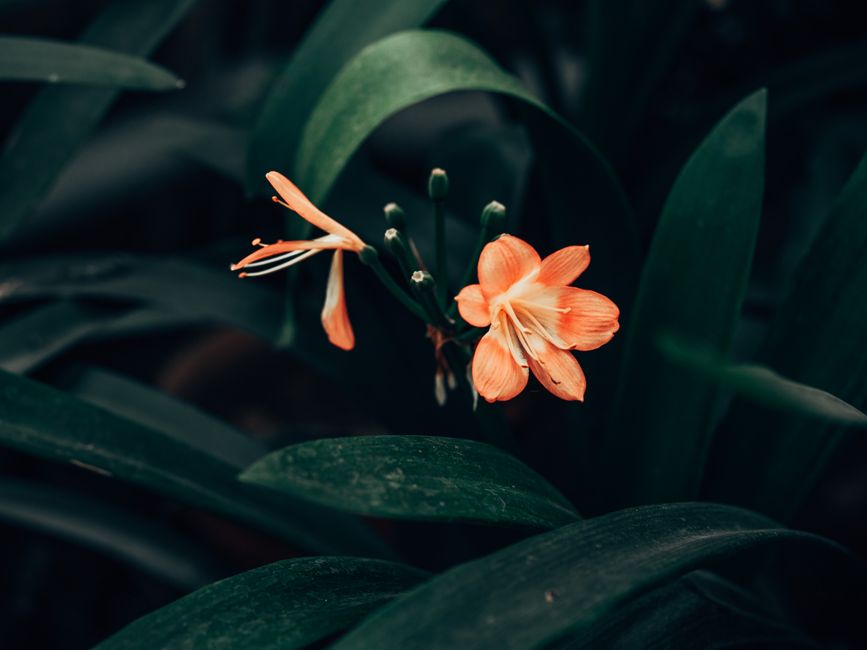
Clivia is a shade-loving houseplant that blooms best when it gets a cool, dry rest period in late autumn and early winter. Give it bright filtered light, let the soil dry slightly between waterings, and keep it root-bound in a pot that is only slightly larger than its roots. Most clivias fail to flower because they are kept too warm, watered too much, or repotted too often — not because they are difficult plants.
Clivia (Clivia miniata) is a South African bulb-like plant with strappy evergreen leaves and clusters of trumpet-shaped orange, yellow, or peach flowers. It is genuinely one of the easier indoor plants to keep alive. Getting it to bloom reliably is a separate skill, and it comes down to mimicking the seasonal cycle the plant evolved with.
What Kind Of Light Does A Clivia Need?
Clivia needs bright, indirect light — the kind you get a few feet back from a sunny window, or through a sheer curtain. Direct midday sun will scorch the leaves, leaving pale or brown patches that do not heal.
In practice, an east-facing window is close to ideal. A south or west window works if the plant sits far enough back that sunlight never lands directly on the leaves. North-facing windows are often too dim, especially in winter, and a clivia in low light will grow slowly and rarely flower.
Leaves tell you whether the light is right. Deep, dark green leaves usually mean the plant is getting too little light. Leaves that look slightly yellowed or bleached are getting too much. Healthy clivia foliage is a rich mid-green.
If you move a clivia outdoors for summer — which many growers do — put it in full shade under a tree or on a covered porch. Morning sun is tolerable. Afternoon sun is not.
How Often Should You Water Clivia?
Water clivia when the top inch or so of soil feels dry, and water thoroughly so that excess drains out the bottom of the pot. Never let the pot sit in a saucer of standing water.
Clivia has thick, fleshy roots that store water. They rot easily in soggy soil, and root rot is one of the most common reasons a clivia declines. Overwatering usually shows up as yellowing leaves that feel soft, or brown mushy patches at the base of the plant.
Watering needs change with the season. During active growth in spring and summer, the plant may need water roughly once a week, depending on pot size, temperature, and airflow. In winter, when the plant is resting, it needs much less — sometimes only every two to three weeks.
Use water at room temperature. Cold water straight from an outdoor tap can shock the roots. If your tap water is heavily treated, letting it sit overnight before use is a reasonable habit, though there is no strong evidence that clivia is especially sensitive to ordinary municipal water.
Why Is The Cool Winter Rest Period So Important For Flowering?
Clivia needs a cool, dry rest period in late autumn and winter to trigger flower bud formation. Without it, the plant will grow leaves happily but often will not bloom.
The general target is a temperature range of roughly 50°F to 55°F (10°C to 13°C) for several weeks during the resting period. Many growers simply move the plant to a cool porch, an unheated bedroom, or a garage that stays above freezing. The plant tolerates these temperatures well as long as it stays above about 40°F (4°C).
During this rest, water sparingly — enough to keep the leaves from shriveling, but not enough to encourage new growth. Stop fertilizing entirely. The combination of cool temperatures and reduced water is what signals the plant to shift from leaf production to flower production.
This is the single most important thing to understand about clivia, and the one most often missed. A clivia kept at normal room temperature all winter in a warm living room is being told, in effect, that it is always summer. It responds by growing leaves.
After the rest period, when you see a flower stalk beginning to emerge from the center of the plant, gradually increase watering and move the plant back to a warmer spot. Do not rush this. A sudden shift to warmth and heavy water can cause the developing bud to abort.
What Kind Of Soil And Pot Does Clivia Need?
Clivia needs well-draining potting mix and a pot only slightly larger than its root system. It flowers best when slightly root-bound, so repotting should be infrequent.
A standard potting mix amended with perlite or coarse bark works well. The goal is a mix that holds some moisture but drains freely. Garden soil straight from the ground is usually too heavy for a container plant.
On pot size: the common mistake is choosing a pot that is too large. A clivia in an oversized pot tends to put energy into root growth rather than flowers, and the extra soil holds moisture longer, increasing rot risk. Repot only every three to four years, or when roots are visibly crowding the pot or pushing above the soil surface.
When you do repot, choose a container only one size up. Clivia roots are thick and can be damaged easily, so handle them gently and do not bury the crown of the plant — the point where leaves emerge — below the soil line.
When And How Should You Fertilize Clivia?
Feed clivia with a balanced liquid fertilizer during active growth in spring and summer, at roughly half the strength recommended on the label. Stop feeding during the winter rest period.
There is no strong evidence that clivia needs a special high-phosphorus “bloom booster” fertilizer to flower. Flowering in clivia is driven mainly by the cool rest period and adequate light, not by fertilizer type. A balanced feed supports general health; it does not force blooms.
Too much fertilizer, particularly too much nitrogen, encourages leafy growth at the expense of flowers. If your clivia produces abundant leaves and no flowers, overfeeding is one possible cause worth considering alongside warmth and low light.
How Do You Get Clivia To Bloom Again?
To bring a reluctant clivia into bloom, check four things in order: winter temperature, light levels, pot size, and watering during the rest period. These are the factors that most reliably influence flowering.
- Temperature: Was the plant given several weeks at around 50°F to 55°F in late autumn or winter?
- Light: Is it getting bright indirect light for most of the day?
- Pot size: Is it slightly root-bound rather than sitting in a large pot of fresh soil?
- Water during rest: Was watering reduced enough to slow growth without letting the plant dry out completely?
Clivia typically flowers in late winter to spring, though timing varies with the plant’s conditions. Some clivias bloom reliably every year once established; others are more irregular. A plant that has never flowered may simply be too young — clivias grown from seed can take several years to reach flowering size, while divisions of an older plant often bloom sooner.
Yellow or peach-flowered clivias are not a different species. They are color forms of the same plant, and they need the same care.
What Are Common Clivia Problems And What Causes Them?
Most clivia problems trace back to water, temperature, or light. The plant is not especially prone to pests, though mealybugs and scale can appear on indoor plants.
Yellowing leaves can mean several things: overwatering, too much direct sun, or natural aging of the oldest outer leaves. Context matters. If the yellowing is on old leaves near the base and the rest of the plant looks healthy, it is often normal. If new growth is yellowing or leaves feel soft, suspect the roots.
Brown tips on leaves usually point to inconsistent watering or very dry air. Mushy brown patches at the base of the plant suggest rot and require immediate attention — reduce watering, check drainage, and consider repotting into fresh, well-draining mix.
Failure to flower is by far the most common complaint. It is almost always a rest-period or light issue rather than disease.
One note on safety: clivia contains alkaloids and is considered toxic if eaten. Keep it out of reach of pets and small children. This is well documented for the plant, and it is worth taking seriously rather than treating as a minor concern.
Frequently Asked Questions
How often does clivia bloom?
A healthy, mature clivia typically blooms once a year, usually in late winter or spring. Some plants bloom more irregularly, and young plants may not flower for several years.
Why is my clivia not flowering?
The most common cause is a missing cool rest period in winter, followed by too little light or a pot that is too large. Check those three factors before assuming the plant is unhealthy.
Can clivia grow in low light?
Clivia tolerates lower light than many flowering plants, but it needs bright indirect light to bloom well. In deep shade it usually survives but rarely flowers.
Is clivia toxic to cats and dogs?
Yes, clivia is considered toxic to pets if eaten and can cause digestive upset. Keep it out of reach of animals and small children.
